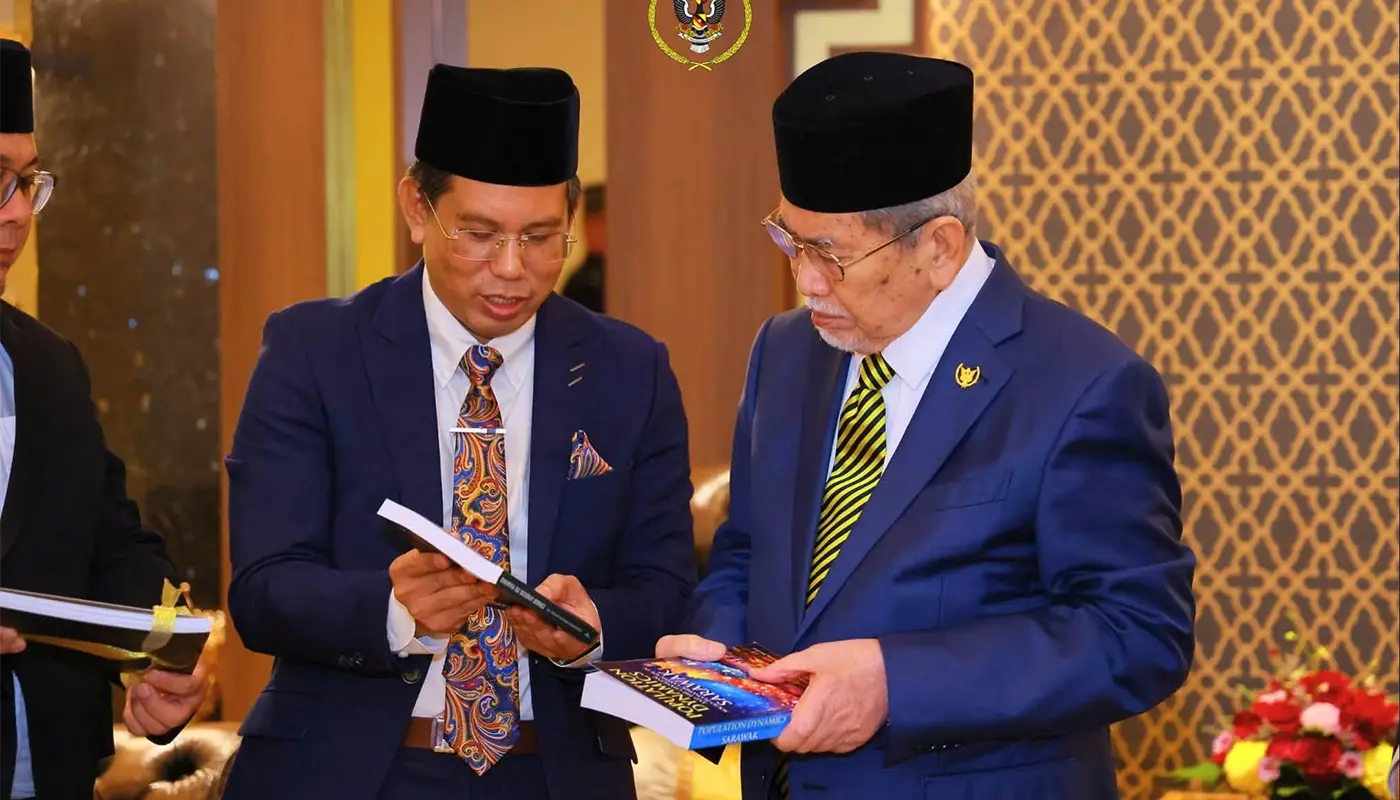
KUCHING – Sarawak Governor Tun Pehin Sri Dr Haji Wan Junaidi Tuanku Jaafar has called for a balanced approach to insolvency management, emphasising the importance of supporting people facing financial difficulties alongside enforcing laws governing debt and bankruptcy.
He made the remarks during a courtesy visit by a delegation from the Malaysian Insolvency Department (MdI), led by its Deputy Director-General Abu Bakar Manat, who is also performing the duties of Director-General, at the Sarawak State Astana in Petra Jaya on 19 October.
The meeting covered the department’s leadership and responsibilities, as well as the implementation of the Cross-Border Insolvency Act 2026 (Act 877). The legislation provides a framework for addressing insolvency cases involving companies with assets, liabilities, creditors or business operations in more than one country.
The visit also provided an opportunity to discuss the role of insolvency law in supporting legal cooperation across jurisdictions, protecting creditors’ interests and strengthening confidence in Malaysia’s legal and business environment.
Accompanying Abu Bakar were Insolvency Department Bankruptcy Division director Fajrul Shihar Abu Samah, Sarawak Insolvency director Adibah Husna Zainal Abidin, special officer to the Director-General and Corporate Communications Unit head Muhamad Syah Azlan Abdullah, and special officer and Research and Legal Section head Romzan Bujang.
During the discussion, Wan Junaidi drew on his previous experience as Minister in the Prime Minister’s Department responsible for Parliament and Law, particularly his involvement in discussions on proposals for a new insolvency law in Malaysia.
He said efforts to develop the country’s insolvency framework should ensure that the law remains relevant to changing economic conditions and national policy priorities. He also linked the need for an effective legal framework to the National Entrepreneurship Policy 2019, which seeks to foster a supportive environment for businesses and strengthen the country’s entrepreneurial development.
Cross-border insolvency can present complex challenges when a company’s financial obligations, assets and creditors are spread across different jurisdictions. Differences between national legal systems can complicate proceedings, making clear rules and cooperation between authorities important in determining how claims and assets are handled.
Against this background, the implementation of Act 877 is intended to provide a legal basis for dealing with insolvency matters that extend beyond Malaysia’s borders. Its practical impact will depend on the applicable legal procedures and the cooperation of relevant parties in individual cases.
Wan Junaidi also urged MdI to continue expanding its role beyond law enforcement by providing advice, guidance and opportunities for financial recovery to individuals experiencing debt-related problems.
He stressed that insolvency administration should balance accountability with assistance for people seeking to improve their financial circumstances. Such an approach, he said, should give those facing financial hardship a chance to rebuild their financial position and move forward with their lives.
The emphasis on guidance and recovery highlights the wider social dimension of insolvency management. While legal processes are necessary to address unpaid obligations and protect the interests of creditors, accessible information and appropriate support can help individuals better understand their options and responsibilities.
Wan Junaidi and Toh Puan Datuk Patinggi Hajah Fauziah Mohd Sanusi also expressed appreciation for the department’s continued work in helping the public deal with indebtedness and improving the efficiency, effectiveness and integrity of insolvency administration.
They thanked Abu Bakar and the delegation for the visit and expressed hope that the department would continue to carry out its responsibilities in the interests of the public and the country.
The discussions brought together issues of legal reform, international cooperation and financial recovery, underscoring the importance of an insolvency system that protects legitimate interests while recognising the difficulties experienced by people facing debt. — Sarawak Daily