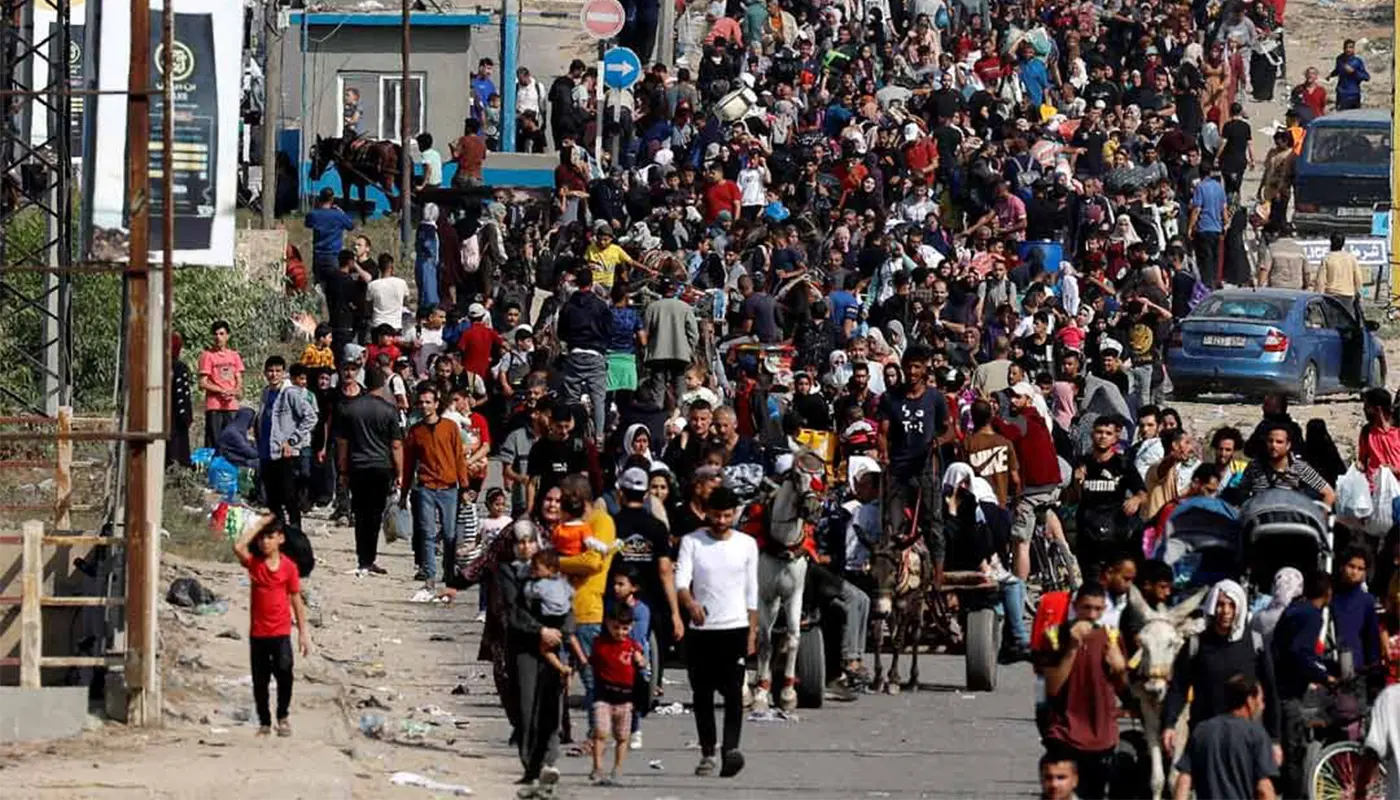
Ten foreign ministers from Europe, North America and Asia have issued a stark warning that the humanitarian situation in Gaza has reached “catastrophic” levels, urging Israel to ease restrictions on aid groups and imports of essential supplies.
The joint statement, released on Tuesday by the UK’s Foreign Office, came as winter conditions worsen in the enclave, where heavy rainfall and plunging temperatures have compounded the suffering of civilians.
The ministers representing Britain, Canada, Denmark, Finland, France, Iceland, Japan, Norway, Sweden, and Switzerland highlighted that 1.3 million people remain in urgent need of shelter, while more than half of Gaza’s health facilities are only partially functional.
They also warned that the collapse of sanitation systems has left 740,000 people exposed to toxic flooding.
The appeal followed remarks by US President Donald Trump, who stood alongside Israeli Prime Minister Benjamin Netanyahu in a US-Israel Meeting in Florida on Monday.
Trump warned Hamas that there would be “hell to pay” if the group failed to disarm, while insisting that Israel had “lived up” to its commitments under the fragile ceasefire agreed in October.
The truce, considered one of Trump’s major achievements since returning to office, has so far held, though tensions remain over the next phase of negotiations.
Foreign ministers welcomed progress in ending bloodshed and securing the release of Israeli hostages but stressed that the plight of Gaza’s civilians must remain central.
They called on Israel to ensure international NGOs can operate “in a sustained and predictable way” and warned that many organisations risk deregistration by 31 December due to restrictive new requirements.
The statement also urged Israel to lift “unreasonable restrictions” on imports deemed to have dual-use potential, including medical and shelter equipment.
Aid groups have long argued that such restrictions severely hamper their ability to respond to urgent needs.
Ministers pressed for the opening of additional crossings to accelerate the flow of humanitarian supplies. While they welcomed the partial opening of the Allenby crossing, they noted that Rafah and other corridors remain closed or heavily restricted.
They criticised bureaucratic customs processes and extensive screenings that delay aid deliveries, even as commercial cargo is allowed in more freely.
“The target of 4,200 trucks per week, including 250 UN trucks per day, should be a floor not a ceiling,” the statement said, calling for higher thresholds to ensure “vital supplies are getting in at the vast scale needed.”
Meanwhile, reports suggest Trump may announce plans in January for an interim government and an international force to oversee reconstruction in Gaza.
However, Hamas’s armed wing has reiterated that it will not surrender its weapons, leaving disarmament a major obstacle to long-term Israeli goals.
With humanitarian needs escalating and political negotiations at a standstill, the coming weeks will test whether international pressure can secure greater access for aid groups and prevent Gaza’s crisis from deepening further.
Sources: Al Jazeera, Reuters, The Guardian, Axios