



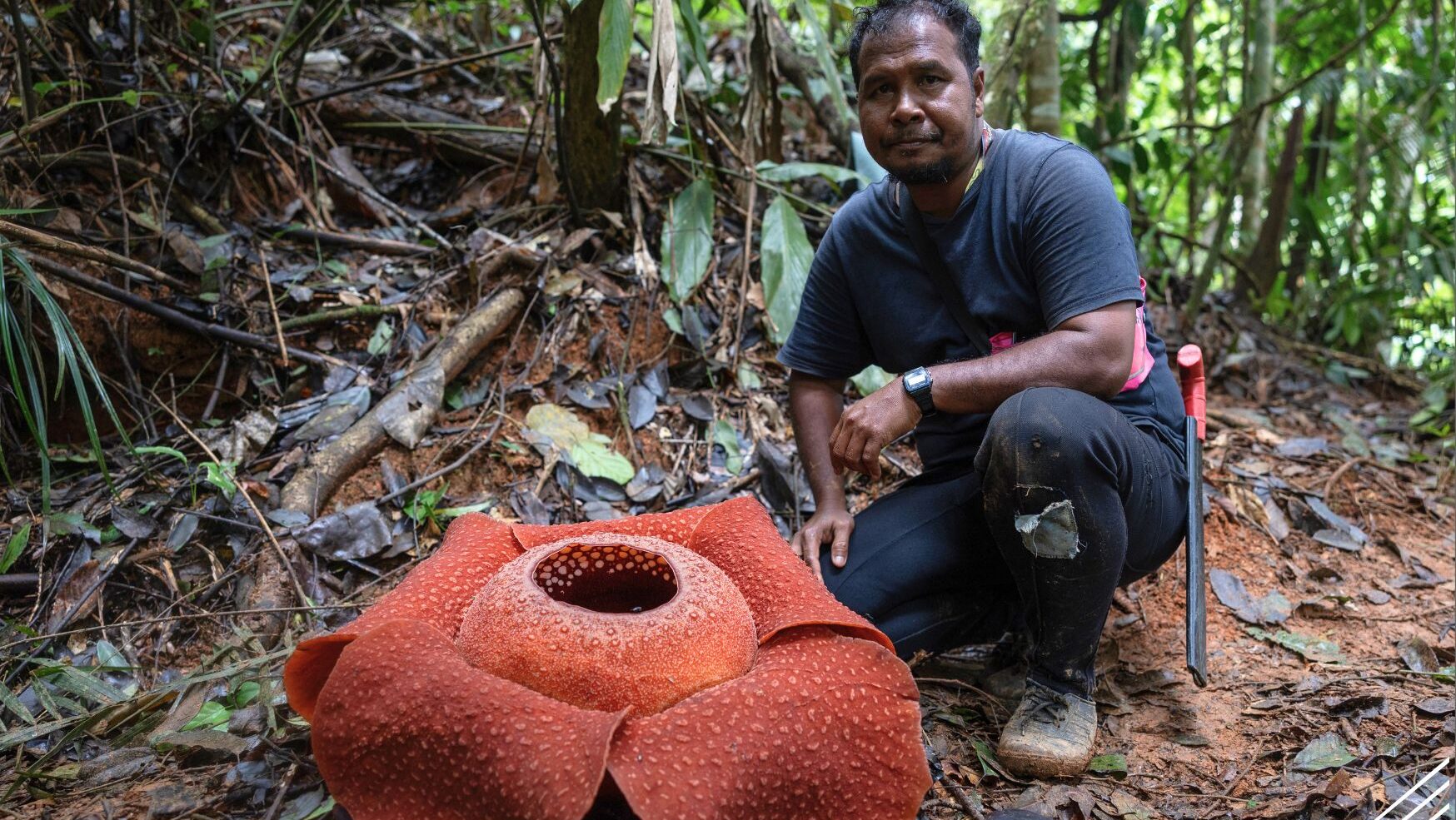
In the heart of the Lojing Highlands in Gua Musang, Kelantan, lies a hidden gem of nature that has captured the attention of many worldwide—the Rafflesia flower. Recently, Rusli Angah, a 43-year-old tour guide from the Temiar Orang Asli tribe, led a group through the Rafflesia Conservation Center, located at an altitude of 350 meters above sea level. The center serves as a critical site for the conservation and study of this rare flower, also known as the “corpse flower” due to its pungent smell, resembling rotting meat.

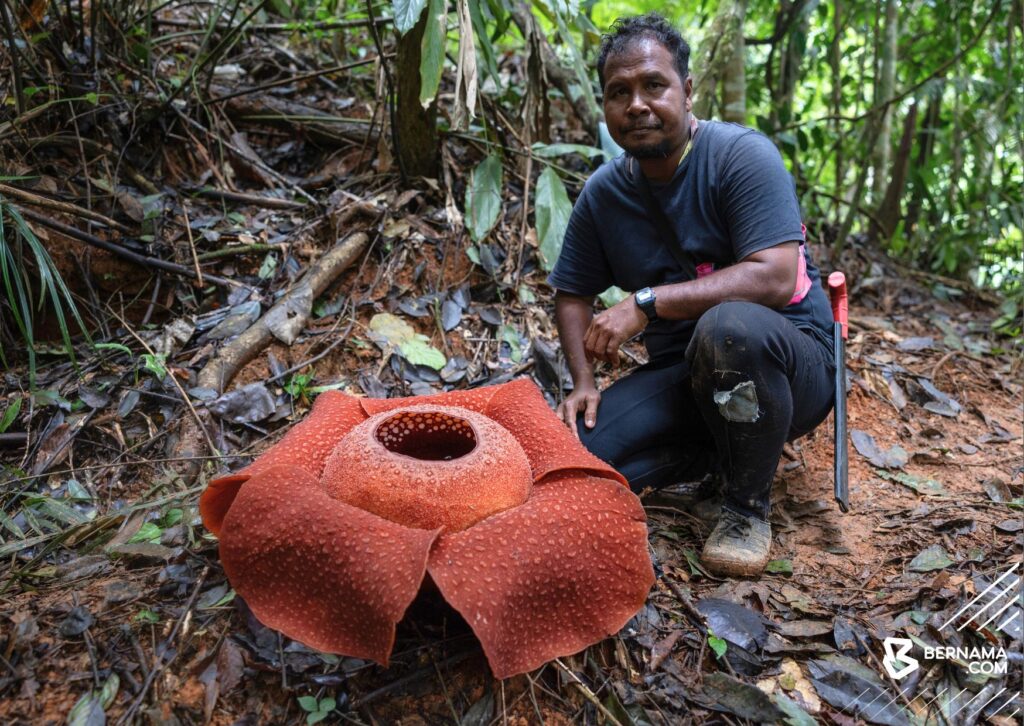
The Rafflesia, which is endemic to Southeast Asia, is most commonly found in Malaysia, Indonesia, and the Philippines. This flower belongs to the Rafflesiaceae family and is a parasitic plant, meaning it lacks leaves, stems, or roots. Instead, it survives by attaching itself to the roots of other trees, extracting nutrients from its host. Despite its unattractive odor, the Rafflesia holds immense significance, particularly among the indigenous Orang Asli communities.
The Temiar and Jahai tribes, among other Orang Asli groups, regard the Rafflesia as a symbol of the forest’s health. To them, the flower isn’t just a botanical marvel—it’s also a spiritual symbol. The Orang Asli believe that the Rafflesia carries a spirit and serves as an indicator of the forest ecosystem’s overall wellbeing. For these communities, the flower’s presence or absence is seen as a sign of the health of the forest that sustains them.
In traditional medicine, parts of the Rafflesia are used in healing practices. Among the Orang Asli, the base of the flower is believed to have therapeutic properties, particularly for women recovering after childbirth. This deep connection between the Rafflesia and the health of the Orang Asli community highlights the cultural and medicinal importance of the plant.
However, the future of the Rafflesia flower is under threat. Habitat destruction and deforestation pose significant challenges to its survival, making conservation efforts like those at the Rafflesia Conservation Center crucial. The work of the Orang Asli and conservationists in preserving the flower and its surrounding ecosystem is not just vital for biodiversity but also for the survival of traditions that have been passed down through generations. — Bernama
