



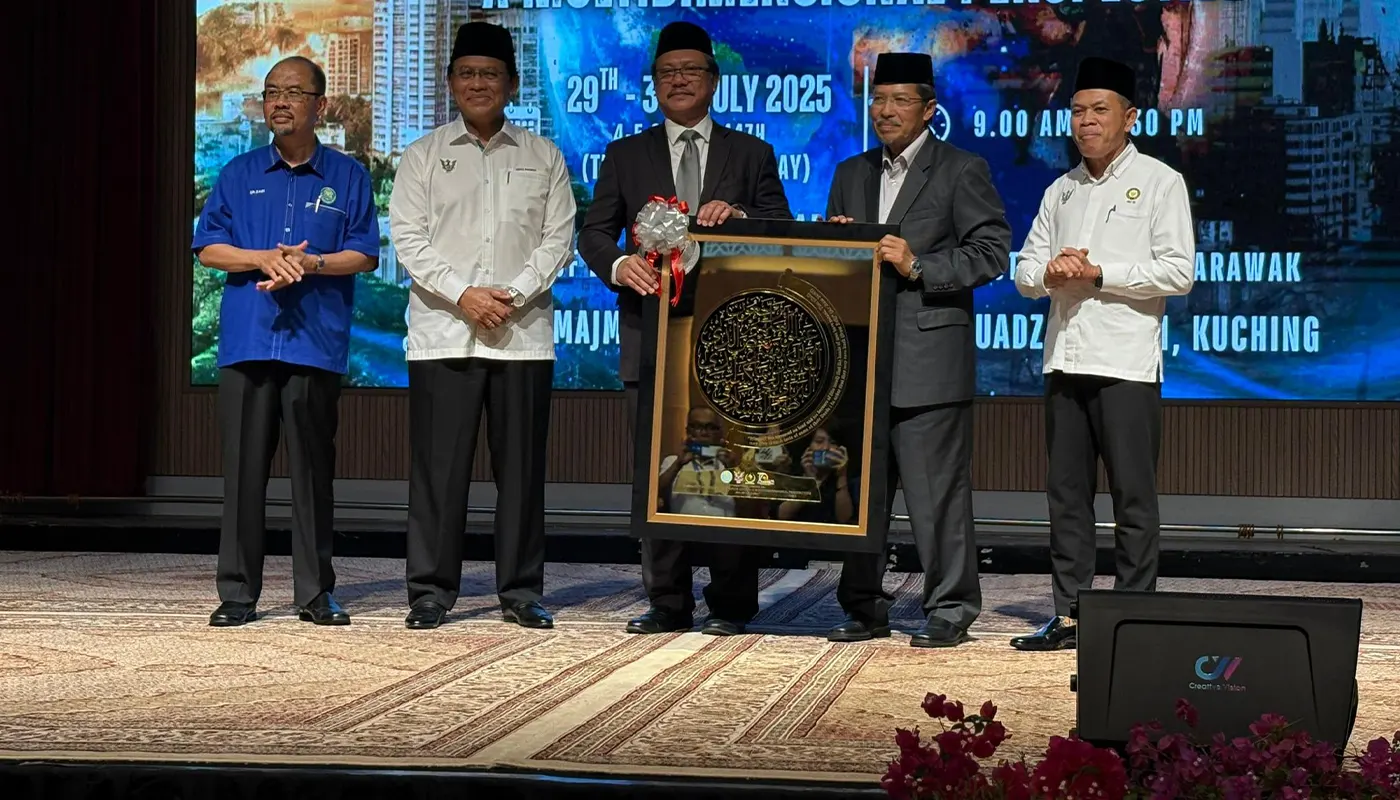
KUCHING: Sarawak has emerged as one of the pioneering states in Southeast Asia to adopt a dual-solution approach—merging nature-based and technology-based strategies—to address the intensifying global climate crisis.

According to Datuk Dr Hazland Abang Hipni, Deputy Minister of Energy and Environmental Sustainability, this innovative strategy is central to the state’s long-term sustainability vision and is implemented through the newly established ministry he has led since 2022.
The initiative reflects the foresight of Sarawak Premier, Datuk Patinggi Tan Sri (Dr) Abang Abdul Rahman Zohari Tun Datuk Abang Openg, who began laying the foundation for this effort nearly seven years ago.
“Our Premier had the vision years ago, and today we are executing a climate mitigation agenda based on both natural resources and advanced technology,” Dr Hazland stated during the closing ceremony of the International Seminar on Humanity & Climate Change Crisis at the Sarawak Islamic Complex Hall on Wednesday.
Sarawak’s strength lies in its abundant forest coverage—approximately 62% of the state’s 12.5 million hectares—which acts as a natural carbon sink. The state also holds immense potential in offshore carbon storage, with the seabed estimated to accommodate up to 9 billion tonnes of carbon, bringing its total carbon storage capacity close to 10 billion tonnes.
On the technology front, Sarawak is a regional leader in renewable energy, particularly hydroelectric power. The journey began with the Batang Ai Dam in 1985 and has since expanded with major projects like the Murum, Bakun, and Baleh dams—now the foundation of Sarawak’s clean energy economy.
Dr Hazland also outlined four core pillars essential to the state’s climate strategy: legal and policy frameworks, technical capacity, sustainable finance, and human capital development.
He noted that the state is in the process of launching a “Green Endowment” fund to support sustainable financing, particularly under Islamic economic principles.
Additionally, Sarawak is actively training a green workforce in sectors such as Carbon Capture, Utilisation and Storage (CCUS), methanol, and bioenergy.
The minister highlighted Sarawak’s leadership in policy development, pointing out that the state now has a comprehensive Hydrogen Economy Blueprint, a Green Economy Policy, and a Wellbeing Economy Policy—making it the first in the world to implement such detailed frameworks.
He concluded by urging stakeholders to use the seminar as a launching point for stronger global cooperation in tackling climate change.
