



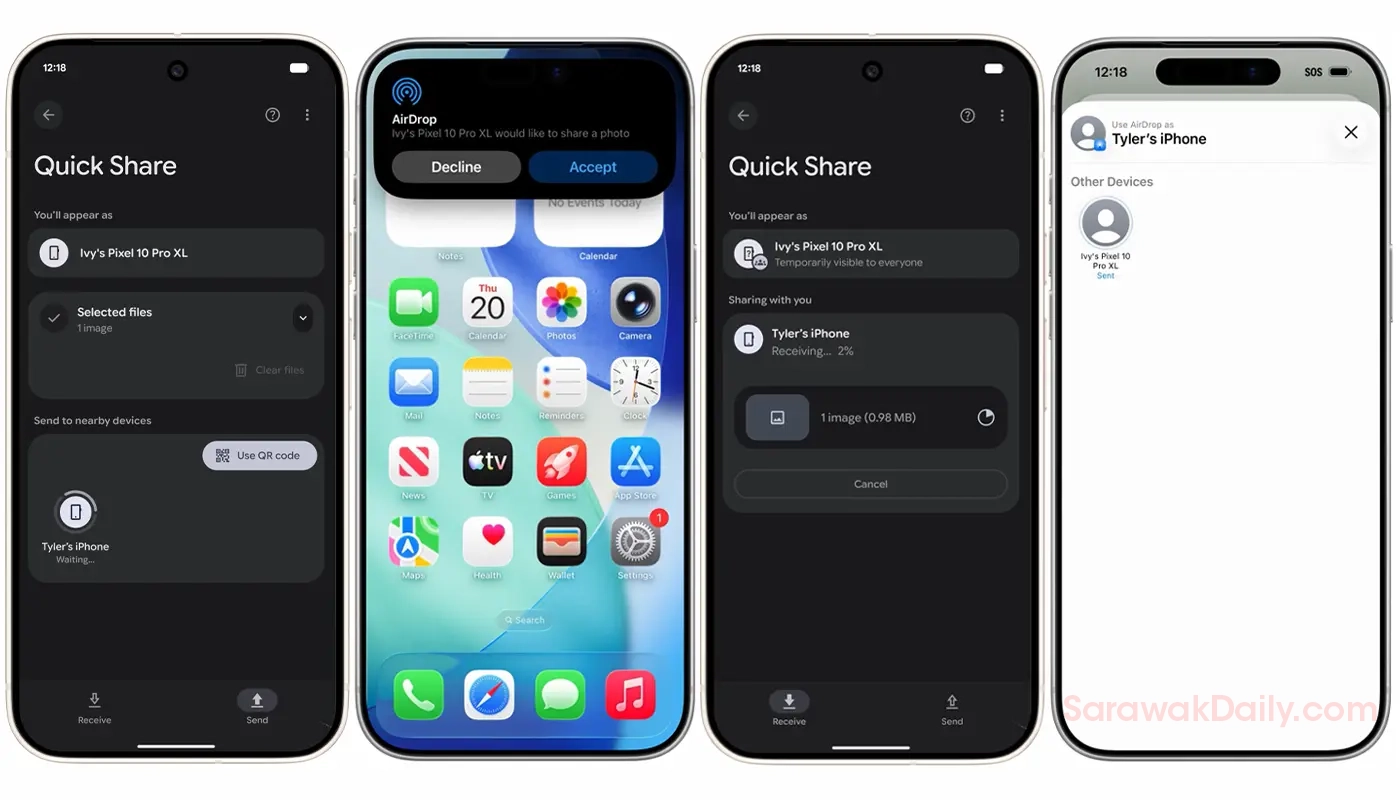
The long-standing digital divide between Android and Apple users has finally been bridged, marking a significant milestone in smartphone interoperability. In a groundbreaking development that has captured the attention of the tech world as of late 2025, Google has officially updated its Quick Share protocol to communicate directly with Apple’s AirDrop system. This integration effectively ends the era of frustrating workarounds for cross-platform file transfers.

For over a decade, sharing high-quality photos, videos, or documents between an iPhone and an Android device required third-party apps, cloud links, or messaging services that often compressed media quality.
However, Google’s latest engineering feat allows specific Android devices to detect and send files to iPhones as if they were native Apple devices. The feature has debuted on the new Google Pixel 10 series, with plans to expand to other Android manufacturers shortly.
According to reports from major tech outlets, this interoperability was achieved through Google’s independent engineering rather than a formal partnership with Apple. The system functions by mimicking the protocols AirDrop uses to discover devices.
For the transfer to work, an iPhone user simply needs to set their AirDrop receiving mode to ‘Everyone for 10 Minutes’. Once enabled, the Android device identifies the iPhone nearby, allowing for a seamless peer-to-peer transfer without the need for an internet connection.
Security remains a paramount concern for both ecosystems, and Google has addressed this by building the new functionality using the memory-safe programming language, Rust.
The company emphasizes that the connection is strictly peer-to-peer, meaning files are not routed through any external servers or the cloud, preserving the privacy and encryption standards users expect from local sharing tools.
While currently exclusive to the Pixel 10 lineup, the technology is poised for widespread adoption. Qualcomm has confirmed that the capability will be enabled on future devices powered by Snapdragon chipsets.
This suggests that flagship phones from manufacturers like Samsung, Xiaomi, and OnePlus will likely gain AirDrop compatibility in upcoming software updates, effectively universalising local file sharing across the mobile industry.
Industry analysts suggest this move may have been accelerated by regulatory pressures in the European Union, which has been advocating for greater interoperability between gatekeeper platforms. Regardless of the motivation, the result is a substantial win for consumer convenience.
The ‘walled garden’ that once isolated Apple devices is now open, allowing families and colleagues to share memories and data instantly, regardless of the logo on the back of their phone.
