




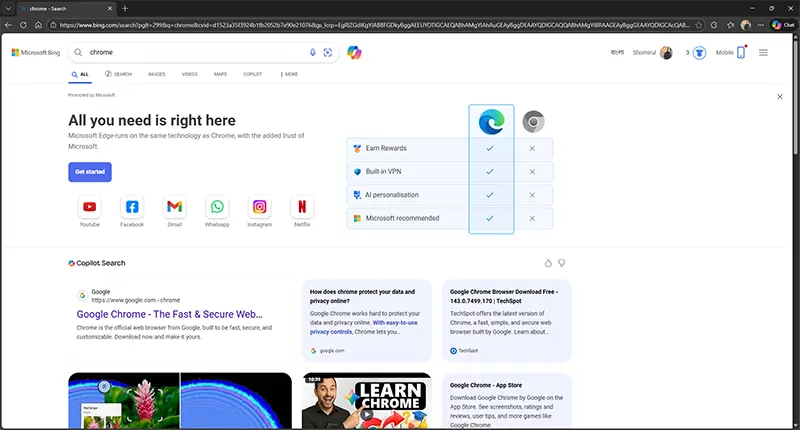
Microsoft has introduced a new tactic to discourage users from downloading Google Chrome, updating its messaging within Edge to emphasise security rather than performance or compatibility.

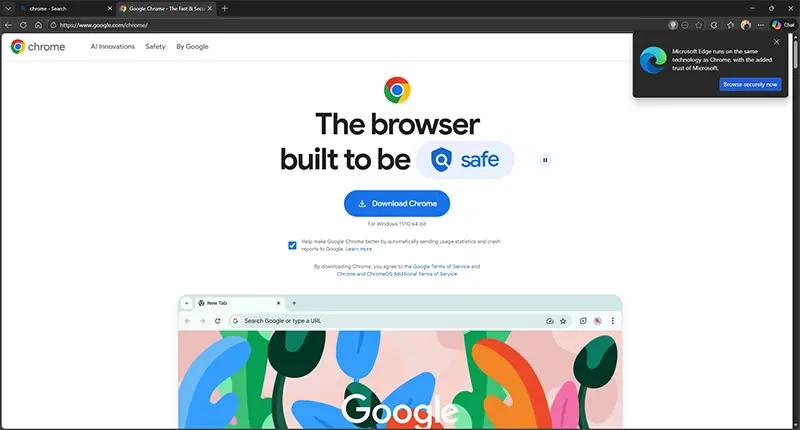
According to reports from Windows Report, users visiting the Chrome download page in Microsoft Edge are now greeted with a banner highlighting Edge’s built-in safety features.
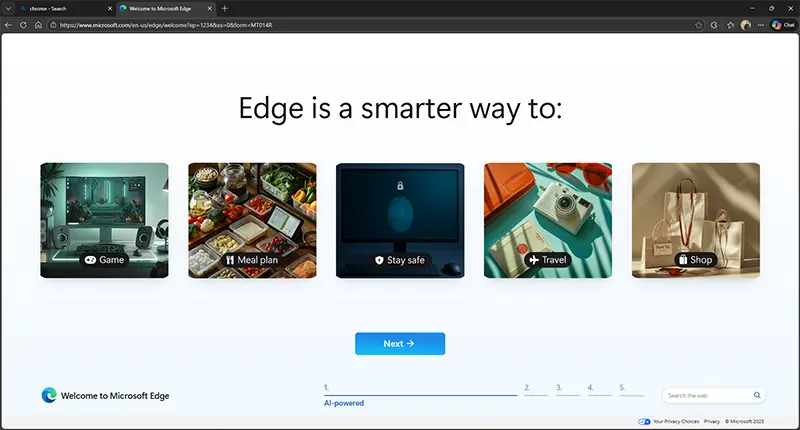
The message promotes Edge as an “all-in-one option” offering private browsing, password monitoring, and protection against online threats. Clicking the banner directs users to a newly created Online Safety page on Microsoft’s website.
This marks a shift from Microsoft’s previous campaigns, which often stressed that Edge shares the same Chromium foundation as Chrome, but with added enhancements.
This time, the focus is squarely on security, echoing Apple’s long-standing Safari versus Chrome messaging centred on privacy and tracking.
The move has drawn criticism from the Browser Choice Alliance, which includes Google Chrome among its members.
The group accused Microsoft of “pushing misleading messages about browsing security to interfere with users’ choices,” urging the company to “end its campaign to undermine consumer choice and lock out competing browsers.”
Security concerns around Chrome remain a prominent issue. Cybersecurity News reported that Google patched eight critical zero-day vulnerabilities this year, with CVSS scores averaging 8.5.
These flaws were actively exploited by sophisticated threat actors, including state-sponsored groups and surveillance vendors.
However, experts note that many of Chrome’s vulnerabilities also affect Microsoft Edge, given their shared Chromium base. This week, Google disclosed two high-severity memory vulnerabilities in Chrome.
Microsoft acknowledged the same flaws in Edge, stating it was “actively working on releasing a security fix.” At the time of writing, Edge updates lagged Chrome’s patches by at least 48 hours.
The debate underscores the complexity of browser security. While Microsoft frames Edge as a safer choice, critics argue that the company’s messaging oversimplifies the issue and risks misleading users.
With both Chrome and Edge subject to similar vulnerabilities, the competition between the two browsers remains less about technical differences and more about user trust and corporate strategy.
Sources: Windows Report, Cybersecurity News, Microsoft Release Notes, Forbes
