



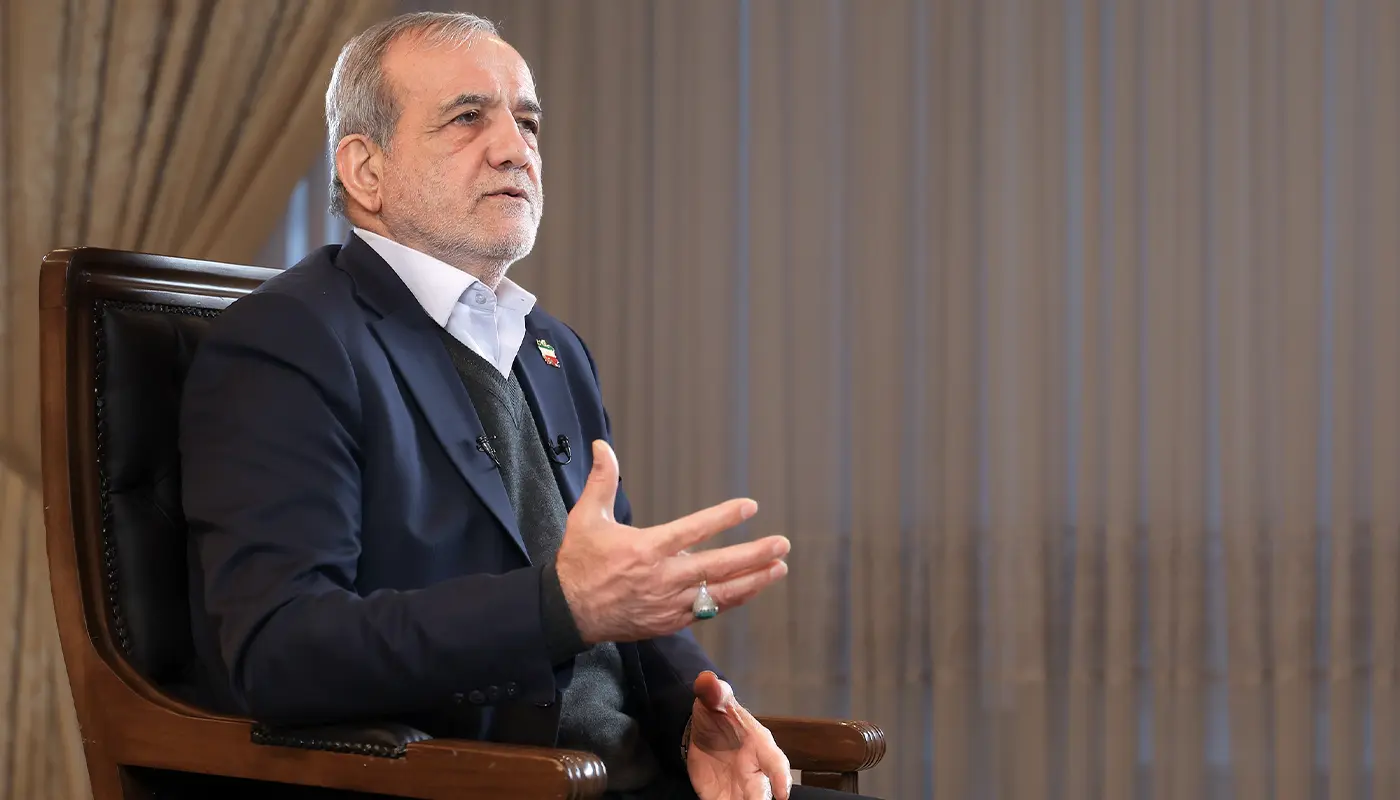
Iranian President Masoud Pezeshkian has intensified rhetoric against Western powers, declaring that his nation is engaged in a “full-fledged war” with the United States, Israel, and Europe.

His remarks, published on the official website of Supreme Leader Ayatollah Ali Khamenei, underscore growing hostilities in the region and highlight Tehran’s perception of being besieged on multiple fronts.
Speaking in an interview, Pezeshkian stated: “In my opinion, we are in a full-fledged war with America, Israel and Europe. They do not want our country to stand on its feet.”
He stated western governments of targeting Iran through economic sanctions, political isolation, cultural pressure, and military threats.
The president compared the current situation to the Iran-Iraq war of the 1980s, but described today’s confrontation as more complex, involving multidimensional tactics rather than direct battlefield clashes.
The comments arrive at a sensitive moment. Israeli Prime Minister Benjamin Netanyahu is scheduled to meet US President Donald Trump in Washington, a summit expected to focus heavily on Iran’s nuclear programme and regional influence. The timing of Pezeshkian’s remarks appears intended to send a strong message ahead of those discussions.
Tensions have been steadily rising since June 2025, when Israel and the US carried out strikes against Iranian targets. In September, France, Germany, and the United Kingdom reimposed United Nations sanctions on Tehran, citing concerns over its nuclear activities.
Pezeshkian warned that any renewed military action would be met with a “more decisive response,” insisting that Iran’s armed forces are now stronger in terms of manpower and equipment than during the summer conflict.
Observers note that the president’s declaration marks a shift from what analysts previously described as a “shadow war” between Iran and its adversaries.
By framing the confrontation as an open and total conflict, Tehran is signalling both defiance and readiness to take action if provoked.
Regional analysts caution that such rhetoric could further destabilise the Middle East, where proxy battles and diplomatic standoffs already threaten fragile stability.
Iran’s leadership has long identified western powers of undermining its sovereignty, but Pezeshkian’s latest remarks suggest a heightened sense of urgency.
His assertion that Iran is stronger than before may be aimed at reassuring domestic audiences while deterring external threats.
However, critics argue that the country’s economy remains under severe strain due to sanctions, raising questions about its capacity to sustain prolonged confrontation.
The coming days will be crucial, as the Trump-Netanyahu summit could set the tone for future western policy towards Iran.
For now, Pezeshkian’s declaration of “full-fledged war” has added a new layer of uncertainty to an already volatile geopolitical landscape.
Sources: Al Jazeera, Jurist, Europeans24, Defense News
