



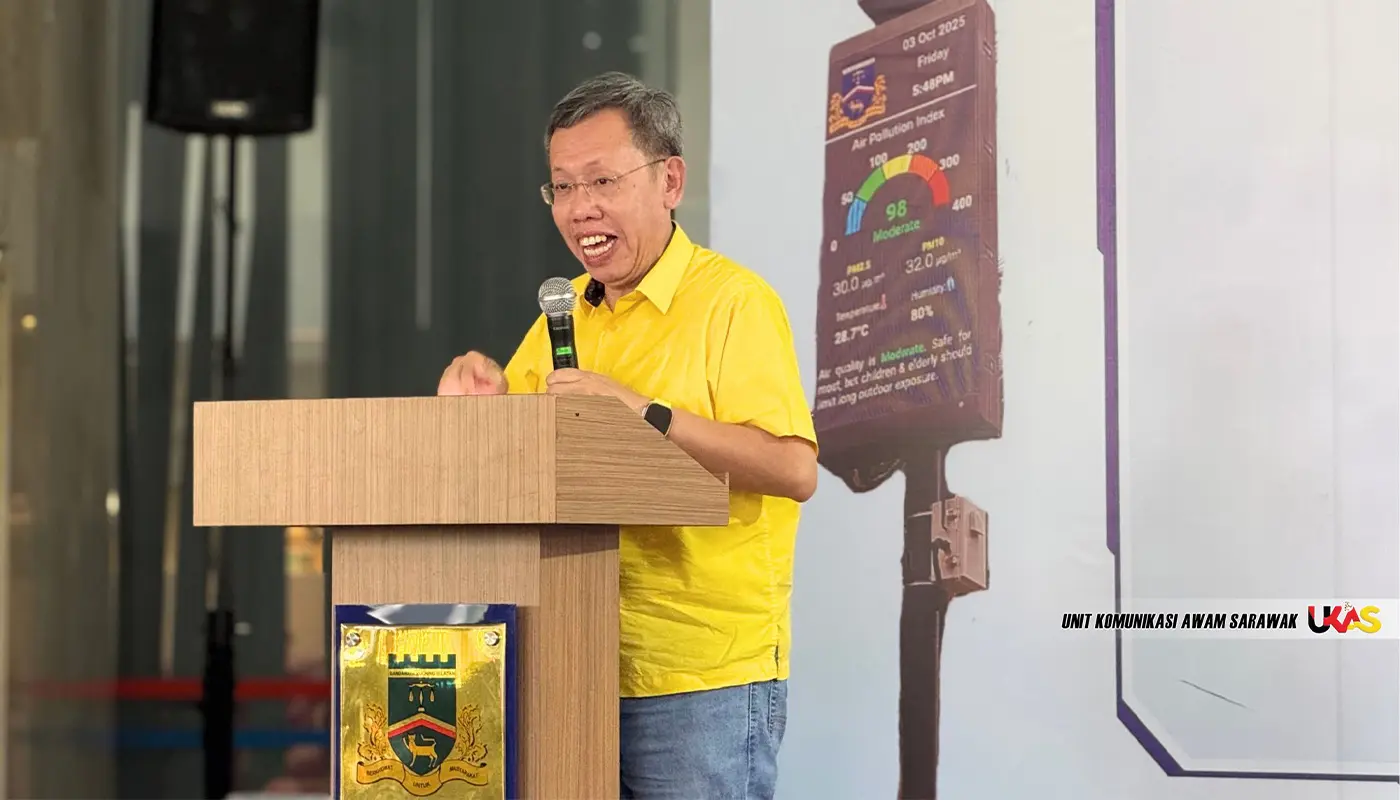
KUCHING – Sarawak has unveiled its pilot project for ESG Smart Poles, marking a significant step in the state’s ambition to build a sustainable and inclusive smart city.

The initiative was launched at Kuching South City Council (MBKS) and is seen as part of Sarawak’s broader nation-building agenda.
Deputy Premier and Minister for Public Health, Housing and Local Government, Datuk Amar Professor Dr Sim Kui Hian, officiated the launch, emphasising that Sarawak’s smart city development must be shaped by local realities rather than adopting external frameworks wholesale.
He noted that inclusivity, sustainability and long-term planning are central to ensuring that technological progress benefits all communities.
The ESG Smart Poles project aligns with Sarawak’s Post-COVID-19 Development Strategy (PCDS) 2030, which prioritises digitalisation, smart technology, environmental responsibility and shared prosperity.
Dr Sim highlighted that while Sarawak has achieved net zero status and contributes significantly to forest conservation, the state continues to face the effects of climate change.
He stressed that climate action must go beyond global rhetoric, focusing instead on safeguarding human lives and improving quality of life.
Rising temperatures and environmental changes, he explained, have direct consequences on public health, making localised solutions essential.
Smart city initiatives such as smart traffic lights, surveillance cameras, command centres and now ESG Smart Poles are designed to enhance safety, health and daily living.
The poles will provide real-time air quality monitoring, enabling residents to make informed decisions about their wellbeing.
“We want Kuching residents to be smart users who know how to use information and technology for their own health benefits,” Dr Sim said.
Sarawak has been an early adopter of smart infrastructure. Smart traffic lights were introduced in Kuching as early as 2016, with approximately 70 percent of the city’s traffic lights now upgraded. This continuity, Dr Sim explained, reflects the importance of long-term planning in governance.
The ESG Smart Poles launch also coincides with MBKS’s progress towards becoming one of the first city councils in Malaysia to achieve UNICEF Child Friendly City status. This recognition underscores Kuching’s commitment to inclusive, people-centred urban development.
The pilot project is part of a wider effort to integrate technology, environmental stewardship and public health into Sarawak’s vision of a smart, liveable city.
By embedding ESG principles into infrastructure, the state aims to balance modernisation with sustainability, ensuring that progress is both technologically advanced and socially responsible.
With initiatives like these, Sarawak continues to position itself as a leader in smart city innovation, demonstrating how homegrown solutions can address global challenges while remaining firmly rooted in local needs.
