



KUCHING – The Kuching South City Council (MBKS) has rolled out a pilot project featuring ESG Smart Poles in public parks, a move aimed at strengthening health awareness, safety and environmental management in the city.

The launch ceremony, held on Saturday, was officiated by Sarawak Deputy Premier Datuk Amar Professor Dr Sim Kui Hian, who also serves as Minister for Public Health, Housing and Local Government. His presence underscored the state’s commitment to people-centred and environmentally responsible urban development.
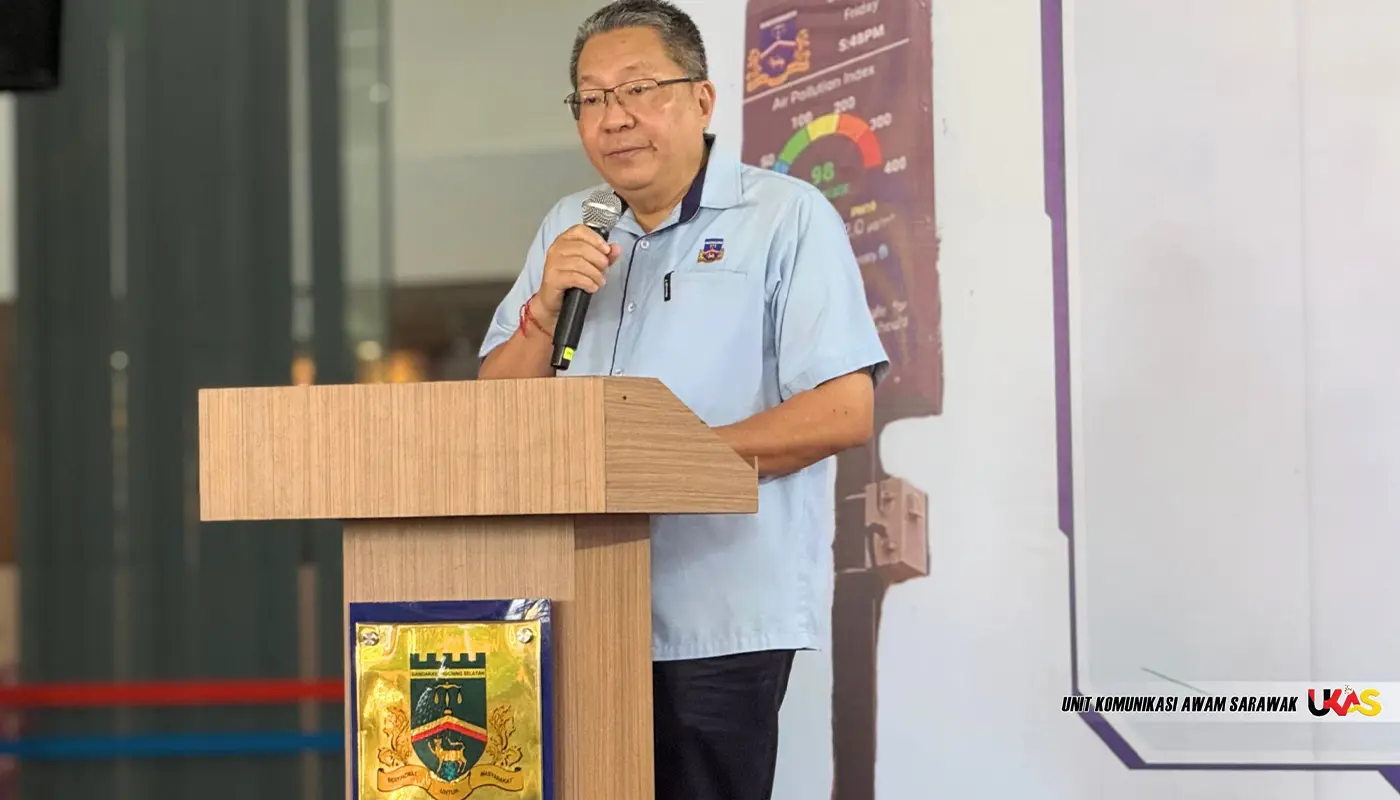
MBKS Mayor Dato Wee Hong Seng explained that the initiative is designed to make environmental data more accessible to the public. The smart poles display real-time air quality information, enabling residents to make healthier and safer choices during outdoor activities.
“With the launch of our ESG Smart Poles, we are making the invisible visible by providing clear and real-time information on air quality so that everyone can make better and safer choices for their health,” Dato Wee said.
Dato Wee emphasised that the project is not merely about technology but about enhancing the lives of families and communities who use public parks for recreation, exercise and social interaction.
He added that the ESG Smart Poles concept was previously showcased at the 2025 International Mayor Forum in Toyota City, Japan, where Kuching shared its practical application of environmental, social and governance principles with global city leaders.
The pilot phase involves the installation of two smart poles at Kuching Park and the Marine Park, making MBKS the first local authority in the city to openly provide real-time air quality data in public spaces.
The poles monitor indicators such as PM2.5, carbon dioxide, temperature and humidity. They are also equipped with CCTV cameras and panic buttons to enhance public safety.
Integration with MBKS platforms including i-PICO and i-BIVAC ensures that all data is linked to the MBKS Smart City Command Centre. This allows for improved analysis of cleanliness, waste management and air quality, while supporting faster and more effective city planning and response.
Dato Wee expressed gratitude to PlanMalaysia for funding the installation, describing the collaboration between federal agencies and local councils as a strong example of delivering tangible benefits to the public.
He further noted that the initiative aligns with the United Nations Sustainable Development Goals (SDGs), particularly those promoting good health, sustainability, climate action and strong governance.
Ultimately, the project is expected to improve the quality of life for Kuching residents while reinforcing the city’s reputation as a forward-looking, sustainable urban centre.
The ESG Smart Poles project reflects Sarawak’s broader vision of integrating technology, environmental responsibility and public health into everyday life, positioning Kuching as a model for smart and sustainable city development.
