



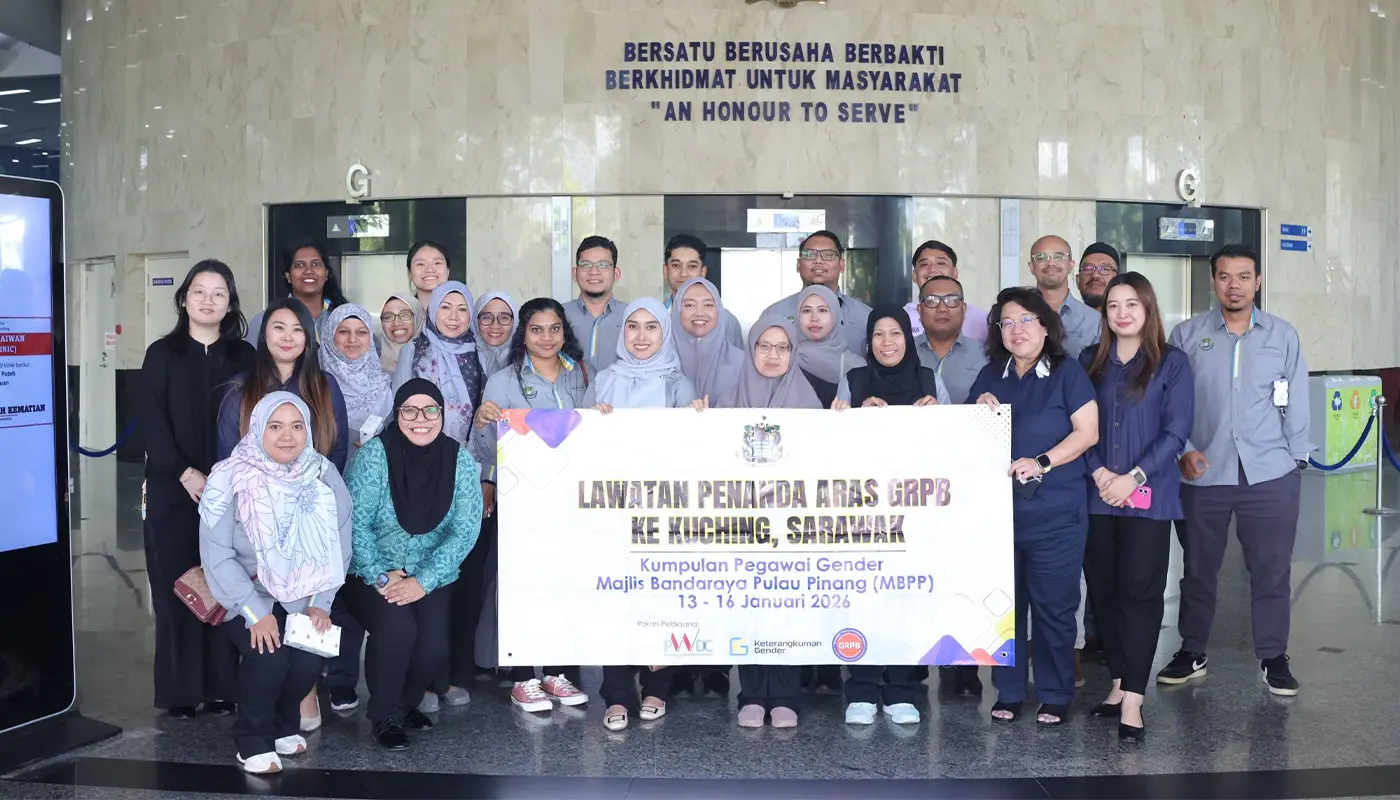
KUCHING – The Kuching South City Council (MBKS) welcomed a delegation from the Penang City Council (MBPP) and the Penang Women’s Development Corporation (PWDC) as part of its ongoing efforts under the Child Friendly Cities Initiative (CFCI).

MBKS, recognised by UNICEF as the first local authority in Borneo to achieve CFCI Candidate City status, shared its experiences in implementing child-centred policies and programmes. The council highlighted strategies that place children at the core of urban planning, emphasising inclusivity, safety, and community engagement.
The sharing session, conducted by MBKS’s Senior Assistant Secretary, outlined both successes and challenges encountered during the implementation of the CFCI framework. The discussion provided valuable insights into how local authorities can adapt international standards to local contexts while ensuring meaningful participation from communities.
As part of the visit, the delegation toured Ausome Park, Sarawak’s first outdoor autism-friendly playground. The facility reflects MBKS’s commitment to inclusivity, offering children of all abilities safe and supportive spaces to play and interact.
The visitors also viewed the ESG Smart Pole, a smart city innovation designed to measure air quality and support environmental monitoring. This technology demonstrates MBKS’s dedication to sustainability and modern urban solutions that benefit residents across Kuching South.
The exchange offered a platform for MBKS, MBPP, and PWDC to share best practices, ideas, and inspiration in advancing child-friendly and inclusive city initiatives. Delegates noted the importance of collaboration between local authorities in building frameworks that support healthier, safer, and more nurturing environments for children.
MBKS reaffirmed its commitment to strengthening inter-city partnerships and continuing its journey towards creating a city that embraces all generations. The council emphasised that initiatives such as CFCI and age-friendly programmes are essential in shaping communities that are resilient, inclusive, and sustainable.
