



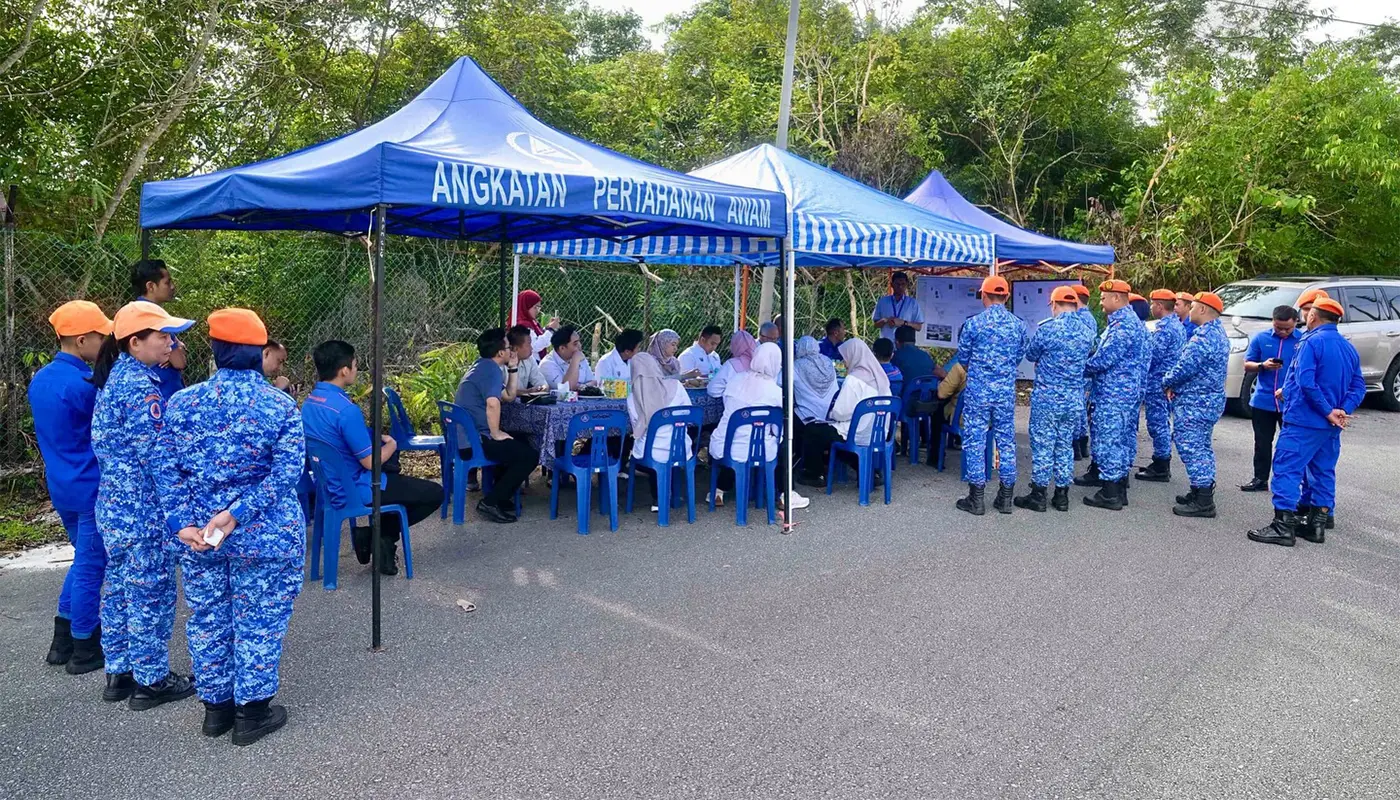
SIBU, 13 April 2026 – Development works in Sibu are being closely monitored to ensure smooth progress and timely delivery, with a recent site visit conducted by YBhg. Datuk Abd Shukor bin Mahmood, Senior Deputy Secretary-General (TKSUK) of the Prime Minister’s Department (JPM).

The monitoring session focused on projects under JPM’s agencies in Sibu, including the proposed construction of the Sibu Civil Defence Force (APM) District Office Open Hall in the Seduan Land District.
Approved under the 12th Malaysia Plan (RMK12) Rolling Plan 4 (RP4) for 2024, the project is being implemented by the Sarawak Public Works Department.
Officials noted that the project faces challenges related to design and site conditions, as the land sits below the main road level.
Despite these issues, the Letter of Acceptance (SST) is expected to be issued to the appointed contractor by September 2026. The site, covering 3.79 acres, belongs to the Federal Land Commissioner (PTP).
The visit also included inspection of upgrading works at Wisma Persekutuan Sibu, which involve improvements across Blocks 1, 2, and 3.
The upgrades cover essential facilities such as the public address system, lighting, toilet amenities, piping, sewage, and internal renovations.
These enhancements are aimed at creating a more efficient and conducive working environment for civil servants and visitors.
The monitoring initiative reflects the government’s commitment to ensuring that development projects in Sibu are executed effectively and meet the needs of the community.
By addressing challenges early and maintaining oversight, authorities aim to strengthen infrastructure delivery and improve public services.
Such visits are part of broader efforts to enhance accountability and transparency in project implementation.
They also highlight the importance of collaboration between federal and state agencies in overcoming technical and logistical hurdles.
With the Civil Defence Force project and Wisma Persekutuan upgrades underway, Sibu is expected to benefit from improved facilities that support both emergency response and administrative functions.
These developments form part of Sarawak’s wider infrastructure agenda, which seeks to balance urban growth with rural and district-level improvements.
