



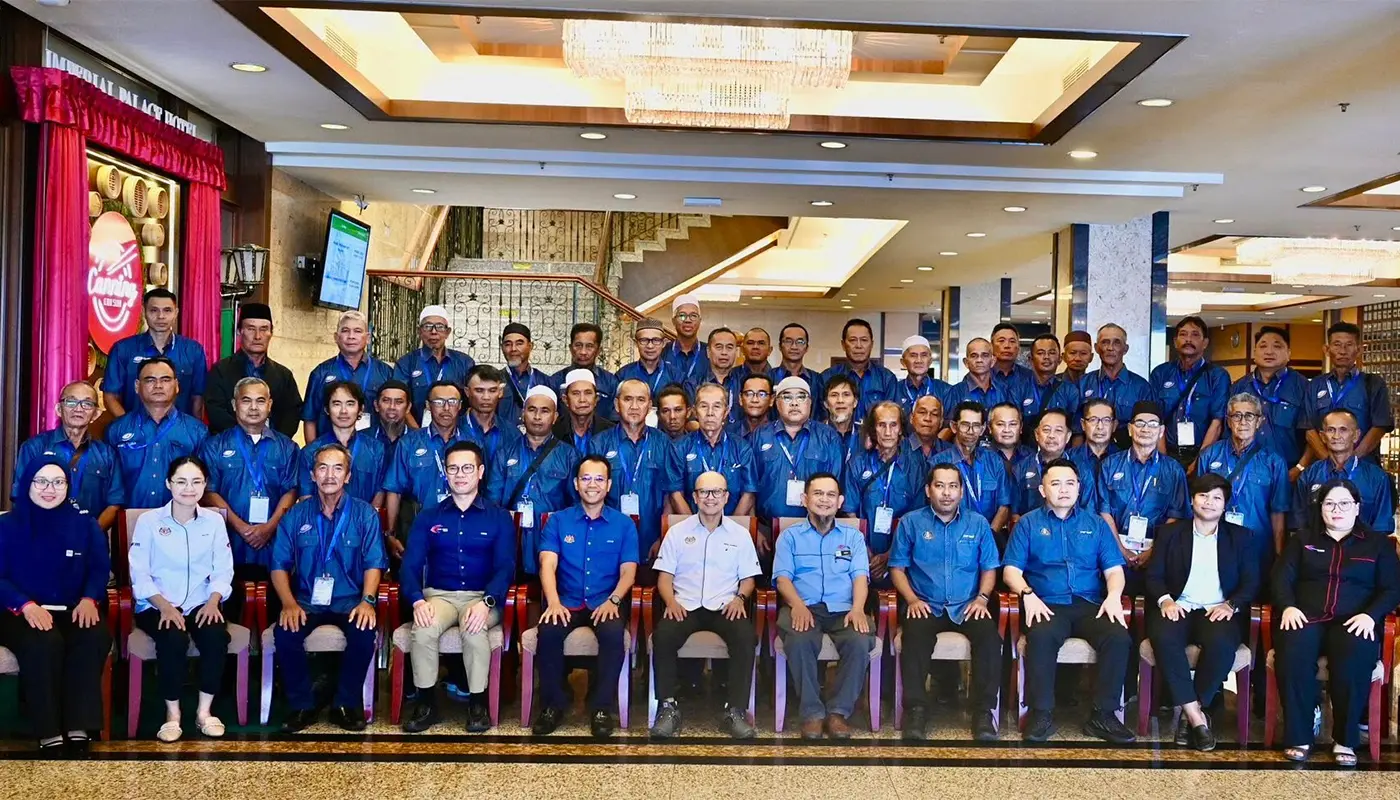
MIRI – The Sarawak Marine Fisheries Department held the Appointment Ceremony for the Head of the Fisheries Network (KJP) Region III on 15 April, marking another step in strengthening the state’s fisheries sector.

The ceremony, hosted at the Imperial Palace Hotel in Miri, follows earlier appointments in Region II (Sibu) earlier this month.
A total of 54 Fisheries Network Leaders received letters of appointment for the 2026–2029 term, covering Miri, Bintulu, Limbang and Lawas.
These leaders will serve as vital links between government agencies and fishing communities, ensuring that information, policies and assistance reach grassroots operators effectively.
The event was officiated with the symbolic beating of a gong by Abdul Rahman bin Abdul Wahab, signifying the official start of the new leadership cycle and reinforcing the commitment to strengthen the role of KJP leaders as community representatives.
The appointments are aligned with Malaysia MADANI’s aspirations, particularly in promoting sustainability and improving the well-being of fishing communities.
KJP leaders are expected to act as facilitators, information providers and feedback channels, helping to bridge logistical challenges across Sarawak’s vast geography.
Participants were also given training and input from strategic partners such as the Malaysian Fisheries Development Board (LKIM) and Agrobank.
These sessions covered resource management, legal compliance and safety at sea, equipping leaders with the knowledge needed to support their communities.
Officials highlighted that the role of KJP leaders is increasingly important in addressing challenges such as climate change and declining fish stocks.
Leaders are encouraged to act as proactive agents of change, engaging closely with communities to understand their needs and provide practical solutions.
The Sarawak Marine Fisheries Department reaffirmed its commitment to supporting the network through continuous training, technical guidance and development programmes.
The department stressed that these efforts are essential to ensure the fishing sector remains competitive, sustainable and resilient for future generations.
The ceremony not only marked the formal appointment of leaders but also symbolised the trust placed in them to guide and strengthen the fishing community.
It is expected that the new leadership will play a key role in advancing the sector and safeguarding the livelihoods of fishing families across Region III.
