



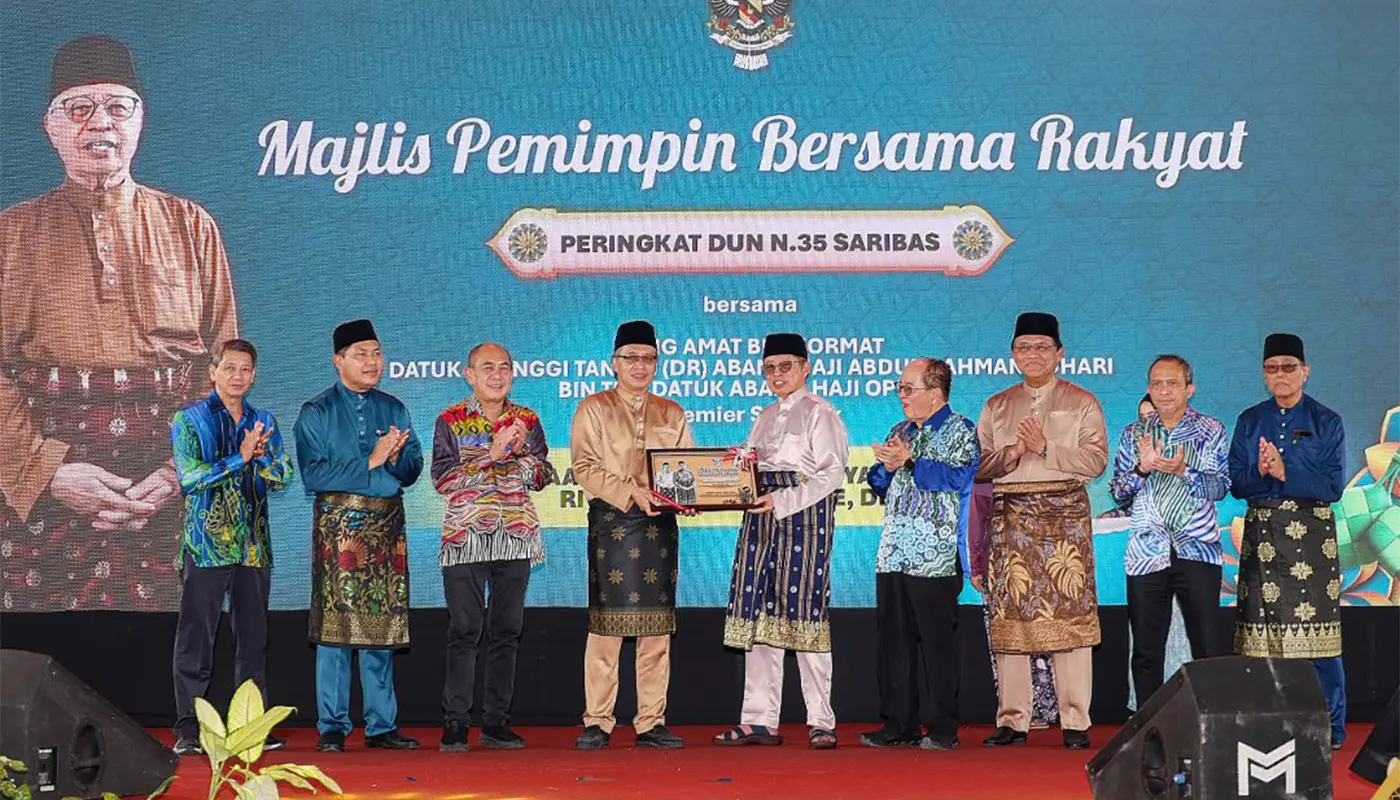
DEBAK – Sarawak is intensifying efforts to reshape its economic landscape by prioritising digital innovation, renewable energy and rural infrastructure development.

The initiative forms part of the Post-COVID-19 Development Strategy (PCDS) 2030, which outlines economic prosperity, social inclusion and environmental sustainability as its core pillars.
Premier Datuk Patinggi Tan Sri (Dr) Abang Haji Abdul Rahman Zohari bin Tun Datuk Abang Haji Openg emphasised that Sarawak’s growth trajectory is no longer reliant solely on traditional resources such as oil.
Instead, the state is diversifying into technology-driven sectors and alternative energy sources to ensure long-term resilience.
“We are no longer dependent on oil alone. We are shifting to hydropower, solar, biomass and gas turbines. This is important so that our economy is more sustainable and not affected by changes in world oil prices,” he said during a Leaders’ Meeting with the People at DUN Level N.35 Saribas.
The Premier highlighted that the digital economy has become a central driver of Sarawak’s transformation, reflecting global trends in technology adoption.
He noted that scepticism towards digitalisation has faded as smartphones and cashless payments have become part of everyday life.
“In the past, people were sceptical about digital, but today everyone uses smartphones, including for payments via QR code. This shows that Sarawakians are able to adapt to new technology,” he explained.
Infrastructure development remains another key focus, with road and bridge projects significantly improving connectivity in rural areas.
The construction of new transport links has reduced travel time between Kuching and Debak to approximately two hours, enhancing accessibility and stimulating local commerce.
“When our infrastructure is completed, relationships become closer, the economy grows and retail businesses also benefit,” the premier added.
The PCDS 2030 strategy aligns with Sarawak’s broader ambition to position itself as a leader in sustainable development.
By investing in renewable energy, the state aims to reduce its dependence on volatile global oil markets while contributing to environmental protection.
Hydropower and solar projects are already underway, with biomass and gas turbine initiatives expected to further diversify the energy mix.
At the same time, digitalisation is opening new opportunities for entrepreneurs, small businesses and rural communities.
The adoption of e-commerce platforms, digital payments and online services is helping bridge the urban-rural divide, ensuring that communities across Sarawak can participate in the digital economy.
The Premier’s remarks underscore Sarawak’s determination to balance economic growth with sustainability and inclusivity.
With infrastructure projects strengthening rural networks, renewable energy powering future industries, and digitalisation driving innovation, Sarawak is positioning itself for a more resilient and prosperous future.
