



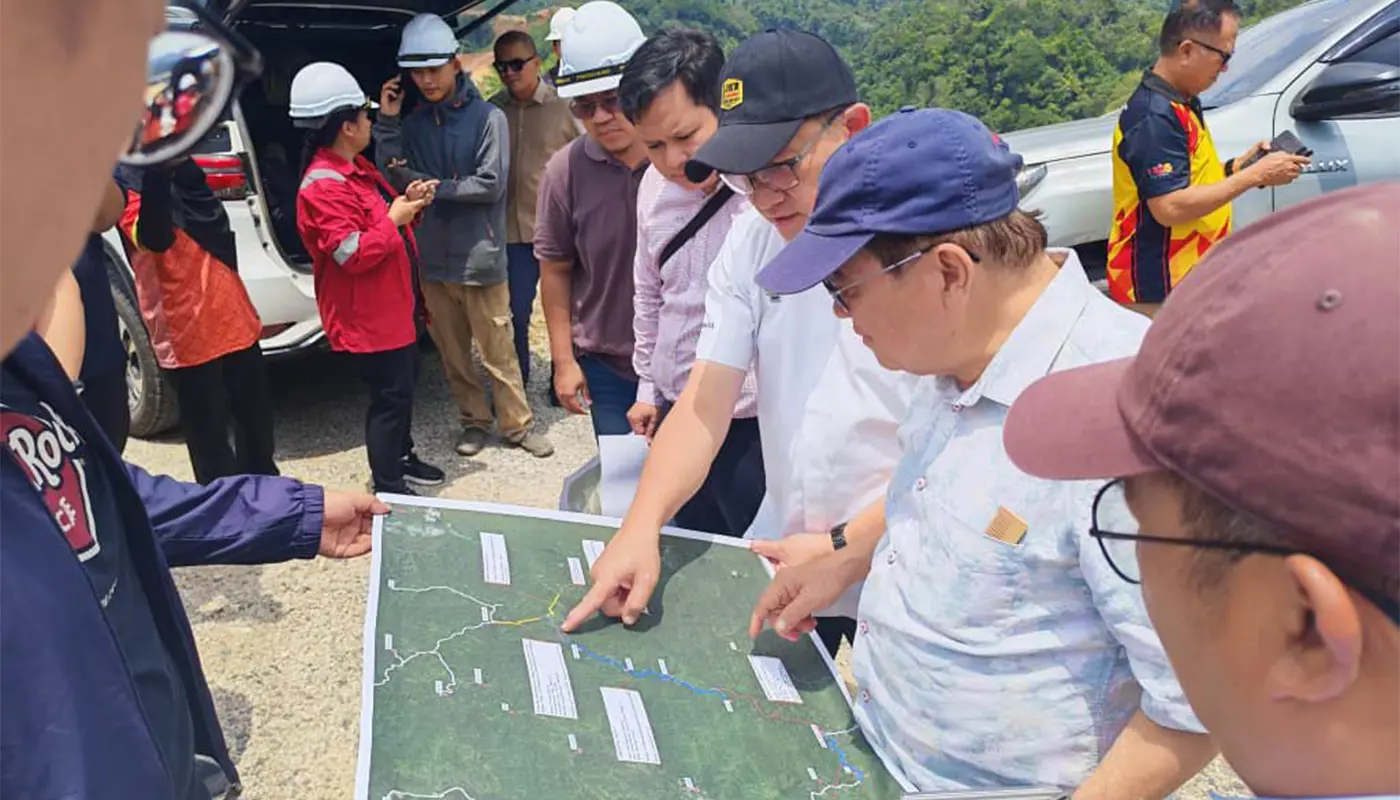
BETONG – Sarawak Deputy Premier Datuk Amar Douglas Uggah Embas conducted a working visit on 21 April 2026 to review progress on key rural infrastructure projects in Betong.

The initiative forms part of the state government’s wider effort to strengthen connectivity and improve living standards in rural communities.
During the visit, Uggah was briefed by Divisional Engineer Jason Ng Boon Tuan on the proposed Bukit Sadok road alignment project.
The plan involves constructing a 3.1 km road built to JKR R1 standards. Once completed, the route will provide safer and more efficient access for local residents while serving as the main link to the Rentap Fort Replica, a heritage site currently under construction.
The project is expected to enhance historical tourism in the region, adding cultural and economic value to Betong.
In addition, Uggah was updated on the ongoing construction of the Jalan Jambu Krampak–Rantau Layang road.
The 1.8 km stretch, also developed to JKR R1 standards, is actively being implemented and is scheduled for completion in October 2026.
This road will directly benefit several longhouses, including Ijok, Teguyu, Lempaong, Batu Pesok and Rantau Layang, by improving access to essential services and linking communities more effectively to the main road network.
Officials highlighted that these projects are designed not only to improve mobility but also to open up opportunities for agricultural expansion.
Enhanced connectivity is expected to support the cultivation of crops such as rubber, oil palm and pepper, thereby boosting local economies and raising household incomes.
The Deputy Premier emphasised that rural infrastructure development is central to the government’s vision of balanced growth.
By investing in roads and communication networks, the state aims to bridge the gap between urban and rural areas, ensuring that communities in remote regions enjoy equal access to opportunities and services.
The initiatives in Betong reflect Sarawak’s broader commitment to inclusive development, combining heritage preservation, tourism promotion, and agricultural advancement.
With improved infrastructure, residents are expected to benefit from safer travel, stronger economic prospects, and a higher quality of life.
