



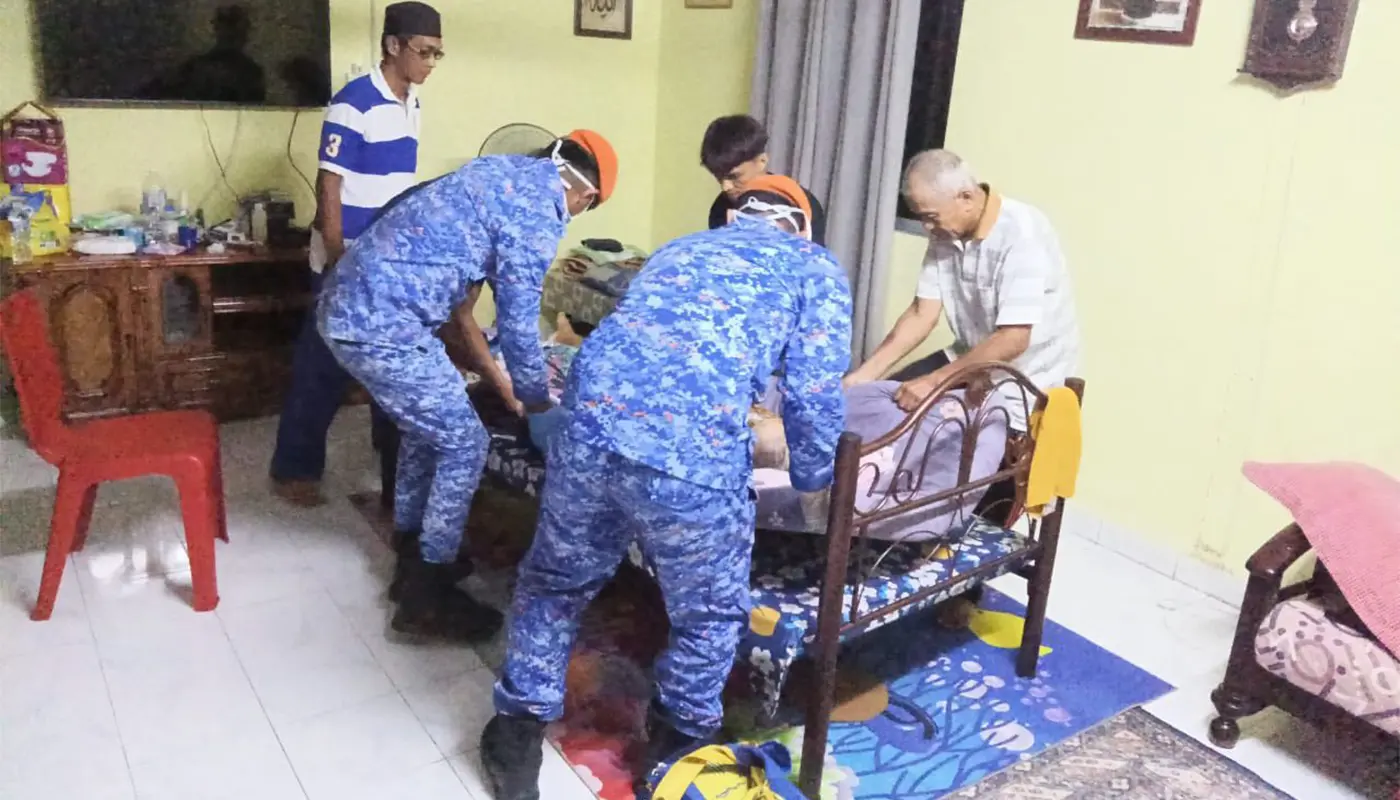
DEBAK – The Malaysian Civil Defence Force (APM) in Debak District responded swiftly to an emergency call on 26 April 2026, after being alerted to an elderly woman who was reported to be weak at her home.

The request for assistance came from a member of the public, prompting APM personnel on duty to move immediately to the scene.
Upon arrival, the team carried out a preliminary assessment of the woman’s condition, including monitoring her breathing, pulse rate, and overall physical state.
After stabilising her condition with appropriate emergency support, the officers carefully transferred the woman into an APM ambulance.
She was then transported to Debak Clinic under close supervision, with personnel monitoring her health throughout the journey.
The operation was completed successfully, with the victim arriving safely at the clinic to receive further medical treatment.
APM Debak highlighted that the quick and professional actions of its members ensured the patient was stabilised and delivered to healthcare staff without delay.
Cases such as this underline the crucial role of the Civil Defence Force in providing emergency support to communities, particularly in rural districts where access to immediate medical care can be limited.
The ability of APM teams to respond rapidly and deliver patients safely to clinics or hospitals is often vital in preventing further complications.
Community members are encouraged to contact emergency services promptly when faced with similar situations.
Authorities have stressed that early reporting allows trained personnel to intervene quickly, ensuring that vulnerable individuals receive the care they need.
The Debak incident also reflects the broader commitment of APM to safeguarding public welfare. Beyond disaster response and rescue operations, the force plays a significant role in health-related emergencies, bridging the gap between communities and medical facilities.
As Sarawak continues to strengthen its emergency response systems, the importance of coordination between residents and local agencies remains clear.
The Debak case serves as a reminder of how timely action and professional intervention can make a critical difference in ensuring public safety and wellbeing.
