



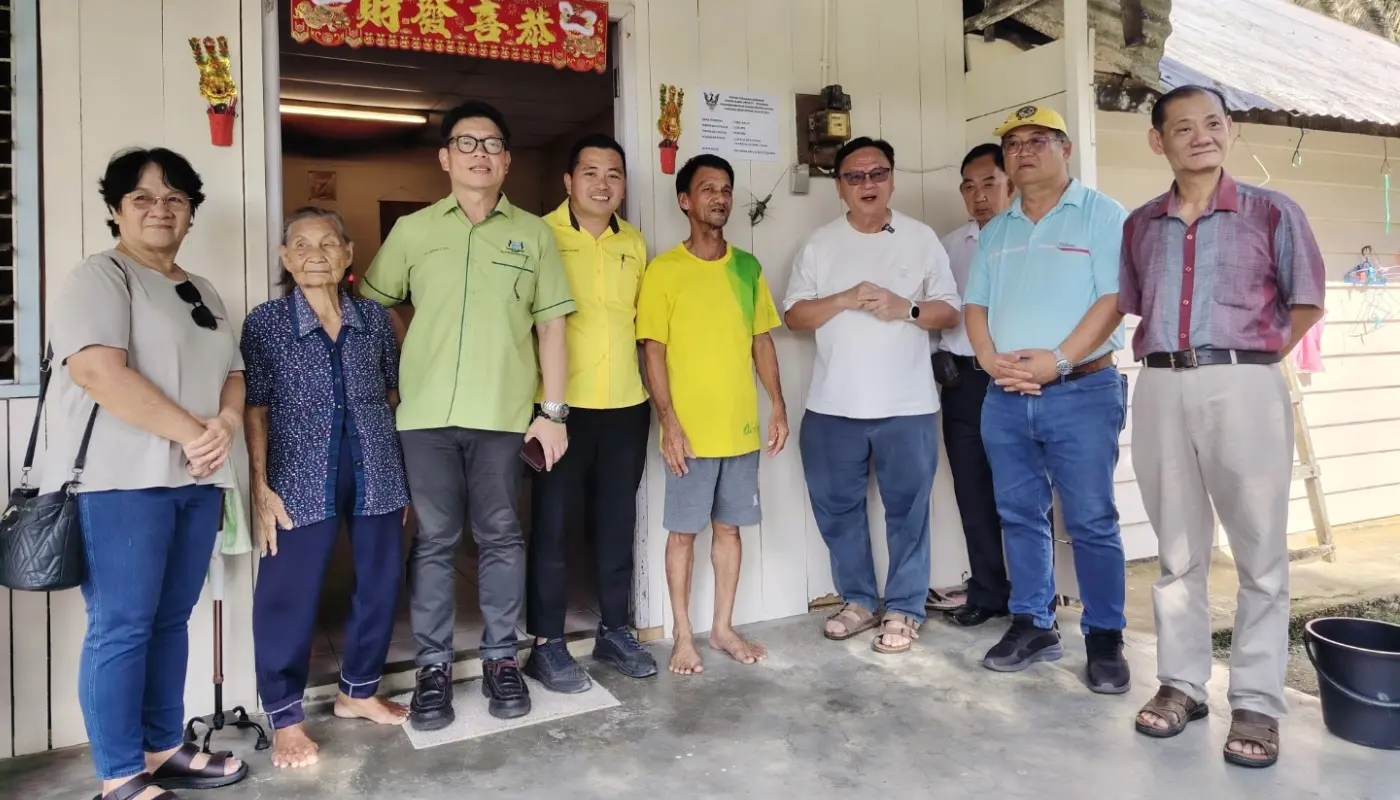
KUCHING – Efforts to improve living conditions for vulnerable households in Batu Kitang have received a boost with the allocation of RM15,000 under the Minor Rural Project (MRP).

The funding supports the Poor People’s Home Improvement Programme, which focuses on upgrading homes to make them safer and more comfortable.
Assemblyman for N13 Batu Kitang, YB Dato Ir Lo Khere Chiang, visited the site on 4 May to inspect the progress of the initiative.
He emphasised that the programme is designed to ease the burden of low-income families by providing them with improved housing facilities that meet basic standards of safety and comfort.
The Poor People’s Home Improvement Programme has been a key component of Sarawak’s broader community welfare agenda, targeting households that require urgent assistance.
By repairing and upgrading homes, the initiative aims to enhance the quality of life for residents while fostering a stronger sense of dignity and security.
Dato Ir Lo explained that the allocation reflects the government’s commitment to ensuring that development projects reach those most in need.
He noted that housing improvements are not only about physical structures but also about creating a healthier environment for families to thrive.
Community members have welcomed the support, highlighting that such programmes directly address pressing needs at the grassroots level.
For many, the upgrades mean safer living conditions, reduced risks from structural issues, and greater comfort for daily life.
The MRP scheme has long been recognised as a vital mechanism for delivering small-scale but high-impact projects across Sarawak.
From infrastructure upgrades to community facilities, the programme channels resources into areas that can make a tangible difference in people’s lives.
Dato Ir Lo reiterated that the initiative in Batu Kitang is part of a wider strategy to uplift communities and ensure that no group is left behind in the state’s development journey.
He expressed hope that the assistance would inspire greater community resilience and contribute to long-term social well-being.
The inspection visit underscored the importance of monitoring and ensuring that allocations are properly utilised.
With continued collaboration between government representatives and local communities, the programme is expected to deliver meaningful improvements for those who need them most.
