



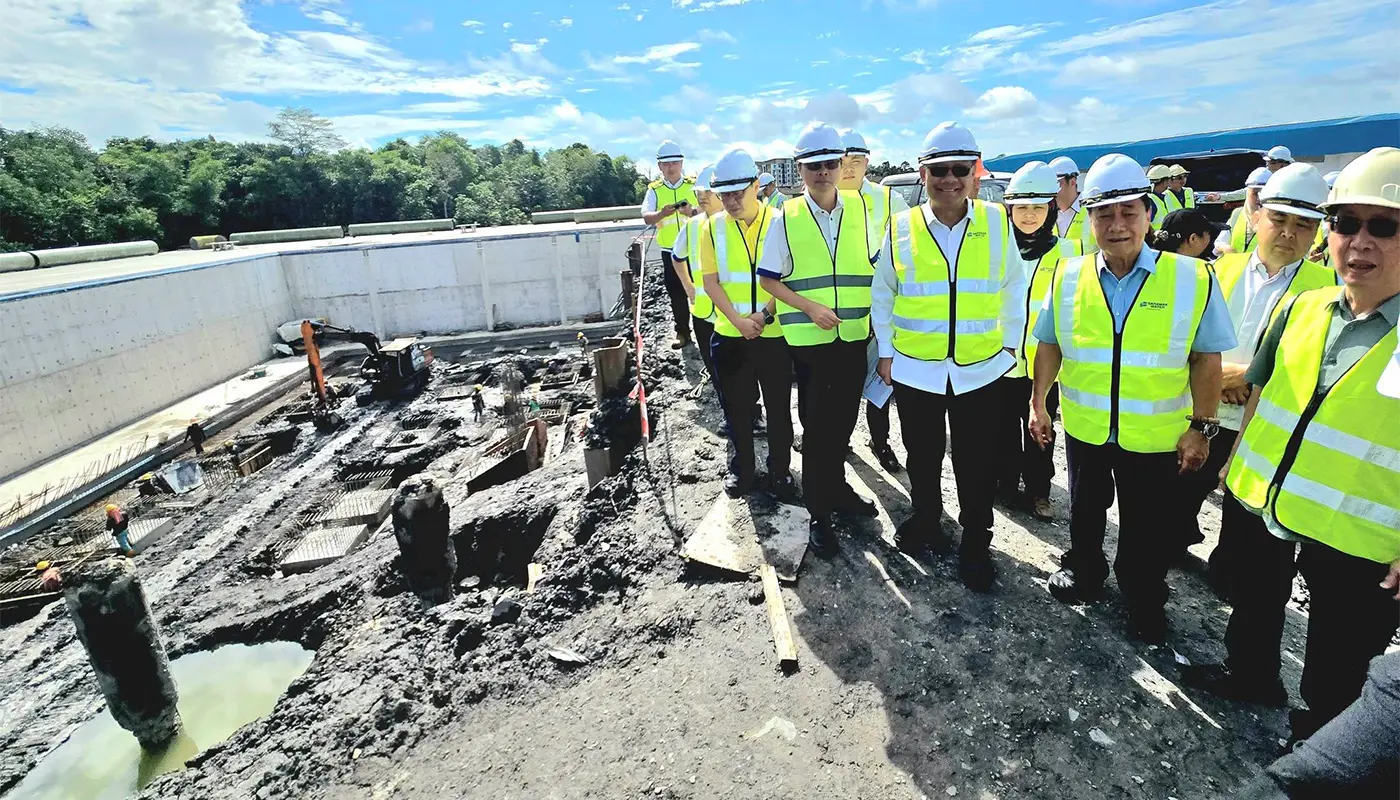
SIBU – The Salim Water Treatment Plant (LRA) upgrade project in Sibu is progressing ahead of schedule, with 68.24 per cent completion recorded as of early May.

The RM291.4 million project, fully funded by the Sarawak Government, is currently 4.39 per cent ahead of its planned timeline.
Sarawak Minister of Utilities and Telecommunications, YB Dato Sri Haji Julaihi bin Haji Narawi, shared the encouraging update during a site visit to the facility.
He confirmed that partial completion is expected by the end of 2026, covering raw water intake facilities, pipe installation and the construction of a new treatment plant capable of producing 150 million litres per day (MLD).
Once fully completed by mid-2027, the Salim LRA will double its capacity to 300 MLD. This expansion is projected to benefit approximately 350,000 residents across Sibu, Kanowit, Selangau, Maradong and Rassau, ensuring reliable water supply until at least 2036.
Acting Chief Executive Officer of Sarawak Water Sdn Bhd, Puan Malseni binti Jamal, emphasised that the initiative reflects the corporation’s commitment to strengthening water infrastructure and supporting future development in the region. She noted that the project is designed to meet growing demand while enhancing service reliability.
The programme also included a dialogue session with community leaders (KMKK) from the Sibu division, providing updates on water supply projects and addressing local concerns.
The engagement aimed to foster transparency and strengthen collaboration between government agencies and community representatives.
The Salim LRA upgrade is considered a high-impact project, not only for its scale but also for its role in supporting economic growth and improving quality of life.
By expanding capacity and modernising facilities, the project will help ensure that water supply remains sustainable and resilient in the face of rising demand.
The Sarawak Government reiterated its commitment to delivering efficient and reliable public utilities, with the Salim LRA project serving as a cornerstone of its long-term infrastructure strategy.
The initiative reflects the broader vision of empowering communities by ensuring access to essential resources.
