



SPAOH – The development trajectory for the Bukit Saban state constituency is undergoing a significant strategic shift. With the majority of essential infrastructure now in place, attention is turning towards bolstering economic activities and enhancing local income levels. This new phase aligns with the broader Post-COVID-19 Development Strategy (PCDS) 2030, which prioritises sustainable growth and job creation.

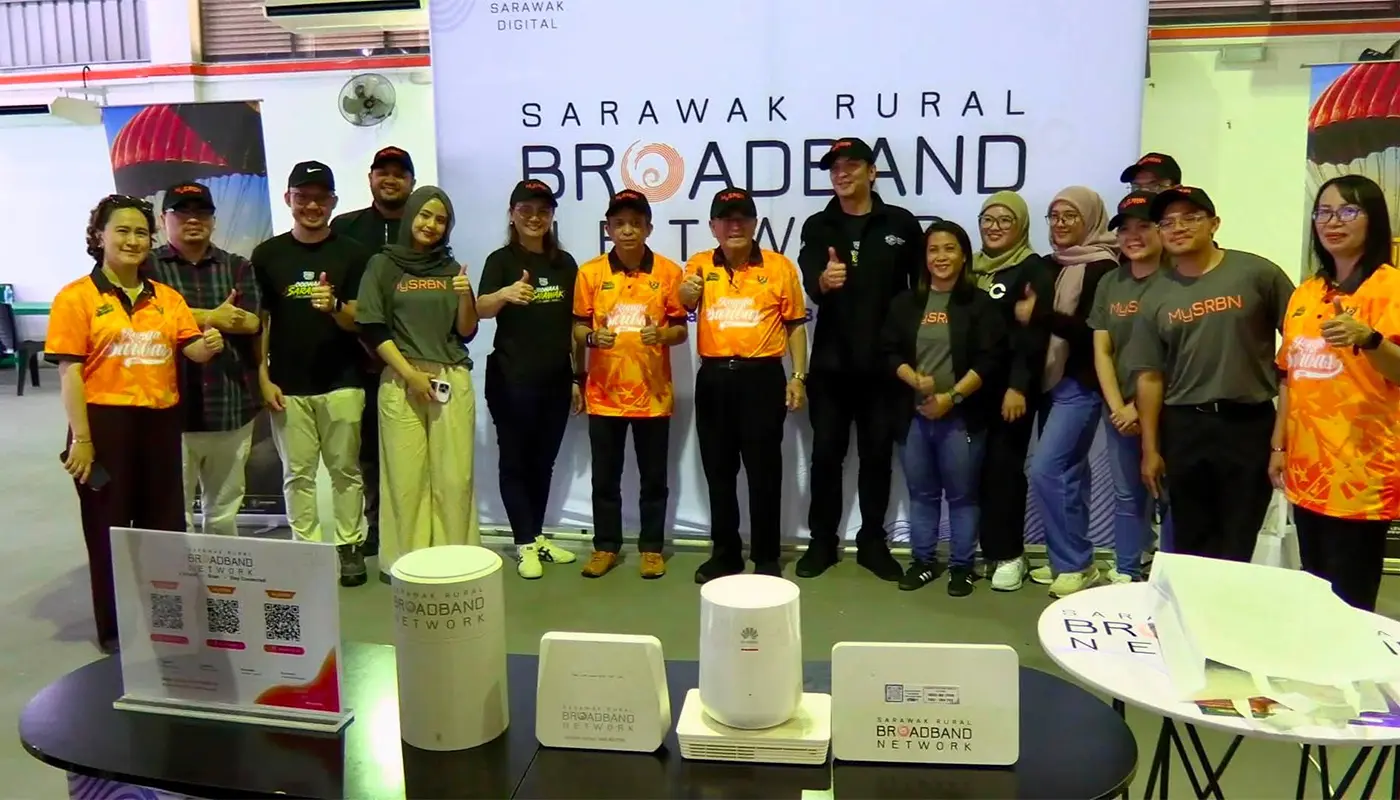
Datuk Amar Douglas Uggah Embas, the Sarawak Deputy Premier and Assemblyman for N.37 Bukit Saban, outlined this transition during a media engagement on Saturday. He was speaking after visiting the PUBG MOBILE OOOHAAA Sarawak Activation Tour at the Spaoh Multipurpose Hall. His comments also addressed recent social media discussions regarding the implementation of the Livestock Economic Enhancement Assistance Program (PPEP) in the area.
Uggah explained that the Betong Division Development Agency (BDDA) has allocated up to RM200 million for each state constituency within the division. This substantial funding allows Assemblymen to identify and execute projects that reflect the specific needs and priorities of their local communities. For Bukit Saban, the initial phase of development focused heavily on foundational elements.
“Each DUN receives an allocation of up to RM200 million and State Assemblymen (ADUNs) are given the space to determine projects that are truly needed by the people in their respective areas. For Bukit Saban, most of our basic infrastructure is almost complete. There are still several projects that need to be completed, but now the main focus is to strengthen economic activities because we already have strategic facilities such as the Bebuling Stolport and the Collection, Processing and Packaging Centre (CPPC),” he said.
The completion of roads, bridges, and utility networks has laid a solid groundwork. Now, the government aims to leverage these assets to drive growth in the agriculture, livestock, and agro-food sectors. Central to this strategy is the Bebuling Stolport and the adjacent Agropark, which spans approximately 700 hectares. These facilities are equipped with a Collection, Processing and Packaging Centre (CPPC), designed to transform how local produce is handled and marketed.
“Our goal is not just to build roads or basic facilities. This infrastructure must be a catalyst for increasing the people’s income. With the existence of Stolport, Agropark and CPPC, farmers and ranchers will no longer just sell raw produce, but will instead have the opportunity to process, package and market value-added products,” he explained.
By enabling systematic collection, processing, and packaging, the CPPC aims to enhance the commercial value and competitiveness of local agricultural goods. This move is expected to help farmers access wider markets and secure better prices for their efforts, moving beyond the traditional model of selling raw commodities.
Another critical component of this economic roadmap is the ongoing construction of the Batang Lupar II Bridge. Once completed, this infrastructure project will significantly improve connectivity within the Betong Division. It is expected to reduce travel times from Sri Aman, Saratok, and Betong to the Bebuling Stolport. Improved logistics efficiency will lower transportation costs for agricultural produce, thereby strengthening the supply chain and making the local agro-food sector more robust.
Uggah emphasised that while physical infrastructure is vital, it serves as a means to an end rather than the final objective. The ultimate measure of success lies in tangible improvements to the livelihoods of residents.
“Infrastructure is the foundation of development, but the ultimate goal is to ensure that progress is translated into increased income, more economic opportunities and the well-being of the people. That is the direction of Bukit Saban’s development,” he said.
This holistic approach reflects a mature stage of regional planning, where initial investments in connectivity and utilities are now being harvested for economic gain. By focusing on value-added industries and improving market access, the administration hopes to create a self-sustaining economic ecosystem in rural Sarawak.
The shift also addresses concerns about long-term sustainability. Rather than relying solely on government spending, the strategy empowers local producers to participate more actively in the commercial economy. This includes providing them with the tools and facilities necessary to compete in modern markets.
As the Batang Lupar II Bridge nears completion and the Agropark facilities become fully operational, Bukit Saban is poised to become a hub for agro-industrial activity. The integration of transport logistics with processing capabilities promises to unlock new potential for the region’s farmers and entrepreneurs.
The Deputy Premier’s remarks underscore a clear vision for the future of rural development in Sarawak. It is a model that balances immediate needs with long-term economic empowerment, ensuring that development benefits are felt directly by the community through improved incomes and greater opportunities.
