



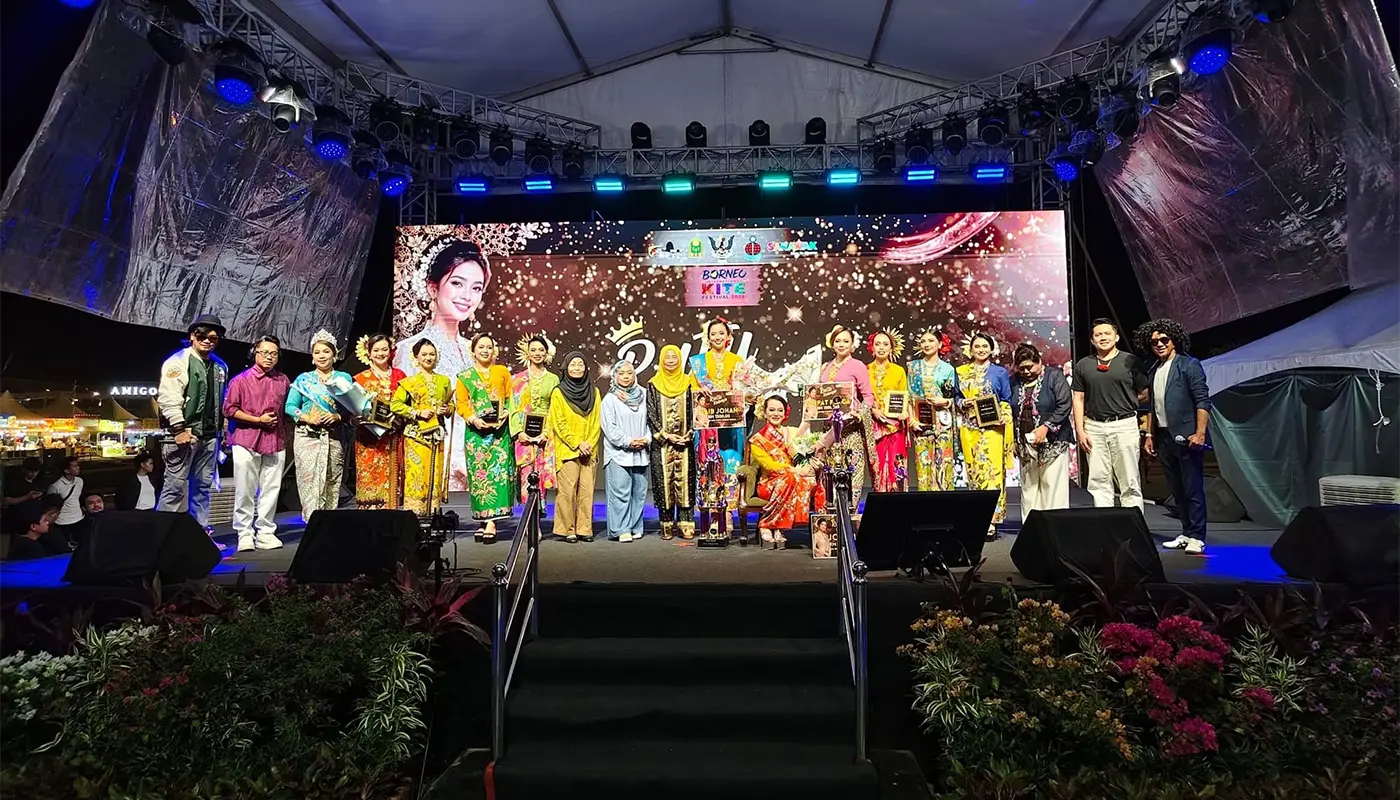
KUCHING – The Borneo International Kite Festival (BIKF) 2026 concluded on a high note as the spotlight shifted from the skies to the stage for the prestigious Kebaya Queen Competition.

The event, held during the festival’s closing night, celebrated the rich cultural heritage of the region through fashion, poise, and talent.
Amidst a vibrant atmosphere filled with spectators and enthusiasts, Ms. Veniesha Enjau Leslie emerged victorious, claiming the title of the 2026 BIKF Kebaya Queen Champion.
The competition served as a platform to showcase the elegance and confidence of participants who represented the diverse cultural tapestry of Sarawak.
Contestants were judged not only on their attire but also on their stage presence, charisma, and ability to embody the grace associated with traditional Malay and indigenous clothing.
The kebaya, a traditional blouse-dress combination, has long been a symbol of feminine beauty and cultural identity in Southeast Asia, and this event aimed to revitalise interest in the garment among younger generations.
Ms. Veniesha Enjau Leslie impressed the panel of judges with her unique charisma and self-assured demeanor. Her performance on stage was marked by a seamless blend of traditional respect and modern confidence, which resonated well with both the adjudicators and the audience.
For her outstanding presentation, she was awarded the champion title along with a cash prize of RM2,000. Her victory highlights the growing appreciation for cultural preservation through contemporary platforms such as international festivals.
The competition was fiercely contested, with several other participants delivering memorable performances. Ms. Fionaniza Anak Nome secured the position of first runner-up, earning a prize of RM1,500.
Her portrayal of the kebaya was noted for its stylistic flair and confident execution. Taking third place was Ms. Lily Ling Luhat, who received RM1,000 for her efforts. Both runners-up demonstrated significant talent and contributed to the overall success of the event by raising the standard of participation.
The Borneo International Kite Festival is one of Sarawak’s most anticipated annual events, drawing visitors from across the globe. While the primary focus remains on kite flying and aerial displays, the inclusion of cultural segments like the Kebaya Queen Competition adds depth to the festival experience.
It provides an opportunity for attendees to engage with local traditions beyond the visual spectacle of kites, fostering a deeper understanding of Sarawak’s multicultural society.
Organisers of the event emphasised that the competition was designed to empower women and promote cultural pride. By combining fashion with tradition, the festival creates a space where heritage is not just preserved but celebrated dynamically.
The enthusiastic response from participants and the public alike suggests that such initiatives are effective in keeping traditional arts relevant in a modern context.
Congratulations were extended to all participants for their stylish and proud performances. Each contestant played a vital role in highlighting the beauty and versatility of the kebaya.
The event also served as a reminder of the importance of supporting local talent and providing platforms for cultural expression.
As the festival drew to a close, the energy from the closing night ceremonies left a lasting impression on attendees.
The success of the Kebaya Queen Competition underscores the potential for integrating cultural showcases into large-scale tourism events.
It demonstrates that economic and recreational activities can go hand in hand with cultural education and preservation.
Looking ahead, organisers hope to expand the scope of such competitions in future editions of the BIKF. With increasing interest in sustainable tourism and authentic cultural experiences, events that highlight local craftsmanship and tradition are likely to gain even more prominence.
The 2026 edition has set a strong precedent, proving that the spirit of Sarawak is best expressed through a combination of sky-high ambitions and grounded cultural roots.
