



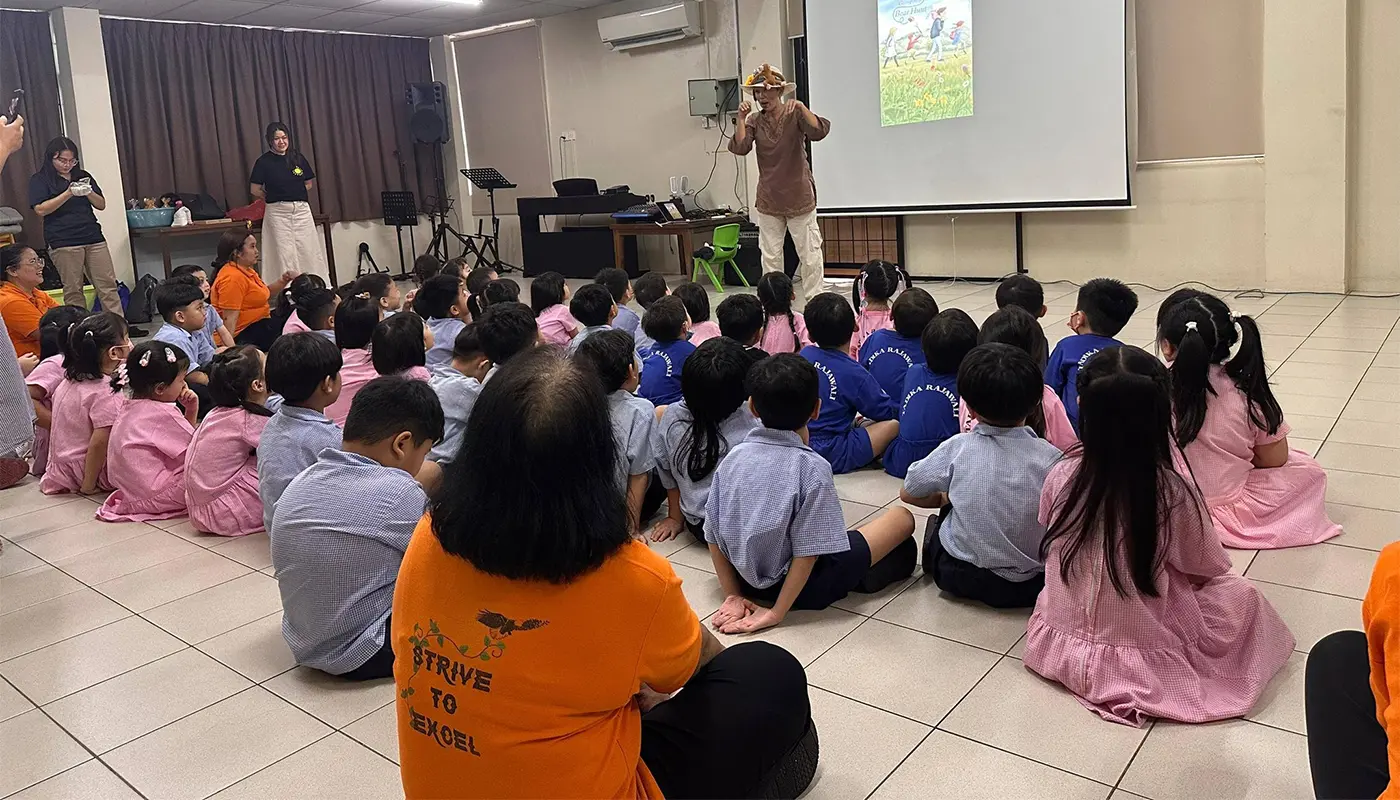
KUCHING – A storytelling initiative aimed at nurturing a love for reading among children has reached Kuching, with the Bejalai Storyteller Programme successfully held at Rajawali Kindergarten.

The event forms part of the nationwide Let’s Read Together 2026 campaign, which seeks to encourage literacy and family engagement through interactive activities.
The programme, running from 13 to 17 April, is scheduled to visit 11 kindergartens across the city. Each stop features lively storytelling sessions designed to spark imagination and build enthusiasm for books among young learners.
Organisers emphasise that the initiative is not only about entertainment but also about laying the foundation for lifelong reading habits.
Children attending the sessions are given storybooks to take home, a gesture intended to extend the experience beyond the classroom.
These souvenirs from the library serve as both keepsakes and tools to encourage families to continue reading together at home.
By involving parents and siblings, the organisers hope to strengthen the culture of shared learning within households.
The Bejalai Storyteller Programme has been highlighted as a creative approach to literacy development, combining performance with education.
Storytellers use interactive techniques to capture attention, making the sessions engaging for children of different ages.
This method reflects broader efforts across Malaysia to modernise reading campaigns and adapt them to younger audiences who are increasingly exposed to digital media.
Education advocates in Sarawak have long stressed the importance of early literacy as a cornerstone of academic success.
Initiatives such as Let’s Read Together 2026 are seen as vital in bridging gaps between formal education and community involvement.
By bringing storytelling directly into kindergartens, the campaign ensures that children are introduced to books in a familiar and supportive environment.
The programme also aligns with Sarawak’s wider cultural emphasis on preserving oral traditions while promoting modern literacy.
Storytelling has historically played a role in community bonding, and its integration into educational settings reflects a blend of heritage and contemporary learning strategies.
Parents and teachers in Kuching have welcomed the initiative, noting that it provides children with both entertainment and educational value.
The distribution of books is particularly appreciated, as it ensures that the benefits of the programme continue at home.
Organisers believe that these small steps contribute to building a society where reading is viewed as enjoyable and accessible.
With the tour continuing across multiple kindergartens, the Bejalai Storyteller Programme is expected to reach hundreds of children in Kuching.
As part of the broader Let’s Read Together 2026 campaign, it represents a collective effort to instil a passion for reading and to strengthen family participation in education.
