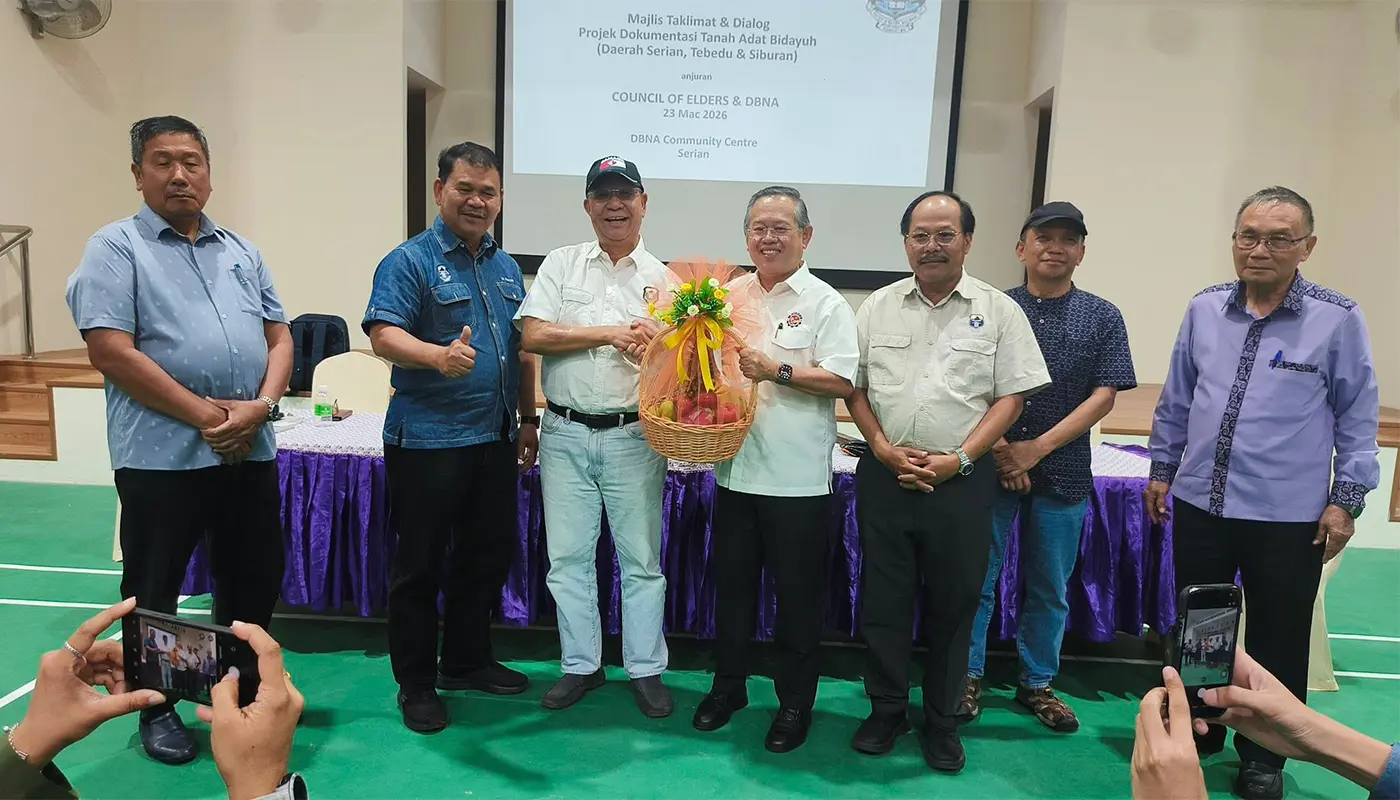
SERIAN – The Bidayuh community is being encouraged to take a more active role in the Bidayuh Customary Land Documentation Project (LDP), an effort aimed at protecting and strengthening their land rights.
The message was shared during a briefing session at the DBNA Hall in Serian on Monday, attended by representatives from Serian, Tebedu, and Siburan.
Speaking at the event, Ik Pahon Joyik explained that the project began in 2007, led by Michael Manyin Jawong alongside the leadership of the Dayak Bidayuh National Association (DBNA).

A steering committee was later set up in 2009 to coordinate the work, with the project gradually expanding over the years.
He pointed out that the initiative has the backing of the state government, which allowed the documentation of customary land. DBNA was also given the authority to work with the Sarawak Land and Survey Office to carry out the process.

The latest Roadshow 2.0/2026 session in Serian marks the third stop after earlier programmes in Lundu and Bau. The goal is to extend the project to more villages, with a target of wider coverage by 2030.
At the same event, Martin Ben acknowledged the vision behind the project but raised concerns about low participation in some areas.
In Serian, only 58 out of 113 villages have joined so far. The numbers are even lower in Tebedu, with just 14 villages participating while many others have yet to be included.
He urged village leaders and DBNA units across Serian, Tebedu, and Kedup to set clear targets and push the effort forward.
He stressed that the project offers long-term benefits, especially in strengthening land ownership rights within the Bidayuh community.
The session also included presentations by William Nyigor and Chali Ungang, who explained why documenting customary land matters.
They highlighted how the process, carried out under Section 18 of the State Land Code, leads to official land titles issued by the Sarawak Land and Survey Office.
This step plays a key role in preserving land ownership for future generations while protecting the community’s heritage. Also present were John Ilus and Simon Sinang Bada, showing strong support from local leaders.
The programme continues to serve as an important platform for raising awareness and pushing for wider recognition of customary land, helping ensure the rights and traditions of the Bidayuh community remain secure in the years ahead.