



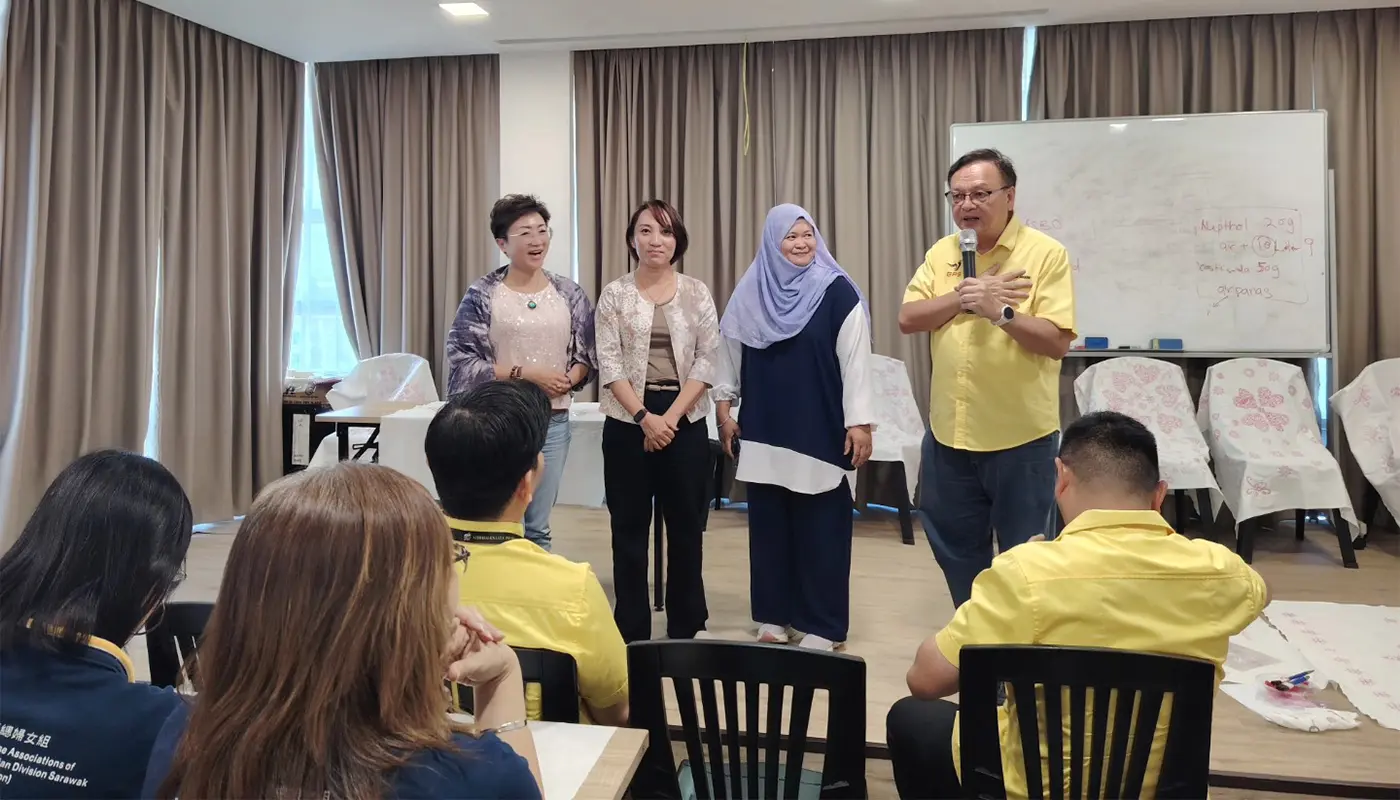
KUCHING – A community-driven initiative highlighting Sarawak’s cultural heritage took place with the Linut Batik Making Programme, organised by JKKK Batu 3–6 in the Kuching area.
The event was attended by YB Dato Ir Lo Khere Chiang, Assemblyman for N13 Batu Kitang, who expressed support for the programme’s role in strengthening local traditions and encouraging creative participation.
The workshop offered participants hands-on experience in the art of batik making, a craft deeply rooted in Malaysian culture.
By focusing on linut batik, the programme introduced a unique variation that blends traditional techniques with local identity, allowing attendees to explore both artistry and heritage.
Organisers emphasised that the initiative was not only about teaching skills but also about fostering community involvement.
The event provided a platform for residents to engage in cultural activities, reinforcing the importance of preserving traditional crafts while adapting them for modern appreciation.
Batik, widely recognised as a symbol of Southeast Asian artistry, has long been celebrated for its intricate designs and cultural significance. In Sarawak, such programmes are seen as vital in sustaining interest among younger generations, ensuring that the knowledge and techniques are passed down.
The Linut Batik Making Programme added to this effort by encouraging creativity while promoting cultural pride.
Community leaders noted that the workshop also served as a social gathering, strengthening ties among residents and creating opportunities for collaboration.
The involvement of the JKKK Batu 3–6 highlighted the importance of grassroots organisations in promoting cultural continuity and supporting local initiatives.
Participants expressed appreciation for the chance to learn directly from experienced batik makers, with many noting that the skills gained could be applied to future creative projects.
The event was described as both educational and enjoyable, offering a meaningful way to connect with Sarawak’s artistic traditions.
The presence of YB Dato Ir Lo Khere Chiang underscored the significance of such programmes in community development.
His attendance reflected ongoing support for initiatives that combine cultural preservation with active community participation, reinforcing the value of heritage in shaping identity and unity.
The Linut Batik Making Programme concluded with recognition of the organisers’ efforts, as the event was widely regarded as a success.
It demonstrated how cultural workshops can inspire creativity, strengthen community bonds, and ensure that traditional practices remain relevant in contemporary society.
