



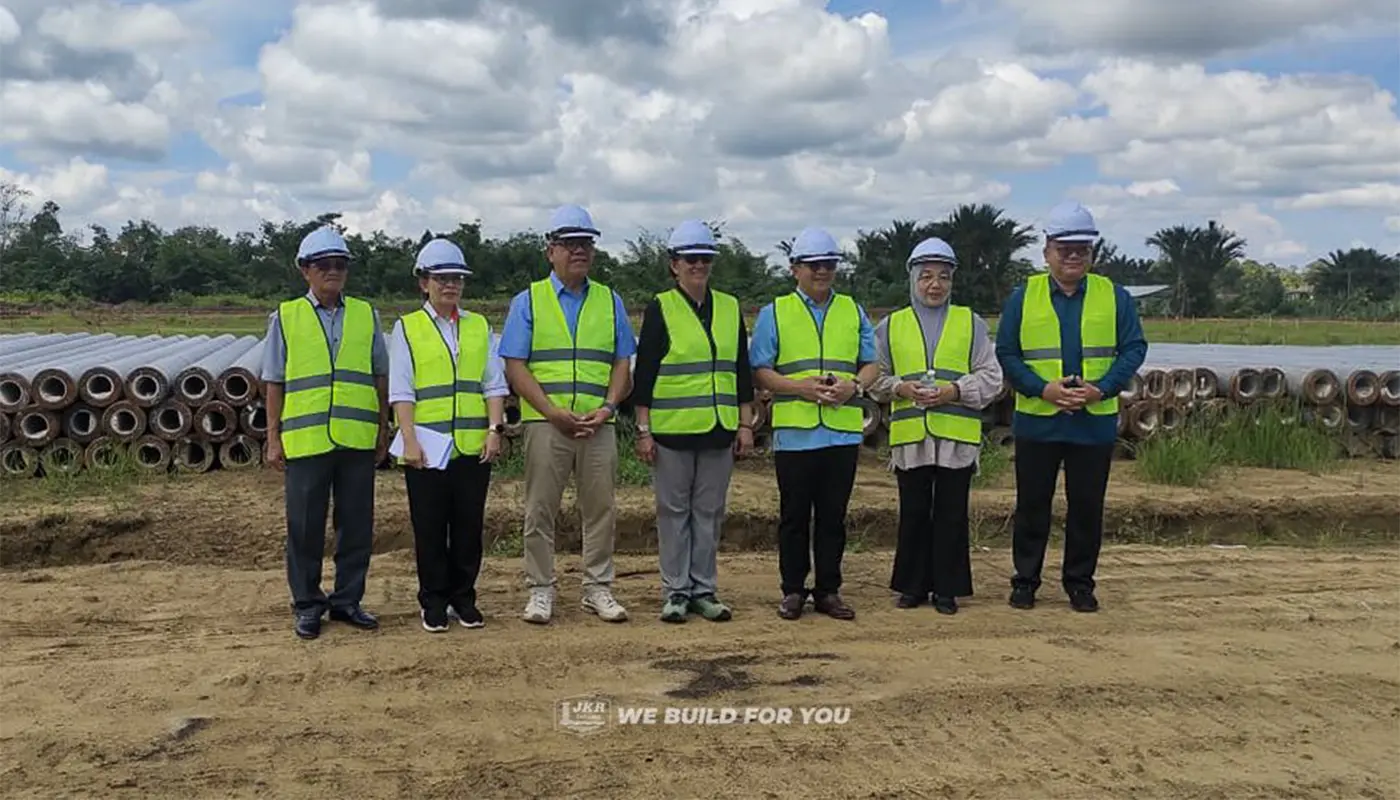
DARO – Malaysia’s Deputy Minister of Health, Dato’ Hajah Hanifah Hajar Taib, visited the construction site of the proposed Type 4 Health Clinic in Daro, Mukah, on 28 April to assess the progress of Phase Two of the project. The initiative is part of ongoing efforts to expand healthcare facilities in rural Sarawak.

During the visit, State Assembly Member for N.43 Daro, Dr Haji Safiee bin Haji Ahmad, provided a detailed briefing on the scope of the project.
He outlined the construction timeline, current developments, and the significance of the clinic in improving access to medical services for residents in the surrounding areas.
The project involves building a fully equipped Type 4 health clinic, which will include staff quarters, an ambulance garage, a pump house, a waste management facility, utility infrastructure, and external works.
Mechanical and electrical installations are also part of the plan. The construction period is scheduled for 30 months, beginning on 4 February 2026 and expected to conclude by 3 August 2028.
Several dignitaries attended the site visit, including Ahmad Johnie bin Zawawi, Member of Parliament for P.207 Igan; Datin Paduka Roslinah binti Mad Jani, Senior Divisional Secretary (Development) at the Ministry of Health; Dr Veronica Lugah, Director of the Sarawak State Health Department, accompanied by her deputy Dr Muhd Nazaruddin; and officers from the Public Works Department (JKR) Mukah Division.
The Deputy Minister’s presence underscored the Federal Government’s commitment to strengthening healthcare infrastructure in Sarawak.
The project is expected to provide modern facilities and sustainable services, ensuring that rural communities benefit from improved medical care.
Dato’ Hajah Hanifah highlighted the importance of the clinic in bridging healthcare gaps, particularly in remote areas where access to medical services remains limited.
She emphasised that the government is dedicated to delivering quality healthcare facilities that meet the needs of local populations.
The Daro Health Clinic project reflects a broader strategy to enhance public health services across Sarawak.
By investing in infrastructure, authorities aim to reduce disparities between urban and rural healthcare provision.
The inclusion of support facilities such as staff housing and ambulance services demonstrates a holistic approach to community health.
Officials noted that the project aligns with national objectives to modernise healthcare delivery and ensure sustainability.
The clinic is expected to serve as a vital hub for medical services, offering residents improved access to treatment, preventive care, and emergency response.
The visit reaffirmed the collaboration between federal and state agencies in delivering essential infrastructure.
With construction underway, the project stands as a symbol of the government’s determination to prioritise the well-being of Sarawakians, particularly those in rural districts.
