The Eurovision Song Contest, long celebrated as a showcase of cultural unity and musical diversity, is facing one of its most significant political crises in recent memory.
On 4 December, the European Broadcasting Union (EBU) confirmed that Israel would be allowed to participate in next year’s competition, prompting immediate withdrawals from Ireland, Spain, Slovenia and the Netherlands.
The decision followed weeks of heated debate among member broadcasters, many of whom had raised concerns over Israel’s war on Gaza and allegations of political interference in previous contests.

Calls for Israel’s exclusion were rejected after the EBU opted not to hold a formal vote, instead introducing new rules aimed at limiting government influence and ensuring neutrality in the competition.
Dutch broadcaster Avrotros issued a strongly worded statement, declaring: “Participation under the current circumstances is incompatible with the public values that are essential to us.”
Spain’s broadcaster RTVE echoed this stance, noting that its board had already agreed in September to withdraw if Israel remained part of the contest.
Ireland’s RTÉ described continued participation as “unconscionable,” while Slovenia’s broadcaster RTVS also confirmed its exit.
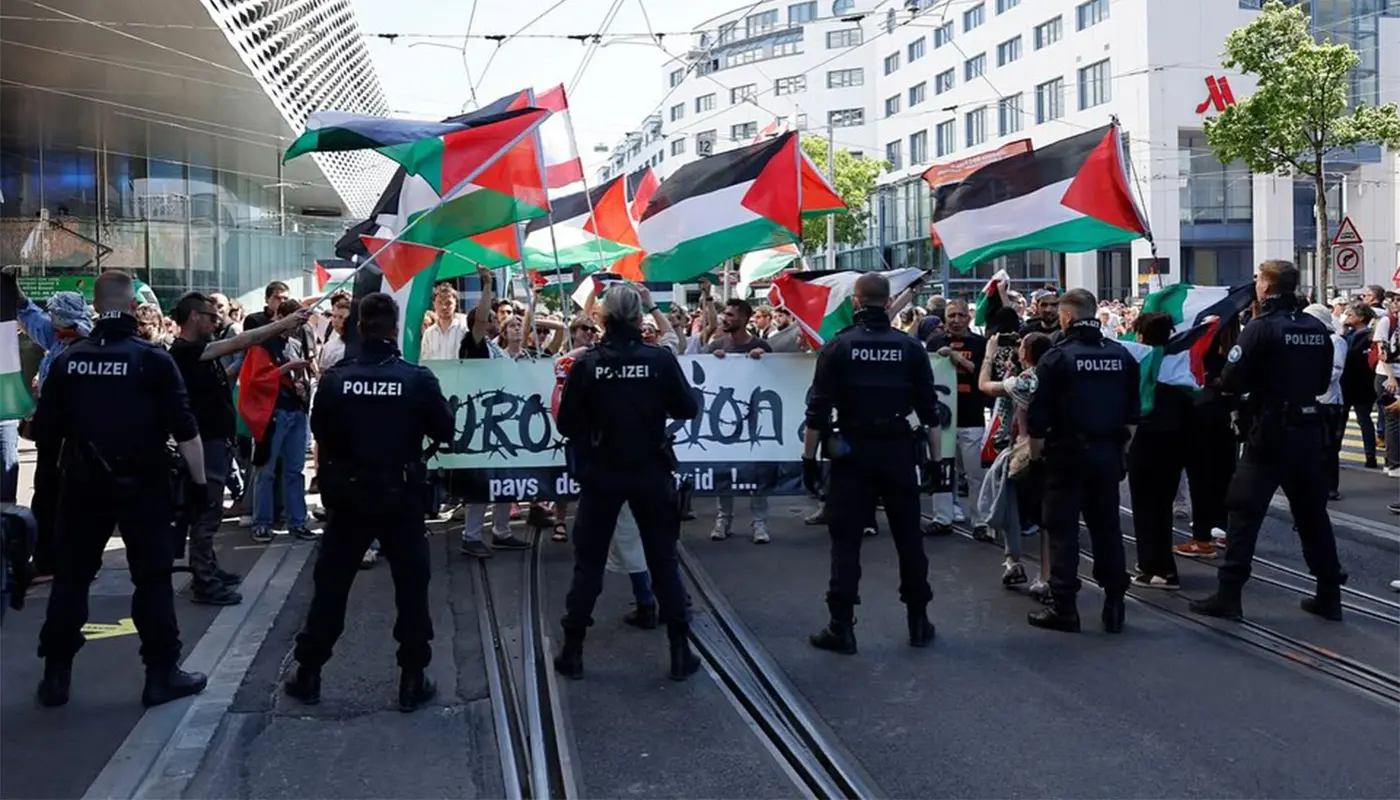
The boycott underscores the growing tension between Eurovision’s unbiased principles and the realities of international conflict. Israel’s inclusion has sparked widespread protests across Europe, with critics accusing the EBU of ignoring humanitarian concerns and supporting war crimes.
Supporters of Israel’s participation argue that Eurovision should remain a cultural event free from political disputes, pointing to the contest’s tradition of inclusivity.
Austria, which will host the Eurovision Song Contest 2026 edition in Vienna, supported Israel’s continued involvement. Germany, meanwhile, had threatened to withdraw if Israel were excluded, highlighting the deep divisions among member states.
The controversy comes after Israel’s entry in 2025, performed by Yuval Raphael, drew criticism amid allegations of disproportionate government-backed promotion.
The EBU has since revised its voting system, reducing the number of public votes allowed per person and tightening rules around promotional campaigns.
With four countries now officially boycotting, questions remain over whether others may follow suit. Iceland has hinted at a possible withdrawal, while campaigners across Europe continue to pressure national broadcasters to reconsider their participation.
The unfolding dispute marks a rare moment where Eurovision’s reputation as a celebration of unity is overshadowed by geopolitical realities.
As preparations for next year’s contest continue, the absence of several nations will undoubtedly reshape the dynamics of one of Europe’s most-watched cultural events.
Some asking why Israel, a country in the Middle East participating in a reputable European event ignoring Israel’s
Sources: NBC News, Al Jazeera, DW, Economic Times