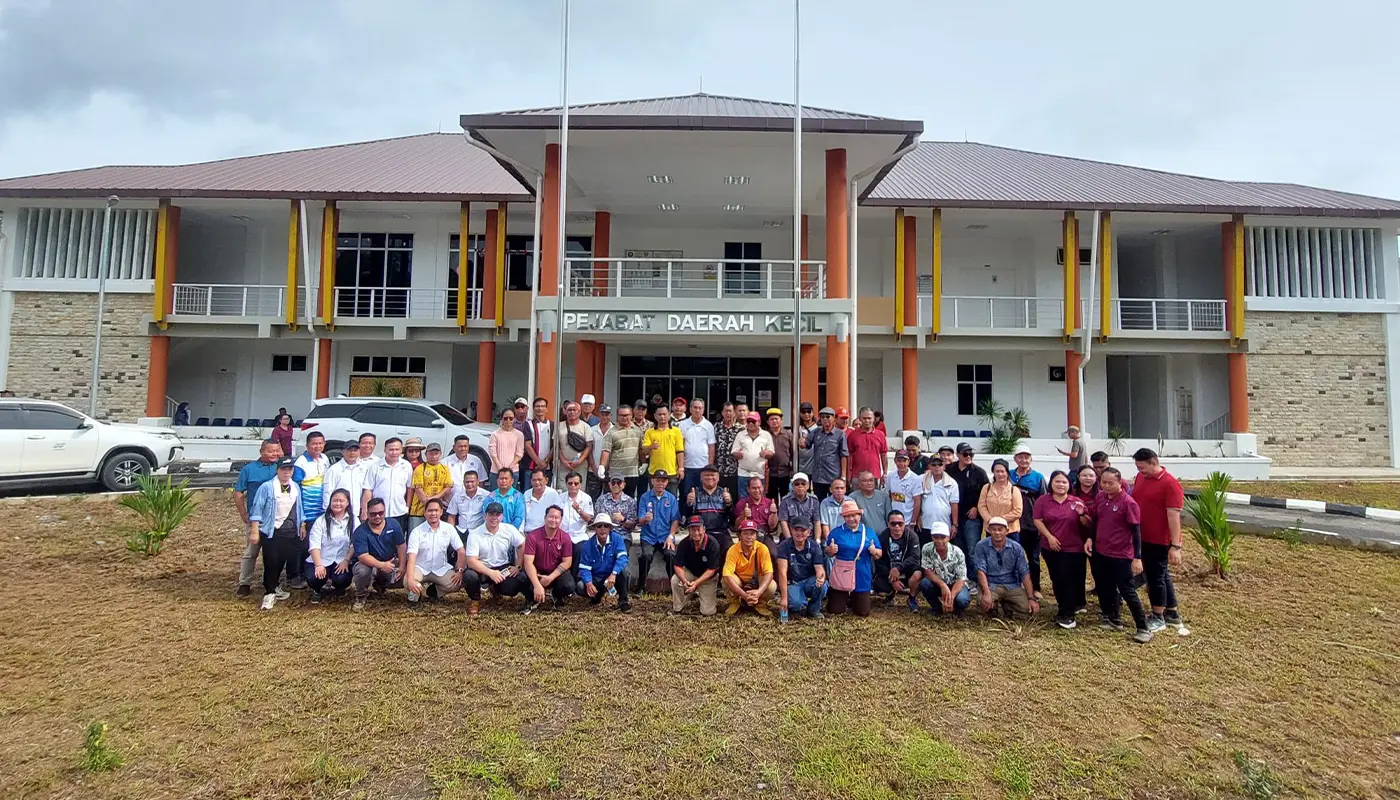
BELURU – A community-led Gotong-Royong Campaign has been hailed as a catalyst for transforming Lapok Town and the wider Tinjar area into a cleaner, more organised and sustainable environment.
The initiative, spearheaded by Deputy Minister of Public Health, Housing and Local Government I and Marudi State Assemblyman (ADUN) Datuk Dr Penguang Manggil, drew around 100 participants on Sunday.
Civil servants, community and tribal leaders (KMKK), council members, GPS Youth and Women’s Movements, and local residents joined forces at the Tinjar Subdistrict Office compound and surrounding areas of Lapok Town.
Dr Penguang emphasised that the campaign is more than a short-term clean-up exercise. Instead, it aims to instil a sense of responsibility and shared ownership among residents in maintaining cleanliness and cheerfulness in their surroundings. “A clean environment reflects the level of awareness and unity of the community,” he said.
He expressed appreciation to all parties involved, noting that the success of the programme was due to strong cooperation between government officials, community leaders, and grassroots organisations.
Looking ahead, Dr Penguang outlined his long-term vision for Lapok Town, aspiring to see it evolve into a vibrant, well-organised and lively hub that enhances the quality of life for residents.
He highlighted that the transformation journey began with the connection of grid electricity under the People’s Project in 2020, followed by a series of infrastructure developments.
Completed projects include the Tinjar Subdistrict Office, while ongoing works involve the Tinjar Rural Water Supply Project and the design of a new Community Hall.
Road upgrades worth more than RM300 million are being implemented in stages, alongside drainage improvements. Plans are also underway to construct an esplanade in Lapok Town, further enhancing its appeal.
Dr Penguang stressed that a well-preserved town environment contributes to better public health, fosters positive mindsets, and creates economic opportunities for small traders and local industries.
He urged residents to adopt prudent waste management practices and maintain public facilities to ensure the sustainability of development efforts.
The campaign reflects a broader push in Sarawak to strengthen community participation in local development.
By combining grassroots involvement with government-backed infrastructure projects, Lapok and Tinjar are set to become cleaner, healthier, and more resilient communities.