



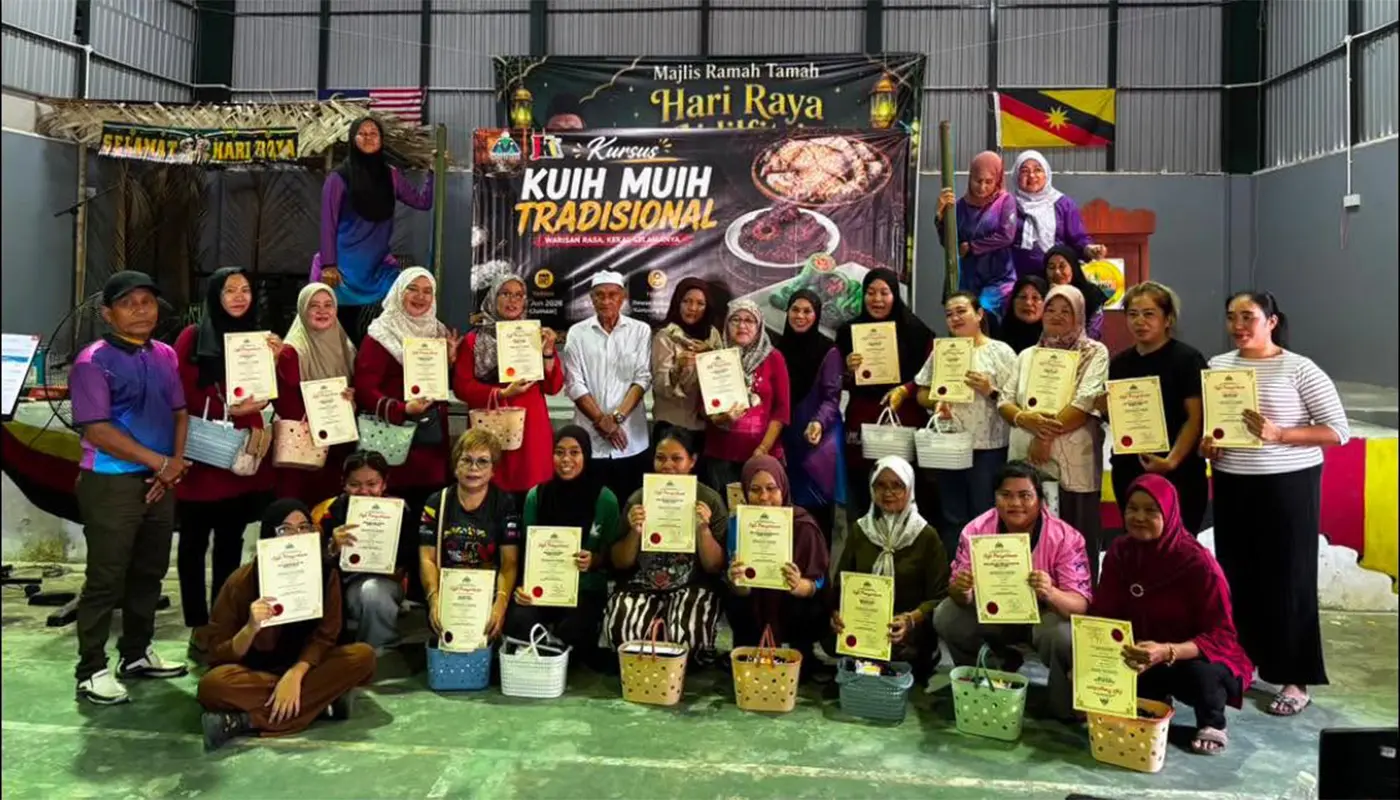
KUCHING – A short-term traditional cake course organised by KJM Kampung Muara Tebas and Selabat was successfully conducted at the Kampung Selabat Multipurpose Hall, drawing strong participation from the local community.

The programme provided hands-on training in the preparation of traditional cakes, offering participants the chance to acquire culinary skills that can be applied both at home and commercially.
Organisers highlighted that the initiative was designed not only to preserve Sarawak’s culinary heritage but also to create opportunities for families to supplement their income.
Community leaders, including the Penghulu and Ketua Kaum, joined representatives from KJM, DBKU community officers, instructors and participants in supporting the event.
Their involvement underscored the importance of collective effort in sustaining cultural traditions while encouraging economic resilience.
Traditional cakes hold a significant place in Sarawak’s cultural identity, often featured during festive occasions and community gatherings.
By teaching younger generations the techniques of preparation, the programme aims to ensure these recipes are not lost to time.
Culinary experts have long emphasised that such initiatives are vital in bridging generational gaps, allowing heritage to be passed down in practical and engaging ways.
Participants expressed appreciation for the opportunity to learn directly from experienced instructors. Many noted that the skills acquired could be used to start small businesses, particularly in catering and local markets.
This aligns with broader community development goals, where skill-based training is seen as a pathway to economic empowerment.
The organisers extended their gratitude to all parties involved, acknowledging the contributions of community leaders, instructors and volunteers who ensured the smooth running of the programme. Their collective effort reflects a wider commitment to cultural preservation and community growth.
Beyond the immediate benefits of skill acquisition, the course also fostered social interaction and strengthened community bonds.
Events of this nature often serve as platforms for networking, collaboration and mutual support, reinforcing the social fabric of local villages.
The programme concluded with hopes that the knowledge shared would continue to benefit participants and inspire further initiatives aimed at preserving Sarawak’s culinary heritage.
As one organiser noted, heritage is preserved, skills are strengthened, and family economies are improved when communities come together to learn and share.
