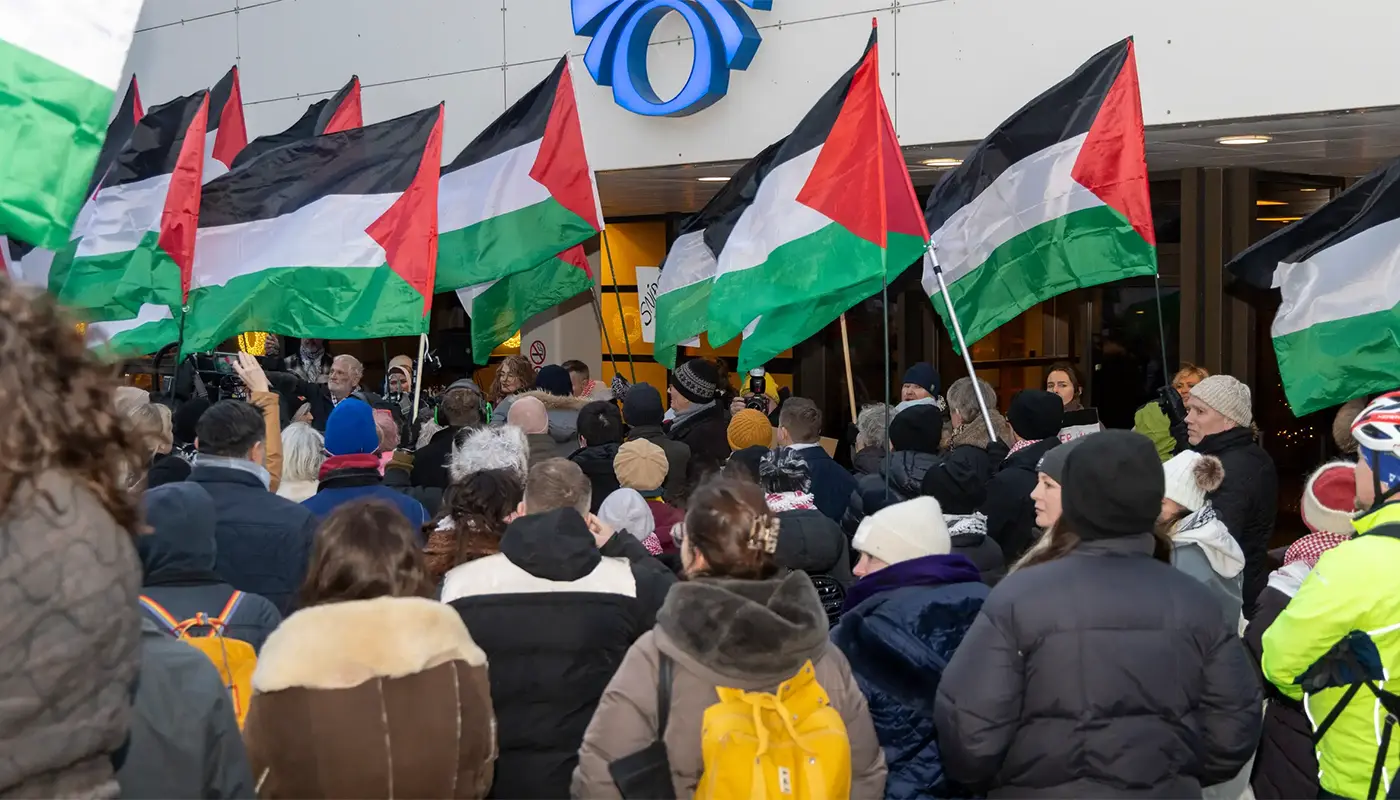
Iceland has announced it will not participate in the Eurovision Song Contest 2026, becoming the fifth country to boycott the event following the European Broadcasting Union’s (EBU) decision to allow Israel to participate.
The Nordic nation’s public broadcaster RÚV confirmed the withdrawal, citing widespread public opposition and political pressure over Israel’s ongoing military campaign in Gaza.
The boycott places Iceland alongside Spain, Ireland, Slovenia, and the Netherlands, all of which have declared they will not send entries to the competition.

The coordinated move marks one of the largest collective withdrawals in Eurovision’s history, raising questions about the contest’s ability to remain apolitical.
Calls for Israel’s exclusion had intensified in recent months, with campaigners and several governments urging the EBU to hold a vote on the matter.

However, the organiser dismissed these appeals, insisting that Eurovision is a cultural event and not a political forum.
Boycott supporters argue that the decision undermines the contest’s credibility, given the scale of humanitarian concerns in Gaza.
Protests against Israel’s participation have been visible in past editions of Eurovision. In 2019, Icelandic performers displayed Palestinian flags during the final, sparking controversy and fines from the EBU. This year’s boycott reflects a continuation of that sentiment, amplified by the current conflict in Gaza.
Israeli singer Noa Kirel, who represented the country in 2023, condemned the boycott, stating: “To boycott Israel is antisemitism.”
Her remarks highlight the polarised debate, with supporters of Israel viewing the withdrawals as discriminatory, while boycotters describe them as acts of solidarity with Palestinians.
The EBU has pledged to release the final list of participating countries before Christmas, but the absence of five nations is expected to reshape the competition’s dynamics.
Eurovision, traditionally celebrated for its inclusivity and cultural diversity, now faces scrutiny over its so-called political neutrality.
Additionally, critics object that EBU’s political view is biased towards Israel, conflicting its own view on political neutrality.
For Iceland, the decision resonates strongly with its public, where grassroots campaigns and petitions had urged RÚV to withdraw.
The broadcaster emphasised that the move was consistent with the nation’s values and public sentiment. RÚV is getting praised by boycotters for being brave to take action against the biased treatment towards Israel.
As the controversy unfolds, Eurovision 2026 risks becoming overshadowed by geopolitical tensions rather than music.
Whether more countries will follow Iceland’s lead remains uncertain, but the boycott has already set a precedent that could influence future contests.
Sources: Al Jazeera, The Independent, ABC News, The Guardian, Sarawak Daily