



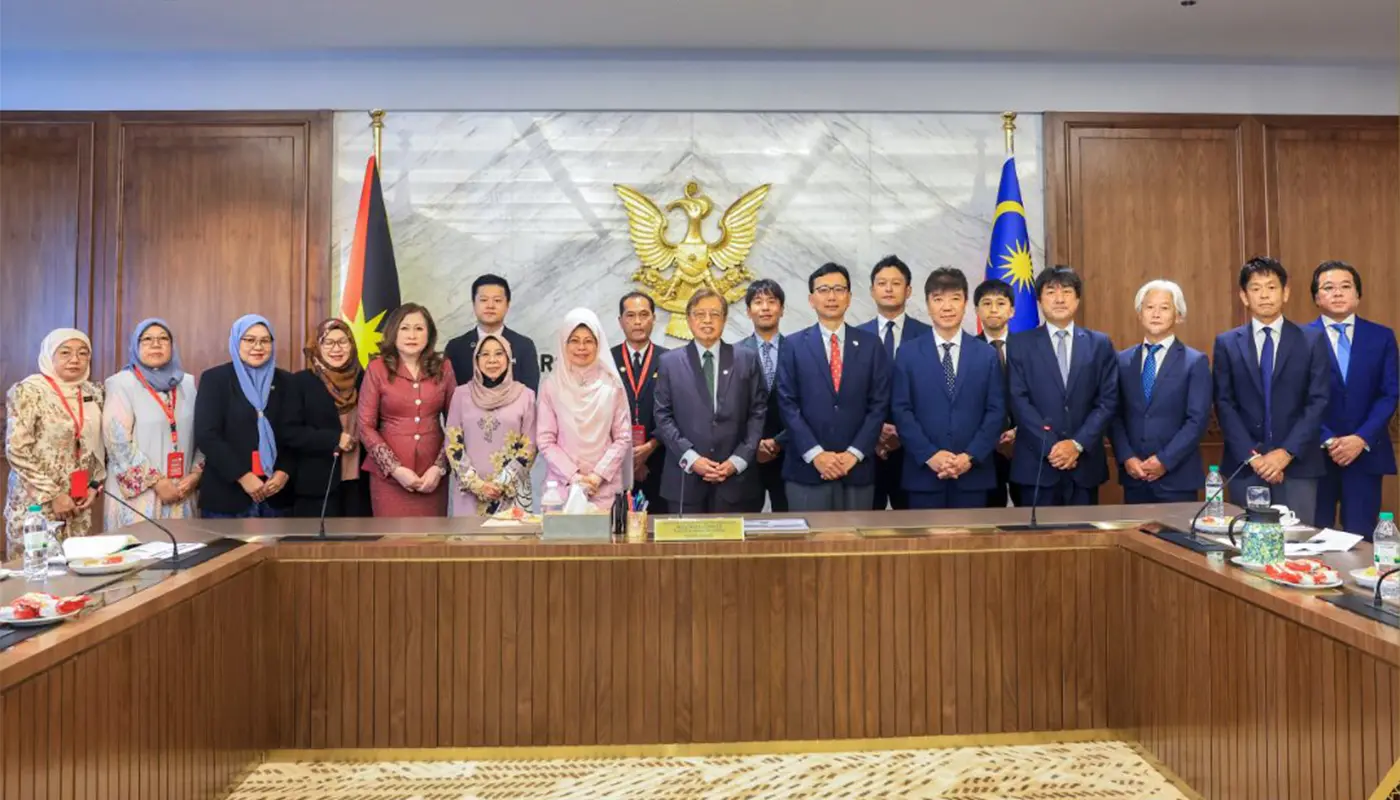
KUCHING – Japan and Sarawak are deepening collaboration in early childhood education, with a focus on inclusive learning methods and technology-driven developmental support for preschool children.

Japanese Ambassador to Malaysia, His Excellency Shikata Noriyuki, highlighted the partnership during a courtesy call on Premier of Sarawak, Datuk Patinggi Tan Sri (Dr) Abang Johari bin Tun Datuk Abang Haji Openg, at the Satria Pertiwi Complex.
He explained that discussions centred on strengthening preschool education through innovative approaches such as early screening and child-focused learning strategies.
Japan is introducing interactive, game-based learning platforms, including technology from companies like Nintendo, to enhance children’s cognitive development in engaging ways.
Ambassador Shikata noted that these methods are designed to make learning more accessible and enjoyable, while also supporting developmental milestones during the crucial early years.
A central element of the collaboration involves Toybox Creations and Technologies (TOY-8), a Japanese firm working with Sedidik to implement a digital child development screening programme across preschools in Sarawak.
The initiative uses artificial intelligence to conduct early-stage assessments through interactive tools, enabling educators to identify developmental delays or special needs more efficiently.
Sarawak’s Minister of Women, Early Childhood and Community Wellbeing Development, Dato Sri Fatimah Abdullah, said the programme complements the state’s inclusive education policy.
She explained that many children enter preschool without prior developmental checks, while limited specialist availability has often led to long waiting times for diagnosis.
“With digital screening, every child can be assessed in a non-intrusive and engaging way. The data generated helps teachers and parents better understand a child’s developmental needs and enables earlier intervention,” she said.
She added that the game-based format reduces stress for children compared to traditional clinical assessments, while still producing reliable data for follow-up action.
Children identified with developmental delays will be channelled into early intervention programmes, improving long-term outcomes in line with international best practices.
The initiative is expected to serve as a benchmark for Malaysia and potentially other countries in the region, including Japan.
Both sides expressed confidence that the AI-driven screening model will strengthen inclusive education and provide a foundation for sustainable development.
Pilot phases are already underway, with plans for expansion and full implementation in the coming years. The collaboration underscores Sarawak’s ambition to position itself as a leader in early childhood education and innovation.
