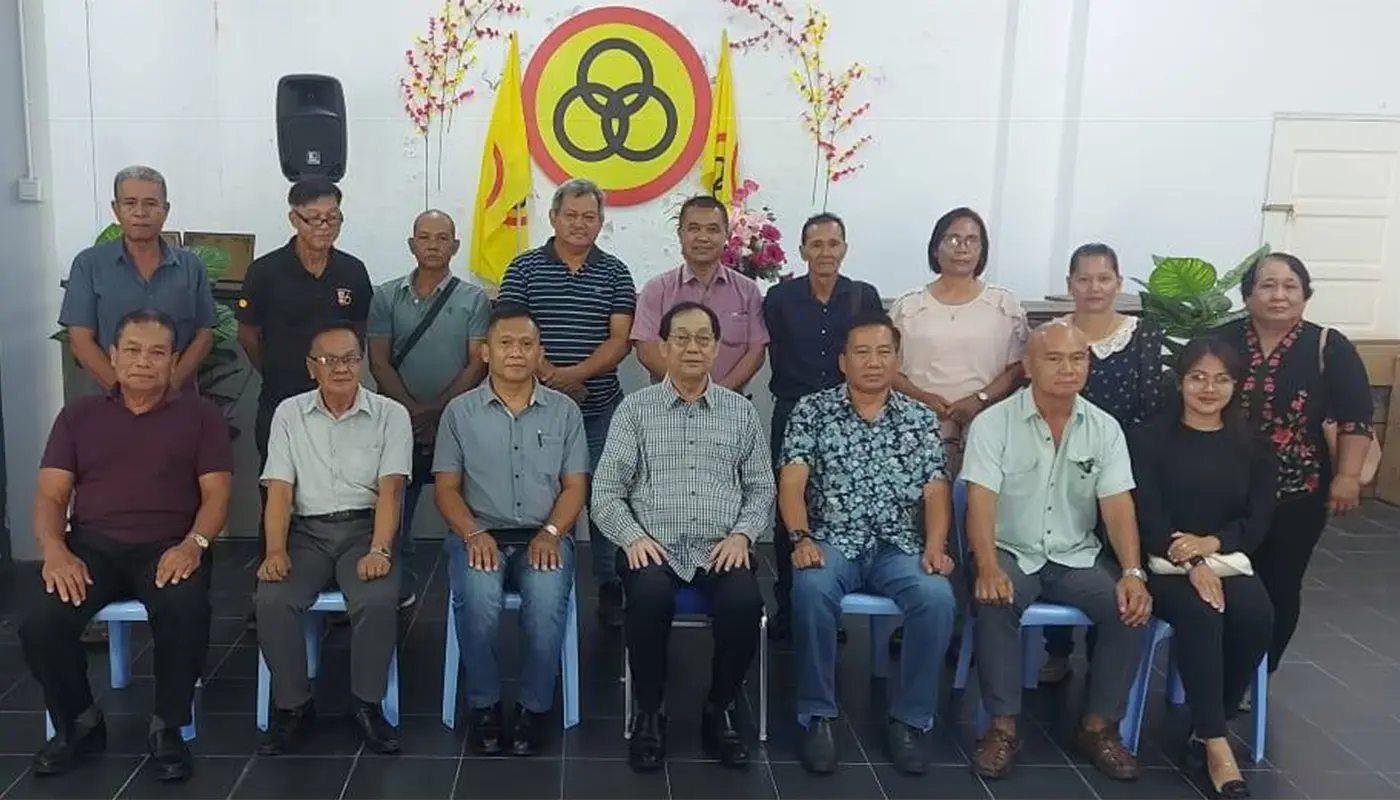
SIMANGGANG – The establishment of the Village Development and Security Committee (JKKK) continues to play a vital role in strengthening the growth and administration of villages and longhouses across Sarawak.
Sarawak Deputy Minister of Education, Innovation and Skills Development Datuk Francis Harden Hollis emphasised that the state government’s commitment to the JKKK system is evident through the approval of allowances for committee members.
He explained that each JKKK chairman receives a monthly allowance of RM1,300, while the secretary is entitled to RM300.

In addition, general committee members (AJK) are given RM50 for each meeting attended, up to six times a year, with RM100 allocated for meeting expenses.
Datuk Francis noted that allowances are paid based on official meeting minutes submitted to the district office, ensuring fairness and proper record-keeping.
He made these remarks during a meeting with JKKK members of Kampung Nanga San, Sri Aman, held at the Simanggang Assemblyman’s Community Service Centre on Thursday night.
The session aimed to remind JKKKs of their responsibilities while encouraging them to be more proactive in planning community development and managing local affairs.
“Through the establishment of a stable JKKK, the voice of the residents will be easier to convey to the authorities to help speed up the resolution of issues such as roads to the village and water supply,” he explained.
Datuk Francis further highlighted that JKKKs act as the backbone of grassroots leadership, strengthening the relationship between the government and local communities. Their role ensures that residents’ concerns are channelled effectively to the relevant authorities.
During the meeting, Achon Tadeng was appointed as the new chairman of Kampung Nanga San JKKK, assisted by Chelsea Tari Pencha as secretary and Sait Madil as treasurer.
Other committee members were also named, covering portfolios such as development, cleanliness, security, education, welfare, agriculture, facilities, protocol, women’s bureau, and auditing.
The appointment of new leaders reflects the state’s commitment to empowering local communities through structured representation.
By ensuring that JKKKs remain active and well-supported, the government hopes to accelerate rural development and improve living standards in villages and longhouses across Sarawak.