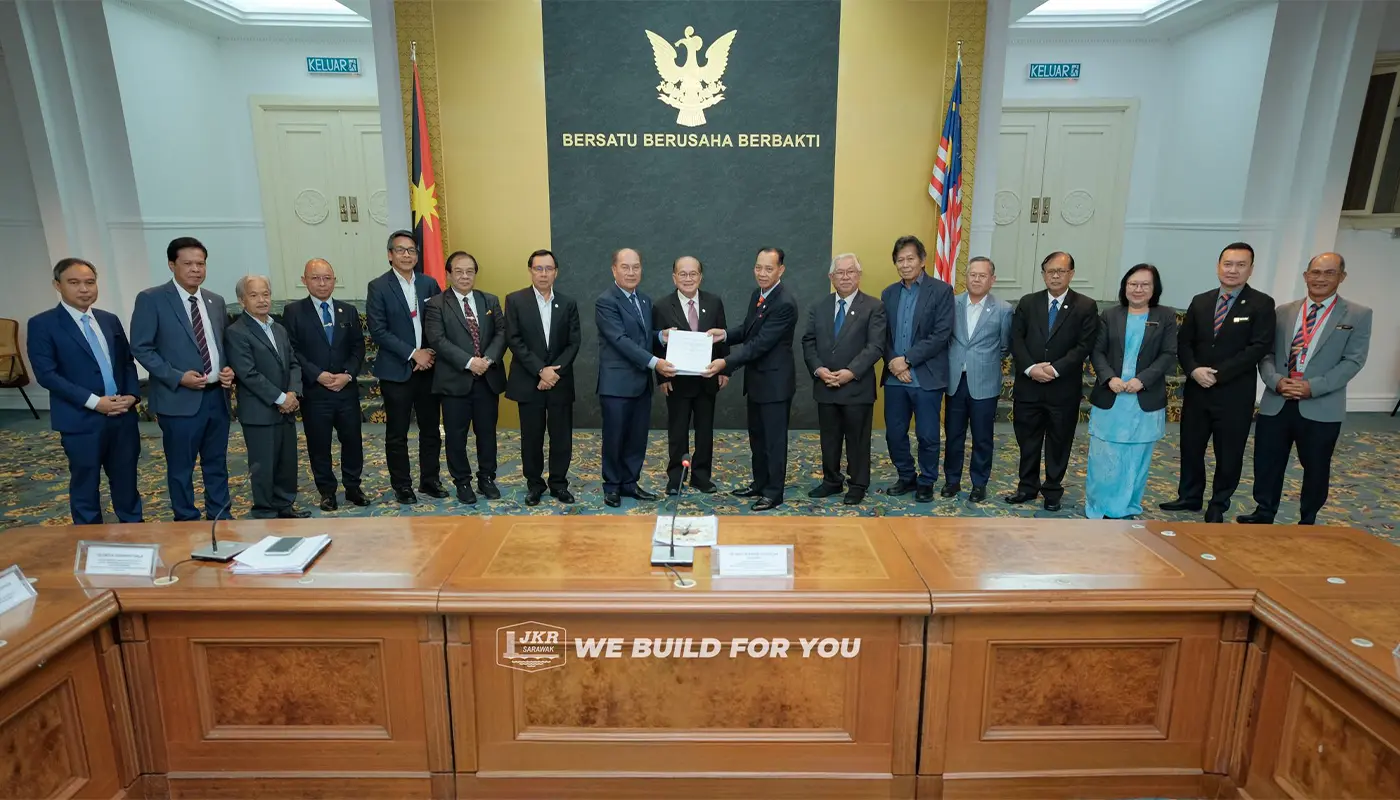
KUCHING – The Director of the Sarawak Public Works Department (JKR), YBhg. Datu Adj. Prof. Ir. Ts. Gs. Br. PMr. Dr. Cassidy Morris, attended the State-Level Gawai Committee Meeting on 24 February 2026 as part of preparations for the upcoming Gawai Dayak celebration.
The meeting, held in Kuching, was convened to coordinate planning, programmes, and implementation strategies to ensure that the state-level Gawai festivities run smoothly.
Organisers emphasised that the celebration must reflect Sarawak’s rich cultural diversity and reinforce the spirit of unity among its people.
The Gawai Dayak festival, celebrated annually on 1 June, is a significant cultural event for the Dayak community and has become a symbol of Sarawak’s multicultural identity.
The state-level celebration brings together communities from across the region, showcasing traditional music, dance, attire, and rituals.
By involving key government departments such as JKR Sarawak, the committee aims to ensure that logistical and infrastructural aspects of the celebration are well managed.
This includes venue preparation, public facilities, and coordination with local agencies to accommodate large gatherings.
Dr. Cassidy’s participation highlights JKR’s role not only in infrastructure development but also in supporting cultural and community initiatives.
The department’s involvement ensures that facilities and services provided during the celebration meet safety and quality standards.
Committee members noted that the Gawai celebration is more than a cultural event; it is an opportunity to strengthen social cohesion and promote inclusivity.
The meeting reaffirmed the importance of collaboration between government agencies, community leaders, and cultural organisations in delivering a memorable and meaningful celebration.
Preparations for Gawai Dayak 2026 are expected to continue in the coming months, with further announcements on programmes and activities to be made closer to the festival.
The state-level event is anticipated to attract visitors from across Sarawak and beyond, reinforcing its position as one of the most prominent cultural celebrations in Malaysia.