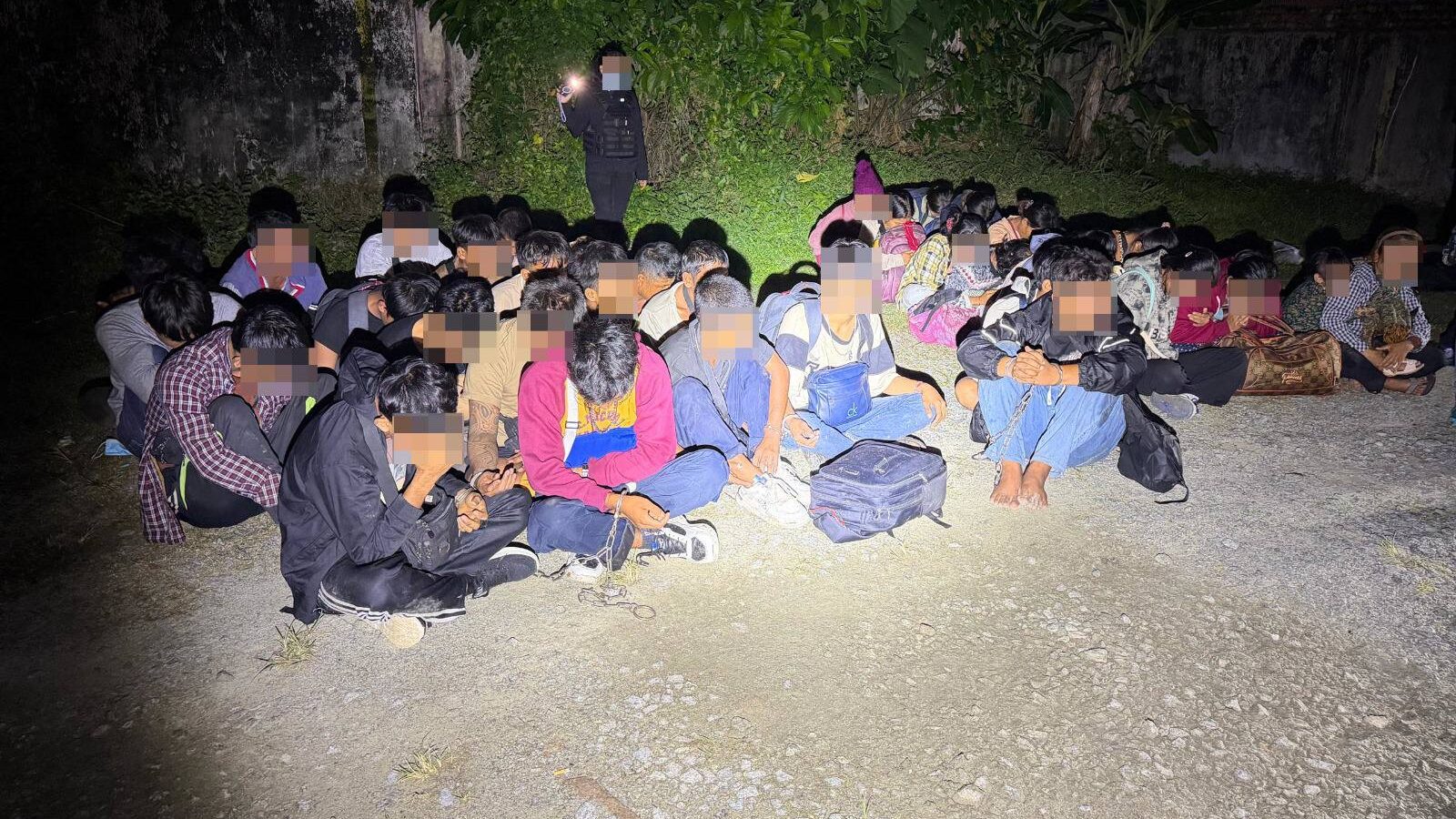
Kota Bharu – The Malaysian Immigration Department has uncovered a human smuggling syndicate operating around Kota Bharu after a three-month intelligence effort. The early-morning operation on December 8 brought an end to a network that had been moving illegal immigrants through the Kelantan border before sending them to the Klang Valley.
According to officials, the syndicate was run by a local man known as “Mat Sero”, who worked closely with a Myanmar national functioning as the main transporter. Their operation was systematic, frequent, and profitable, relying on secret rat routes along the border to smuggle foreigners before handing them over to local transporters waiting on the Malaysian side.
During the operation, enforcement teams intercepted eight vehicles believed to be used for moving the illegal immigrants. The transporters attempted to flee, with some even ramming other vehicles, including the department’s car, in an effort to break through the roadblock. Despite the aggressive behaviour, officers managed to force them to a stop.

Several Myanmar nationals attempted to escape into nearby bushes but were eventually located and detained. In total, officers arrested three Malaysian men, including the suspected mastermind, and one Myanmar man believed to be a transporter. They also detained 35 Myanmar citizens, aged between five and 45 years old. Three mobile phones and eight vehicles were seized for further investigation.
Authorities said the syndicate charged between RM400 and RM500 per person, depending on the destination. The group is believed to have been operating weekly and has likely been active for the past six months. The operation’s success followed patient surveillance and intelligence gathering by immigration teams.

The Immigration Department stated that investigations are ongoing to track down the remaining members of the syndicate. The department reaffirmed its firm stand that anyone involved in migrant smuggling will face strict action under Malaysian law. They also emphasised the need for continuous enforcement to protect national security and prevent syndicates from exploiting vulnerable individuals.