

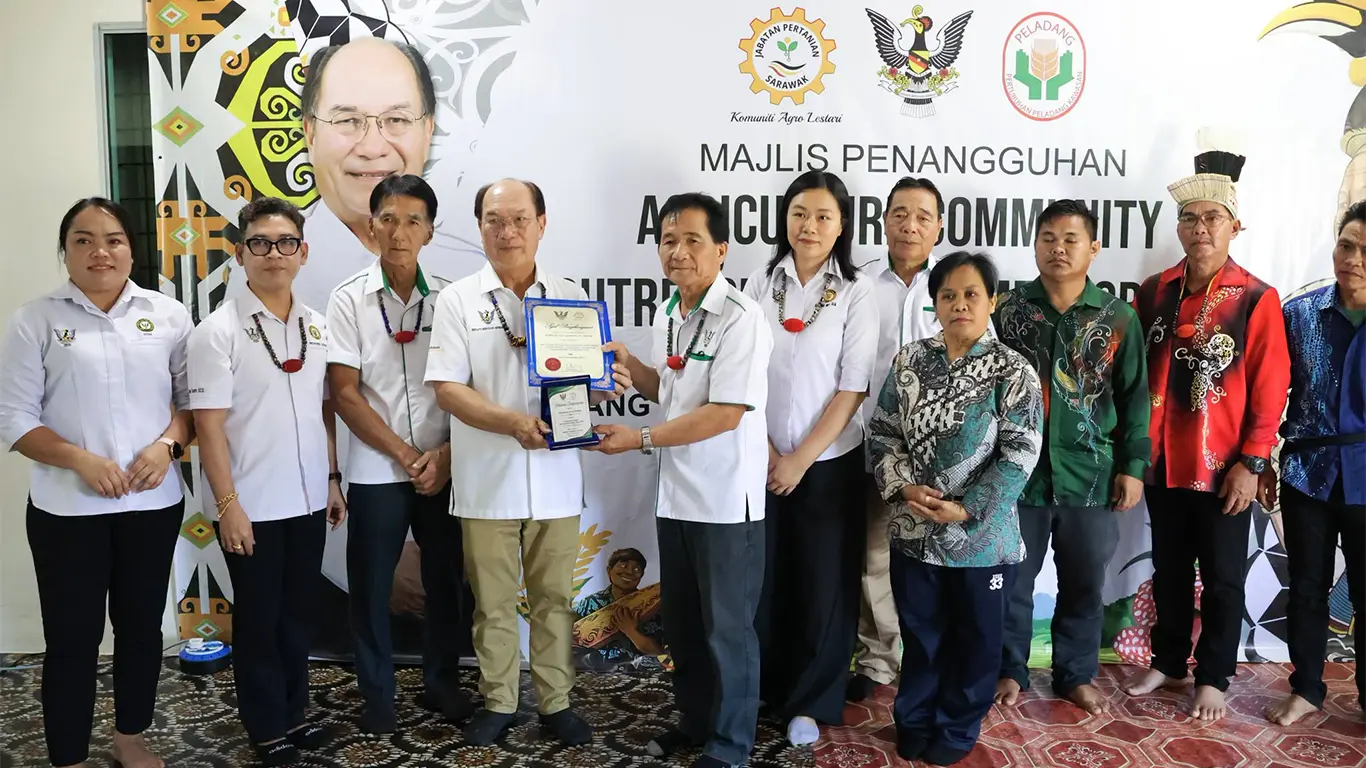


BATU KITANG – Batu Kitang assemblyman Datuk Lo Khere Chiang has welcomed the Sarawak Government’s initiative to expand access to university education, saying the scheme could help more young people pursue tertiary qualifications and prepare for employment in emerging industries.
Lo said greater access to higher education would support Sarawak’s ambition to develop a knowledge-based economy by building a larger pool of educated and skilled local talent.

He described education as an important contribution by Premier Datuk Patinggi Tan Sri Abang Johari Tun Openg towards the state’s long-term development, highlighting the connection between investment in education and the creation of a workforce capable of supporting economic transformation.
“Education is one of the best things the Premier has done for Sarawak. Abang Johari has hit the nail on the head. By investing in education, he is helping to build a knowledge-based society,” he told Sarawak Tribune.

Lo said Sarawak could draw lessons from Singapore, which has developed an economy centred on technology and financial services despite having limited natural resources.
He pointed to the semiconductor industry as an example of a sector that depends heavily on specialised knowledge and technical expertise. The design and manufacturing of semiconductor chips require engineers and other professionals with relevant qualifications and practical skills.
According to Lo, Sarawak’s access to affordable green energy could also become an important consideration for companies assessing potential investment locations.
However, he stressed that attracting investors would need to be accompanied by efforts to ensure sufficient local talent was available to support the industries established in the state.
“Once companies decided to set up here, however, they would need engineers and other skilled workers to get their operations off the ground. If we don’t have enough engineers, investors will struggle to get their industries going here. How do we equip our young people with the knowledge they need? Through education,” he said.
His comments highlighted the relationship between education planning, workforce development and investment attraction, particularly as Sarawak seeks to expand into sectors that require specialised technical capabilities.
For companies considering operations in technology-related industries, the availability of qualified personnel is an important part of establishing and maintaining business activities. A sufficiently trained local workforce could also reduce the need to depend entirely on talent recruited from outside the state.
Lo also welcomed the inclusion of Unified Examination Certificate (UEC) holders among students who could pursue tertiary education through the scheme.
He said the opportunity would provide another pathway for Sarawakian students seeking university qualifications, broadening the options available to young people from different educational backgrounds.
The recognition of educational qualifications within the scheme is particularly relevant to students planning their transition from secondary education to university-level studies.
Lo added that internationally recognised qualifications could also give graduates greater flexibility when considering employment opportunities, including the option of pursuing careers overseas.
Nevertheless, he expressed hope that more Sarawakian graduates would eventually choose to remain in the state as its economy develops and employment opportunities expand.
“We want our students, our children, to stay in Sarawak and serve Sarawak. One day, our young people may find that they would rather stay and work here than go elsewhere,” he added.
His remarks reflected the broader challenge of retaining locally educated talent while ensuring that Sarawak has the skills required to support new investments and emerging economic sectors.
Expanding access to higher education could contribute to this objective by preparing more young people for professional and technical careers. However, employment opportunities, industry growth and the availability of suitable career pathways will also influence whether graduates decide to establish their futures in Sarawak.
Lo’s support for the initiative therefore centres on the importance of connecting education opportunities with the state’s longer-term workforce and economic development needs. — Sarawak Daily