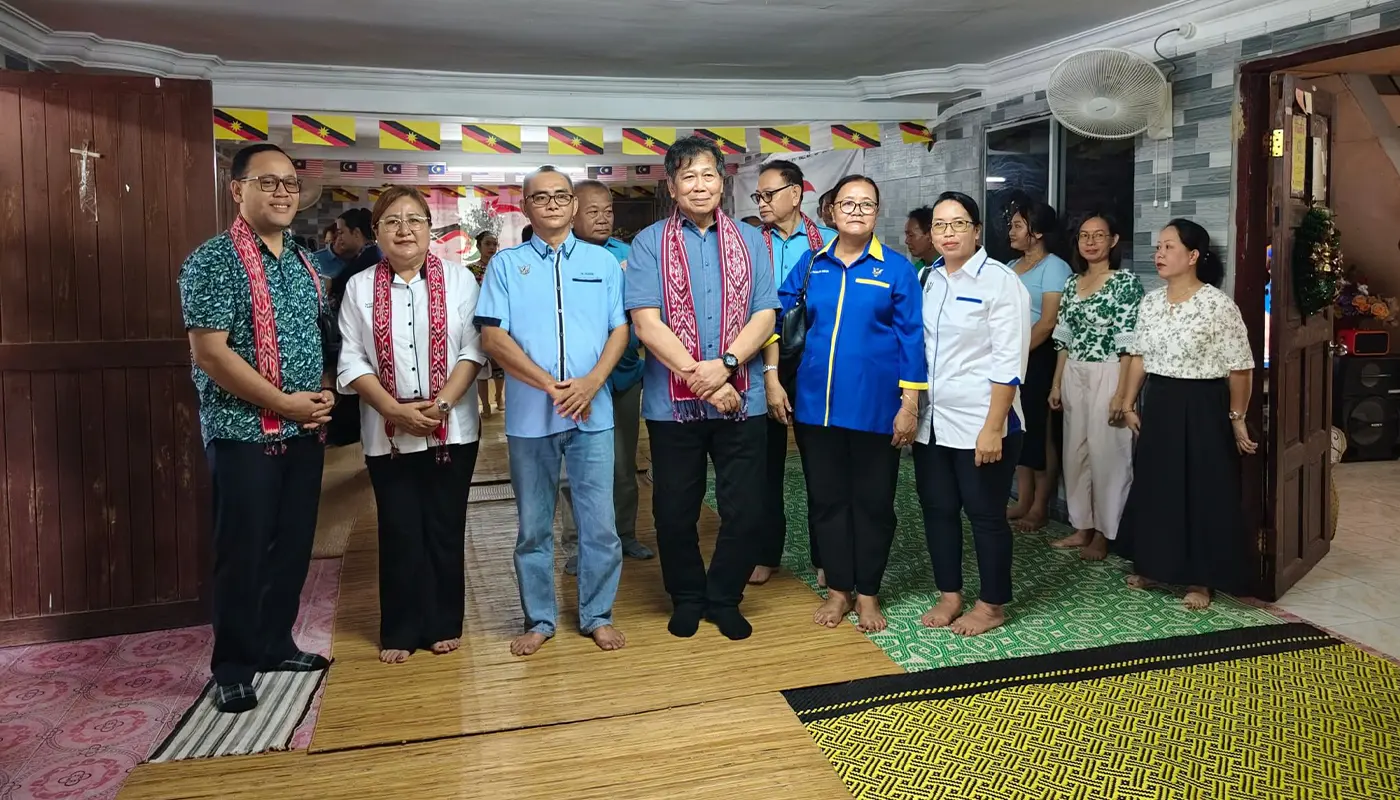
Sarawak’s Rural Transformation Programme (RTP) continues to strengthen development in Lubok Antu, with new allocations, infrastructure proposals, and community-focused initiatives announced during a recent visit by Deputy Minister Datuk Dr Malcolm Mussen Lamoh.
The event highlighted both government commitments and residents’ aspirations for economic empowerment and better facilities.
Government Allocations and Announcements
RM100,000 RTP allocation: Directed to the Village Development and Security Committee (JKKK) of Panjai Ruai Ili.
RM15,000 MRP allocation: Provided to JKKK Panjai Ruai Ili.
RM10,000 MRP allocation: Channelled to Gerempung Indu Panjai Ruai Ili.
Proposed carriageway construction: Two new lines (R1–R3) along Bukong–Bulo–Lubok Antu to improve connectivity.
Border development commitment: Reinforced plans to establish Lubok Antu as an international gateway, aligning with Sarawak’s wider border infrastructure strategy.
Key Issues Raised by Residents
Land development concerns: Communities in Batu Kaya, Wong Panjai, Rakut, Ensawang, and Panjai Ruai sought clarity on their discontinued participation in the SALCRA scheme.
Temporary Occupancy Licence (TOL): Residents requested Section 8 TOL consideration, citing completed perimeter surveys to enable individual land use.
Parking and boarding facilities: Proposals included upgrading land behind the longhouse into parking space and converting Room No.3 into a boarding house for community use.
Study tours: Calls for exposure trips to neighbouring countries to learn about cross-border economic opportunities.
Community Voices
Catherine Jampang: Chair of the Women’s Bureau, highlighted financial constraints, especially the lack of kitchen facilities and basic equipment for community programmes.
Penghulu Manai Jalak: Urged residents to diversify economic activities beyond palm oil, particularly in border regions.
Akoi Ejau: Lubok Antu District Officer reminded residents of free education up to degree level and announced a RM5,000 JKKK governance incentive for eligible committees.
Wider Context
Recent reports confirm that over RM200,000 has been allocated for Lubok Antu’s rural development under separate programmes, focusing on infrastructure, village administration, and women’s empowerment.
These efforts complement the RTP allocations announced by Dr Mussen, reflecting Sarawak’s broader strategy to ensure rural communities benefit from balanced growth.
The government’s emphasis on border development also ties into national initiatives, with nearly RM883.7 million approved for Sarawak-Kalimantan border infrastructure projects. This positions Lubok Antu as a potential hub for international trade and connectivity.
Conclusion
The programme, attended by around 300 residents, showcased Sarawak’s ongoing commitment to rural transformation. By combining financial support, infrastructure proposals, and community-driven initiatives, the state aims to empower Lubok Antu’s residents while strengthening its role as a border gateway.