MIRI – The recent flash floods affecting parts of Miri city have largely subsided, with most residential areas now fully recovered.
Only a few locations in Senadin Village continue to face water retention, though levels are gradually receding.
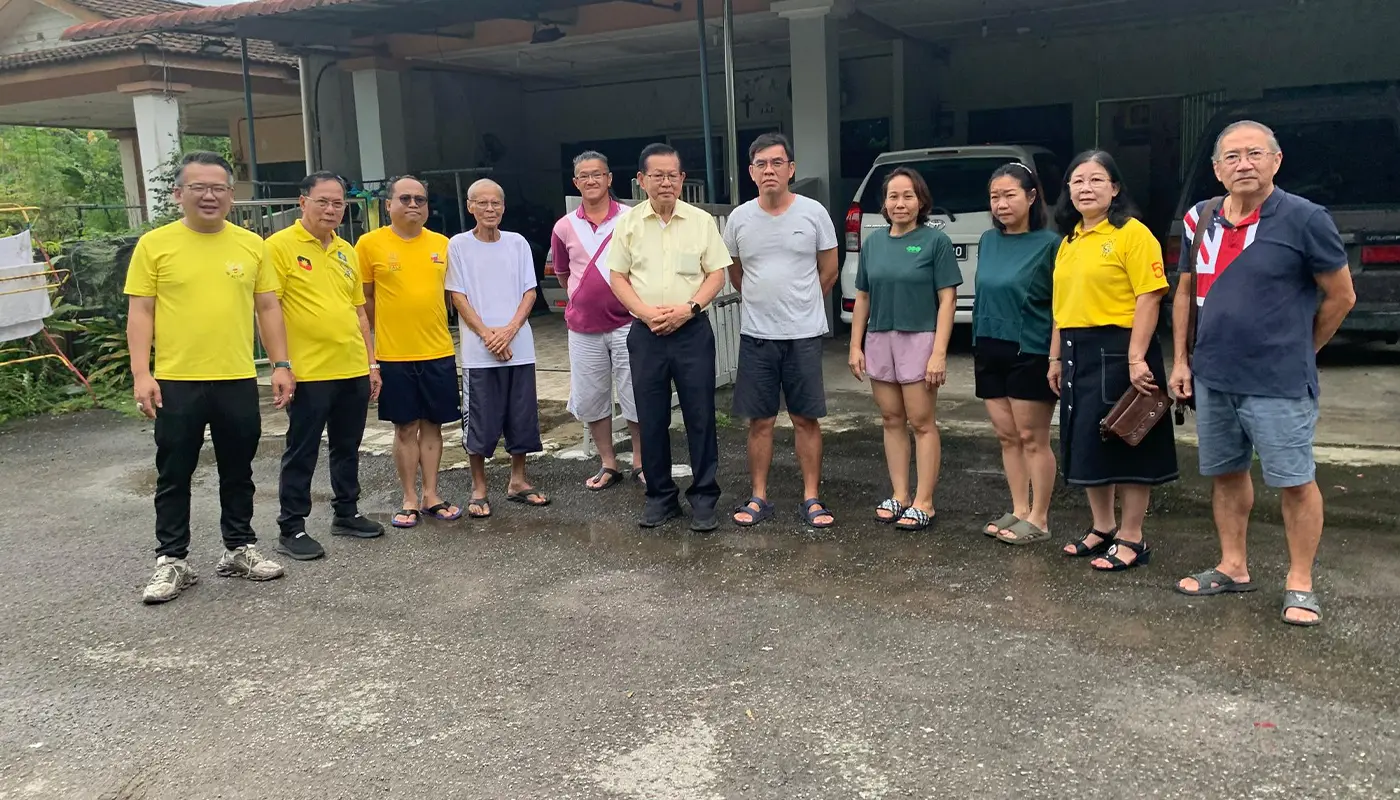
Sarawak Transport Minister and Senadin State Assemblyman (ADUN) Dato Sri Lee Kim Shin confirmed the situation is improving following monitoring by his service centre team on Sunday morning.
He noted that areas such as Desa Indah and Desa Murni have returned to normal, while certain routes in Desa Senadin remain inundated due to drainage systems not functioning optimally.
“The main cause identified is the outflow of water that is affected due to the high water level of rivers and ditches, thus preventing the release of water into the main river,” he explained.
Immediate measures are being taken to address the issue. The Department of Irrigation and Drainage (DID) will clean, widen, and dredge water channels in critical areas.
Meanwhile, the Miri City Council (MBM) is tasked with de-silting and clearing ditches, particularly along Jalan Ilmu in Senadin, where drainage has been blocked by overgrown vegetation.
Dato Sri Lee highlighted that repeated flooding in Senadin is also linked to reservoirs reaching maximum capacity, limiting the drainage system’s effectiveness during heavy rainfall.
To provide long-term solutions, the Sarawak government has approved three major flood mitigation projects in Miri. The first, covering Lutong, Krokop, and Jee Foh, is already underway and has achieved 71 percent physical progress.
Two additional projects will address flood-prone routes from Taman Tunku through Riam and Lopeng to Jalan Padang Kerbau, as well as a dedicated scheme for Senadin, Sungai Lutong, and surrounding areas.
The Senadin project, approved late last year, is expected to be tendered in the coming months, with calls for the process to be expedited.
Dato Sri Lee stressed that while awaiting completion of these large-scale projects, short-term actions will continue.
DID, MBM, and the Public Works Department (JKR) are mobilising efforts to clean and maintain existing drainage systems, prioritising the worst-affected areas.
Authorities believe this phased approach will help reduce the risk of recurring flash floods and enhance safety and well-being for residents.
The combination of immediate interventions and long-term infrastructure projects is expected to strengthen Miri’s resilience against future flooding events.