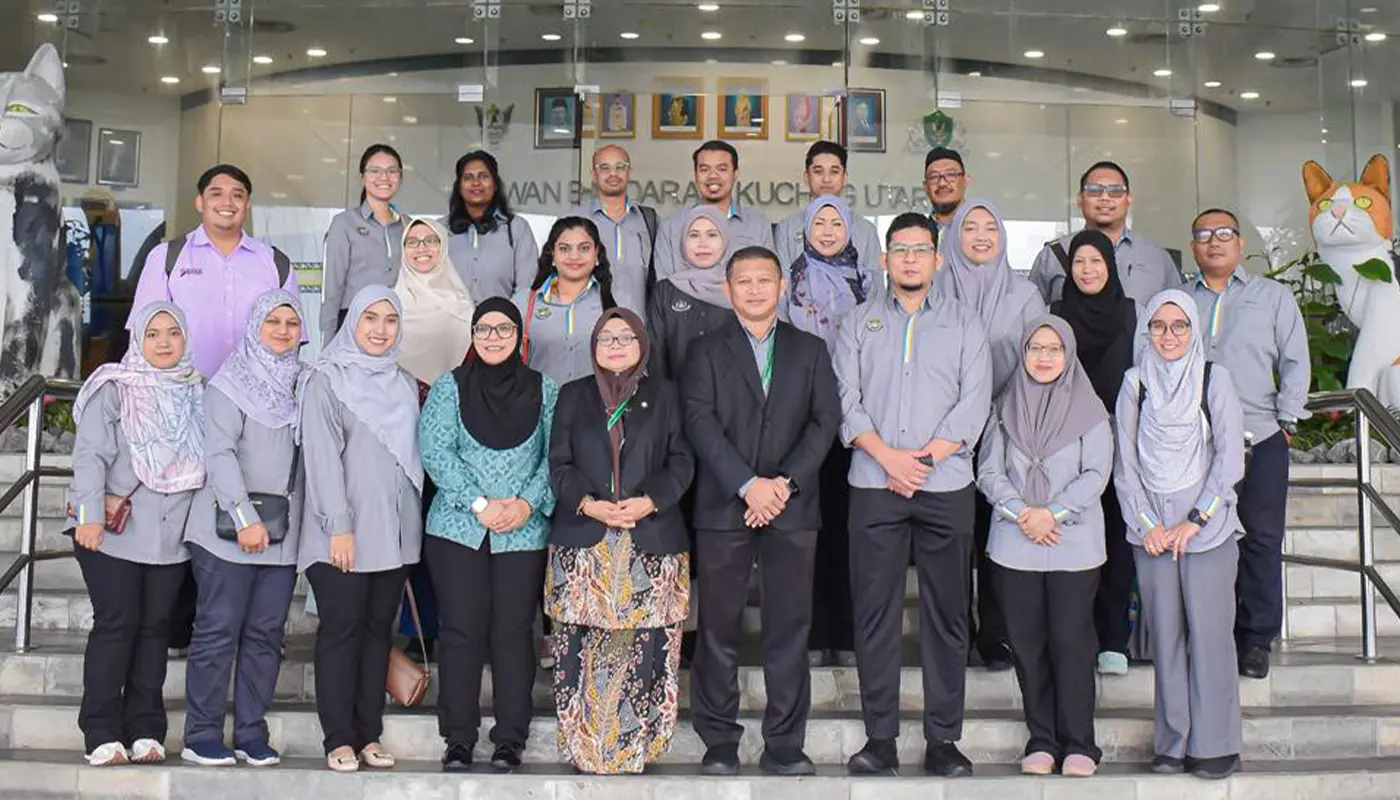
KUCHING – Kuching North City Hall (DBKU) today welcomed a delegation from the Penang City Council (MBPP) and the Penang Women’s Development Corporation (PWDC), marking a significant step in fostering collaboration between local authorities.
The visit was led by Mr. Syawal Abul Haq bin Ahmad Jelani, Head of MBPP’s Development Coordination Unit, and Ms. Haziqah Nasirah binti Zol Bahari, Head of PWDC’s Gender Inclusion Division. They were accompanied by 20 officers from both organisations. The delegation was received by Mr. Rudzaimeir bin Malek, Deputy Director of DBKU’s Community Services Department.
The working session aimed to strengthen strategic partnerships and promote knowledge exchange in inclusive, gender-responsive, and community-based urban governance. Both councils emphasised the importance of building resilient cities that prioritise equality and community participation.

During the programme, Mr. Ramli Omar Baki, Head of DBKU’s Community Development and Services Division, delivered briefings on the Friendly Neighbourhood (KJM) initiative and the Child Friendly City concept. These initiatives highlight DBKU’s commitment to creating urban environments that are safe, inclusive, and supportive of families and children.
The visit provided a platform for dialogue, enabling participants to share experiences and best practices in community service management and urban development. Such exchanges are seen as vital in enhancing the effectiveness of local governance, particularly in addressing social inclusion and gender equality.

The collaboration between DBKU, MBPP, and PWDC reflects a growing recognition of the role local councils play in shaping sustainable and inclusive cities. By integrating gender perspectives and community engagement into urban planning, these institutions aim to ensure that development benefits all segments of society.
Observers note that partnerships of this nature are increasingly important as Malaysian cities adapt to rapid urbanisation and evolving social needs. The visit underscores the value of inter-city cooperation in building frameworks that support inclusive growth and community resilience.
The working visit concluded with a reaffirmation of commitment from all parties to continue strengthening ties and exploring new avenues for collaboration in urban governance and community development.