



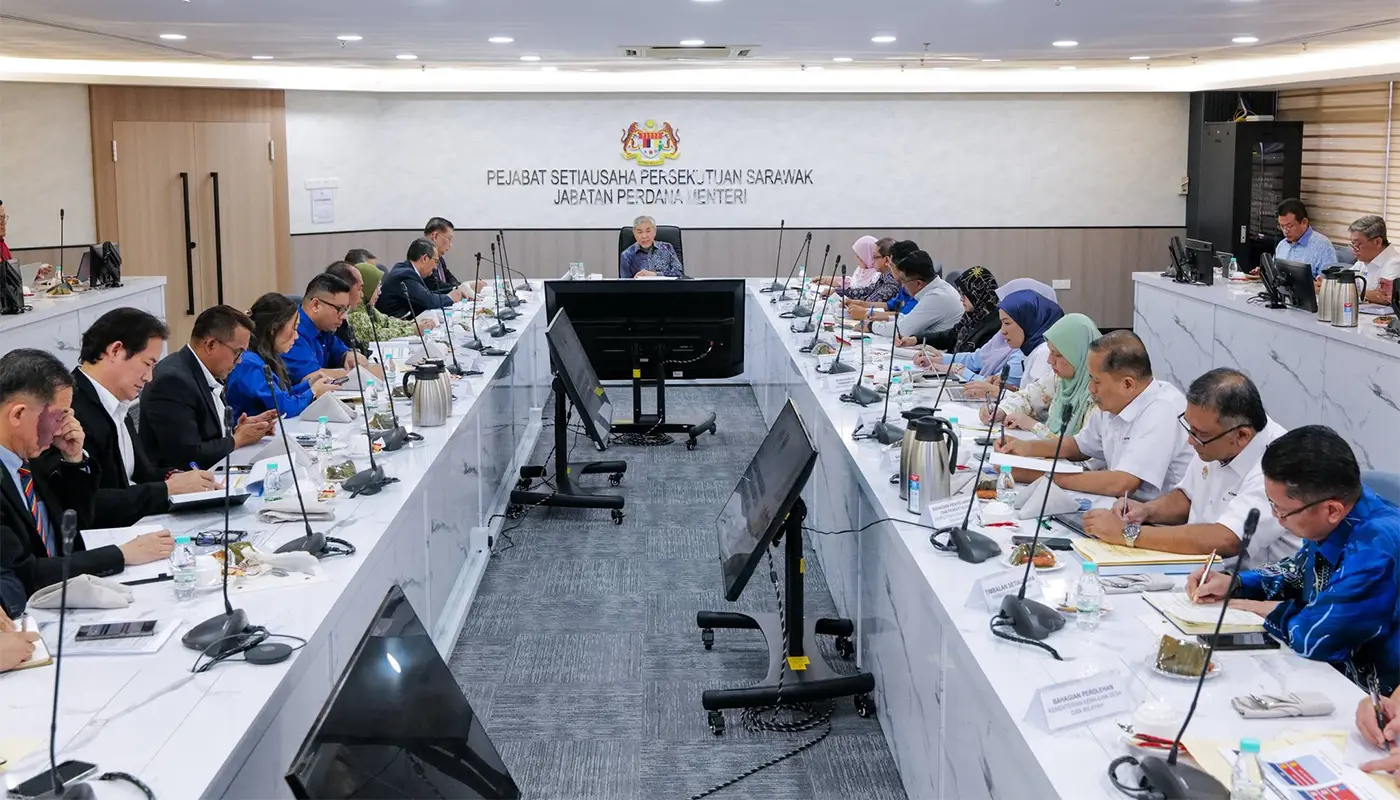
KUCHING – The Rural Water Supply Project (BALB) in Sarawak has been streamlined to accelerate implementation, following a coordination meeting chaired in Kuching with the Sarawak State Government.

The initiative, driven by the Ministry of Rural and Regional Development (KKDW), is described as a “game changer” in ensuring more effective delivery of water supply projects across rural communities.
For 2026, a total of 80 new and extension projects are scheduled under the First Rolling Plan (RP1) of the Thirteenth Malaysia Plan (RMK13).
These projects carry an allocation of RM141.87 million, reflecting the government’s commitment to improving infrastructure and living standards in rural areas.
Officials emphasised that the centralised approach provides significant advantages in terms of coordination at the state level.
By streamlining processes, the government aims to ensure smoother implementation in the field, reducing delays and improving efficiency.
The focus, they stressed, is not merely on completing projects but on enhancing the quality of life for rural residents.
Deputy Prime Minister Ahmad Zahid Hamidi highlighted the importance of the initiative, noting that access to clean and reliable water supply is a fundamental necessity.
He explained that the BALB project is designed to address long-standing challenges faced by rural communities, ensuring that development efforts translate into tangible benefits for the people.
“This is no longer a matter of projects, but a matter of people’s quality of life,” he said, underscoring the broader social impact of the programme.
He also expressed gratitude to the Sarawak State Government for its cooperation and strong support in advancing the initiative.
The Deputy Prime Minister confirmed that a project submission note would be handed over to the Premier of Sarawak later in the day, marking a formal step in the implementation process.
He added that the effort is expected to be blessed with success, reflecting the shared commitment of federal and state authorities to deliver meaningful improvements for rural communities.
The BALB project is part of Malaysia’s wider rural development strategy, which seeks to bridge infrastructure gaps and ensure equitable access to essential services.
In Sarawak, where many communities are located in remote areas, the initiative is seen as vital in supporting economic growth, health, and overall well-being.
By mobilising resources at the central level while coordinating closely with state authorities, the government hopes to set a new benchmark for rural infrastructure delivery.
The streamlined approach is expected to serve as a model for future projects, reinforcing the importance of collaboration in achieving sustainable development goals.
