



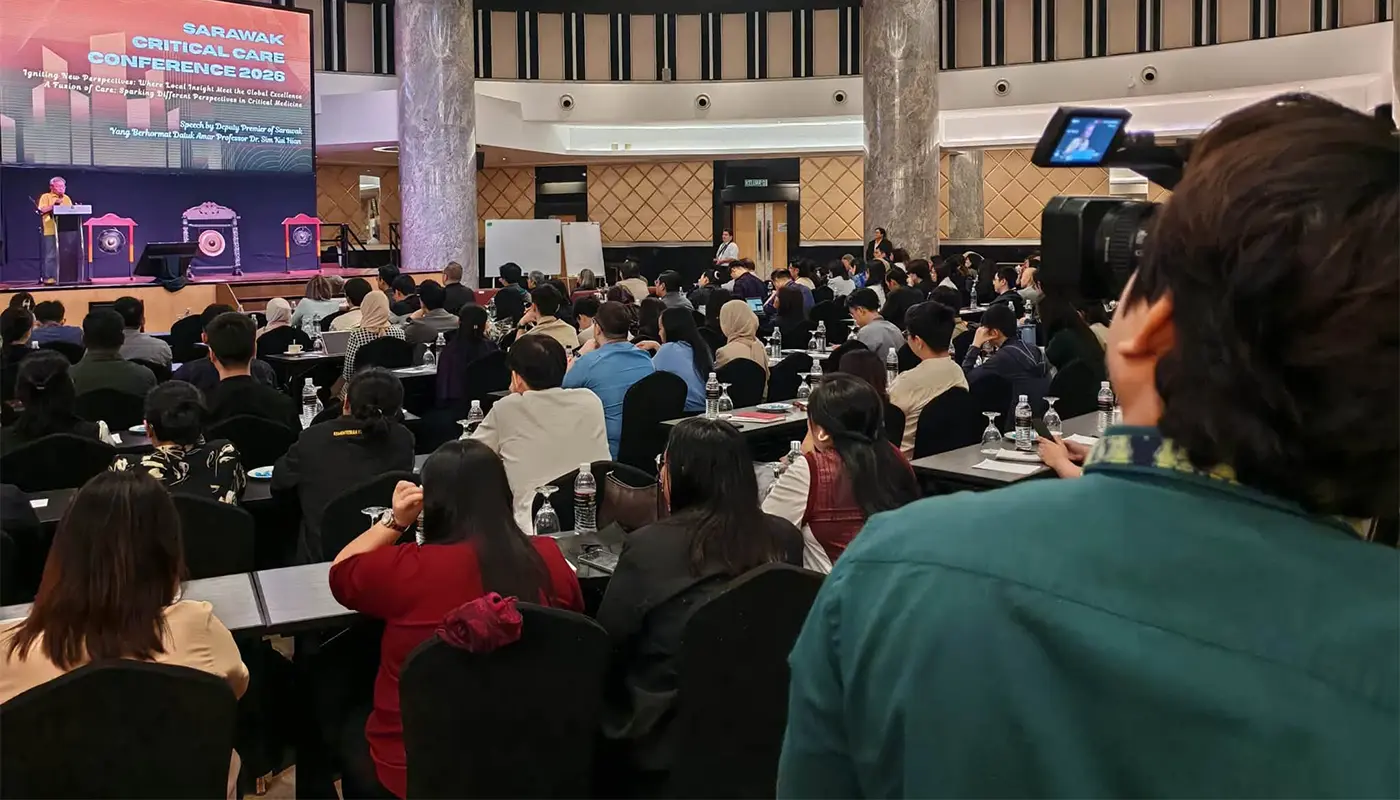
KUCHING – Sarawak has taken a significant step forward in its medical capabilities with the successful hosting of the inaugural Sarawak Critical Care Conference 2026. The event, organised by Dr Rachel Chin, brought together leading medical faculties from Malaysia, Singapore, and Taiwan, highlighting the state’s growing role in regional healthcare discourse.

The conference was themed ‘Sarawak’s Critical Care Milestone: A Symphony That Unites Minds, Saving Lives’, a title that encapsulated the collaborative spirit essential to intensive care medicine. Sessions focused on ‘Igniting New Perspectives: Where Local Insight Meet the Global Excellence’ and ‘A Fusion of Care: Sparking Different Perspectives in Critical Medicine’, allowing local practitioners to exchange knowledge with international experts.
Sarawak Deputy Premier Dr Sim Kui Hian extended his congratulations to Dr Chin for orchestrating the event. He praised the efforts of the visiting faculties from neighbouring countries and Peninsular Malaysia for their willingness to share expertise and support the local medical community.
Their participation provided valuable opportunities for Sarawakian doctors to broaden their clinical perspectives and adopt best practices from around the world.
However, the celebration of academic achievement was tempered by a stark reminder of the systemic challenges facing the state’s healthcare system. Dr Sim highlighted the extraordinary resilience of the staff at Sarawak General Hospital (SGH), which manages to treat approximately 3,000 critical care patients annually despite severe operational constraints.
The Deputy Premier outlined several critical deficiencies that the hospital continues to grapple with. Currently, SGH operates with only 2.5 nurses per bed, significantly below the Ministry of Health Malaysia’s (KKM) standard requirement of five nurses per bed.
The specialist team consists of just 14 consultants and 36 specialists in training, who are required to cover 24-hour shifts, including duties in the operation theatre.
Resource limitations also remain a pressing issue. Despite an insufficient number of ventilators and other essential equipment, the hospital maintains 99 intensive care unit (ICU) beds.
This capacity matches the peak levels seen during the height of the COVID-19 pandemic, when all available resources were channelled into critical care services. Furthermore, Dr Sim noted that many medical professionals, including Dr Chin, are often underpaid relative to their qualifications and workload.
Dr Chin, who hails from Kelantan and completed her postgraduate fellowship in Singapore and Taiwan, chose to serve in Sarawak. Her decision led to the establishment of the state’s first Medical Critical Care Unit earlier this year.
Dr Sim commended her and the entire SGH team for their high spirits and unwavering commitment to putting the people of Sarawak first.
He expressed confidence that, with adequate support and resources, the current team has the potential to rank among the top 100 critical care providers in the Asia-Pacific region. However, achieving this goal requires addressing the fundamental structural issues identified in recent audits.
Last year, following persistent appeals from the state government, KKM officials from Kuala Lumpur conducted a human resources audit in Sarawak.
The findings revealed a startling disparity: Sarawak operates with 45 per cent fewer hospital beds and 54 per cent fewer doctors than the national average. The audit further concluded that the state requires approximately 11,000 additional healthcare posts across its medical systems to meet basic needs.
Dr Sim criticised the federal ministry’s historical stance that recruitment difficulties were due to a lack of interest from professionals willing to move to Sarawak. He pointed out that KKM had not even created the necessary posts for these positions, rendering the argument moot.
“Since KKM is struggling to fulfil their obligation and responsibility, another way forwards is devolution of power for Sarawak Health Autonomy under the Malaysia Agreement 1963 (MA63),” Dr Sim stated.
This call for health autonomy under MA63 has gained momentum as the state seeks greater control over its healthcare delivery and resource allocation. By managing its own health portfolio, Sarawak aims to address staffing shortages more effectively and tailor solutions to its unique demographic and geographic challenges.
The conference served not only as an academic platform but also as a catalyst for advocacy. It highlighted the dichotomy between the high quality of care provided by dedicated individuals and the systemic inadequacies they must overcome. As Sarawak pushes for greater autonomy, the success of events like this demonstrates the state’s readiness to take charge of its healthcare future.
The involvement of international experts also signals Sarawak’s ambition to become a hub for medical excellence in Borneo. By fostering connections with Singapore and Taiwan, the state is building a network of knowledge that can help mitigate local resource gaps through innovation and shared learning.
As the conference concluded, the focus shifted from celebration to action. The data presented by Dr Sim provides a clear roadmap for what is needed: more beds, more doctors, and ultimately, the political will to implement health devolution. For the people of Sarawak, these changes cannot come soon enough.
