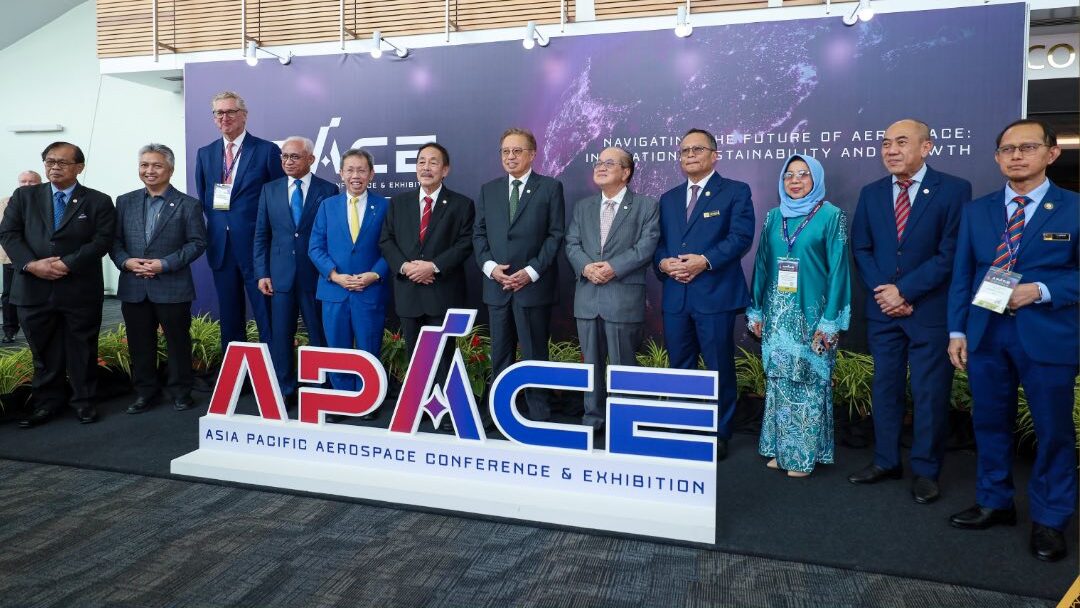
KUCHING, Jan 27 — Sarawak is positioning itself to become a serious player in the regional aerospace and new space economy by adopting CubeSat technology as a faster and more affordable alternative to traditional satellites. This strategic direction was outlined by the Premier of Sarawak, the Right Honourable Datuk Patinggi Tan Sri Dr Abang Haji Abdul Rahman Zohari bin Tun Datuk Abang Haji Openg, during the launch of the Asia Pacific Aerospace Conference and Exhibition (APACE) 2026 at the Borneo Convention Centre Kuching.
In his keynote address, the Premier described aerospace and space technology as strategic industries that are no longer optional but essential for economic competitiveness, technological independence, and responsible environmental management. He stressed that Sarawak’s approach is disciplined and practical, focusing on real-world applications rather than expensive prestige projects.
At the centre of Sarawak’s space strategy is the use of CubeSats, which are small, modular satellites that cost far less and can be developed much faster than conventional satellites. The Premier noted that traditional satellites can cost between 100 and 300 million euros and require five to 15 years to develop and deploy. In contrast, a CubeSat can cost less than 500,000 euros and may be designed, built, and placed in low Earth orbit in under a year.

This difference, he explained, changes the rules of the game by lowering financial risks and opening access to space for smaller economies. Low Earth Orbit satellites such as CubeSats also offer low-latency and high-bandwidth capabilities, making them suitable for Earth observation and communication needs. These features are particularly relevant for Sarawak, given its vast rainforests, extensive river networks, and long coastline.
The Premier revealed that Sarawak is already using satellite data for practical purposes, including forest and natural resource management, agriculture planning, land-use monitoring, disaster preparedness, and maritime surveillance. These applications directly support state development goals and improve decision-making across key sectors.

Looking ahead, Sarawak plans to expand research into satellite systems, ground operations, and artificial intelligence-based data analytics. This includes building ground stations and encouraging start-ups to transform raw satellite data into useful information for farmers, foresters, and emergency responders.
The space initiative is also aligned with the Post-COVID-19 Development Strategy 2030. The Premier highlighted long-term capacity building through education, governance, and industry partnerships. Key efforts include the Faculty of Aerospace Engineering at i-CATS University College, specialised training in aircraft maintenance and overhaul, and the Sarawak Talent Development Policy. Projects such as the Sarawak Science Centre and the Borneo Astronomy Centre in Santubong are also planned to encourage interest in science and technology among young Sarawakians.
In closing, the Premier said Sarawak aims to secure its own future while contributing to a competitive and collaborative ASEAN aerospace landscape. His address at APACE 2026 signalled a clear intention for Sarawak to move from being a technology user to an active developer and owner of space capabilities, with CubeSats forming the foundation of this new direction.