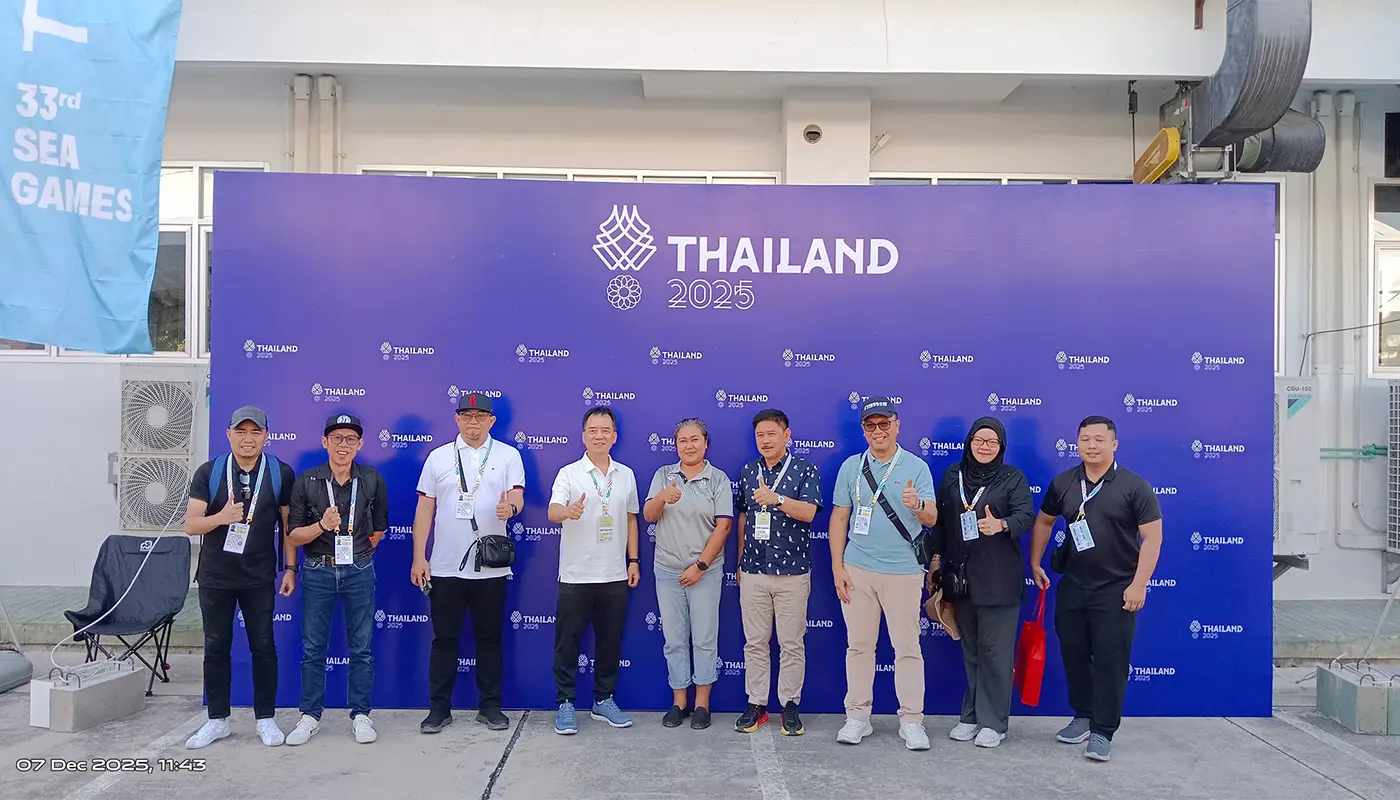
BANGKOK – The Sarawak Government delegation continued its working mission in Bangkok with a detailed review of venues designated for the SEA Games 2025, focusing on preparations for Muay and Petanque competitions.
The delegation included Datuk Gerald Rentap Jabu, Deputy Minister of Youth, Sports and Entrepreneur Development (Youth and Sports), Datuk Dr Ripin Lamat, Deputy Minister of Entrepreneur Development, Azizul Annuar Adenan, Vice President of the Olympic Council of Malaysia and Assemblyman for Tanjong Datu, Datu Hii Chang Kee, Deputy Secretary to the Sarawak Government (Operations), and Morshidi Frederick, Permanent Secretary of the Ministry of Youth, Sports and Entrepreneur Development (MYSED). Senior officials from MYSED and the Sarawak Sports Corporation (SSC) also joined the visit.
On the second day, the delegation toured the Royal Thai Army Sports Centre at Lumpinee Boxing Stadium, the official Muay venue for the Games.

Hosted by Lieutenant General Pongchart Kampalanuwong and his team, the visit provided Sarawak officials with insights into Thailand’s approach to venue operations, technical management, and athlete coordination.
Thai organisers delivered a comprehensive briefing covering security measures, competition scheduling, and crowd management. The Sarawak team also examined seating arrangements to evaluate spectator capacity and delegation requirements.

Best practices in daily operations and event organisation were shared, offering valuable lessons for Sarawak’s own preparations for the SEA Games 2027, where Muay will be among the 17 sports contested.
The working mission continued at Valaya Alongkorn Rajabhat University in Pathum Thani, which now hosts Petanque following the relocation of several sports from Songkhla due to flooding.
Songkhla had originally been scheduled to stage 10 sports, including football, kabaddi, judo, karate, wrestling, chess, pankration, wushu, amateur boxing, and Petanque.
During the inspection, the Sarawak delegation assessed technical readiness, including the quality of the playing surface, competition zone layout, athlete movement flow, and risk management strategies.
Discussions highlighted the challenges of relocating venues and the measures taken by Thai organisers to maintain competition standards despite the disruption.
Officials noted that the Thai organisers’ ability to adapt to unforeseen circumstances demonstrated resilience and effective planning.
These observations will serve as a reference point for Sarawak as it prepares to host events in 2027, ensuring facilities, logistics, and competition operations meet international expectations.
The visit underscored Sarawak’s commitment to learning from regional partners and applying proven strategies to its own hosting responsibilities.
By drawing on Thailand’s experience, Sarawak aims to strengthen its readiness and deliver successful SEA Games for athletes, officials, and spectators alike.