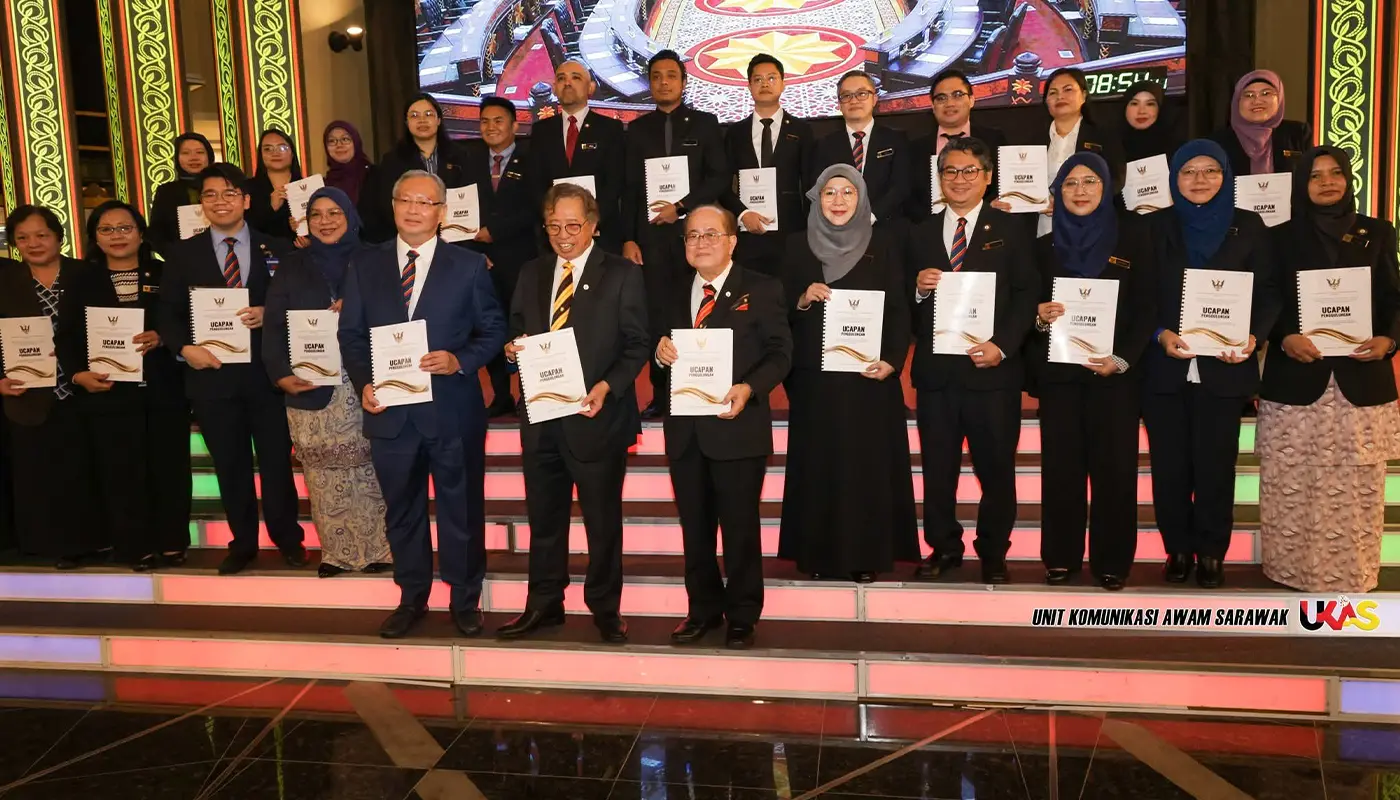
KUCHING – The Sarawak Legislative Assembly (DUN) has passed the Supply (2026) Bill, 2025, marking the approval of the state’s financial framework for the year ahead.
The decision was announced by Speaker Tan Sri Datuk Amar Mohamad Asfia Awang Nasar on Wednesday, following the Bill’s third reading by Premier Datuk Patinggi Tan Sri (Dr) Abang Abdul Rahman Zohari Tun Datuk Abang Openg.
The Premier, who also serves as Minister for Finance and New Economy, had tabled the Bill on 24 November. His proposal received support from Deputy Premier Datuk Amar Douglas Uggah Embas, underscoring the government’s unified stance on fiscal planning.

The 2026 Sarawak Budget outlines a total Ordinary Expenditure of RM12.9 billion, with allocations split between Operating Expenditure and the Development Fund Account. Of this, RM5.6 billion has been earmarked for operating costs, while RM7.3 billion will be channelled into development initiatives.
The Premier highlighted that the budget projects a surplus of RM144 million, with estimated revenue of RM13.05 billion against total expenditure of RM12.91 billion. This surplus reflects the government’s commitment to prudent financial management while ensuring resources are directed towards growth and welfare.

Breakdown of the Operating Expenditure includes RM1.4 billion for staff emoluments, RM2.2 billion for supplies and services, and RM1.8 billion for grants and fixed payments. These cover management grants to statutory bodies and local authorities, debt servicing, gratuities, pensions, scholarships, and welfare assistance.
In addition, RM99 million has been allocated for asset acquisition, while RM150 million is set aside for other operating expenses. The Premier emphasised that these allocations are designed to balance immediate operational needs with long-term development priorities.
The passage of the Supply Bill signals Sarawak’s readiness to implement its 2026 budget, focusing on sustainable growth, infrastructure development, and social welfare.
The government’s fiscal strategy aims to strengthen the state’s economic resilience while ensuring that public services and development projects continue to benefit the people of Sarawak.