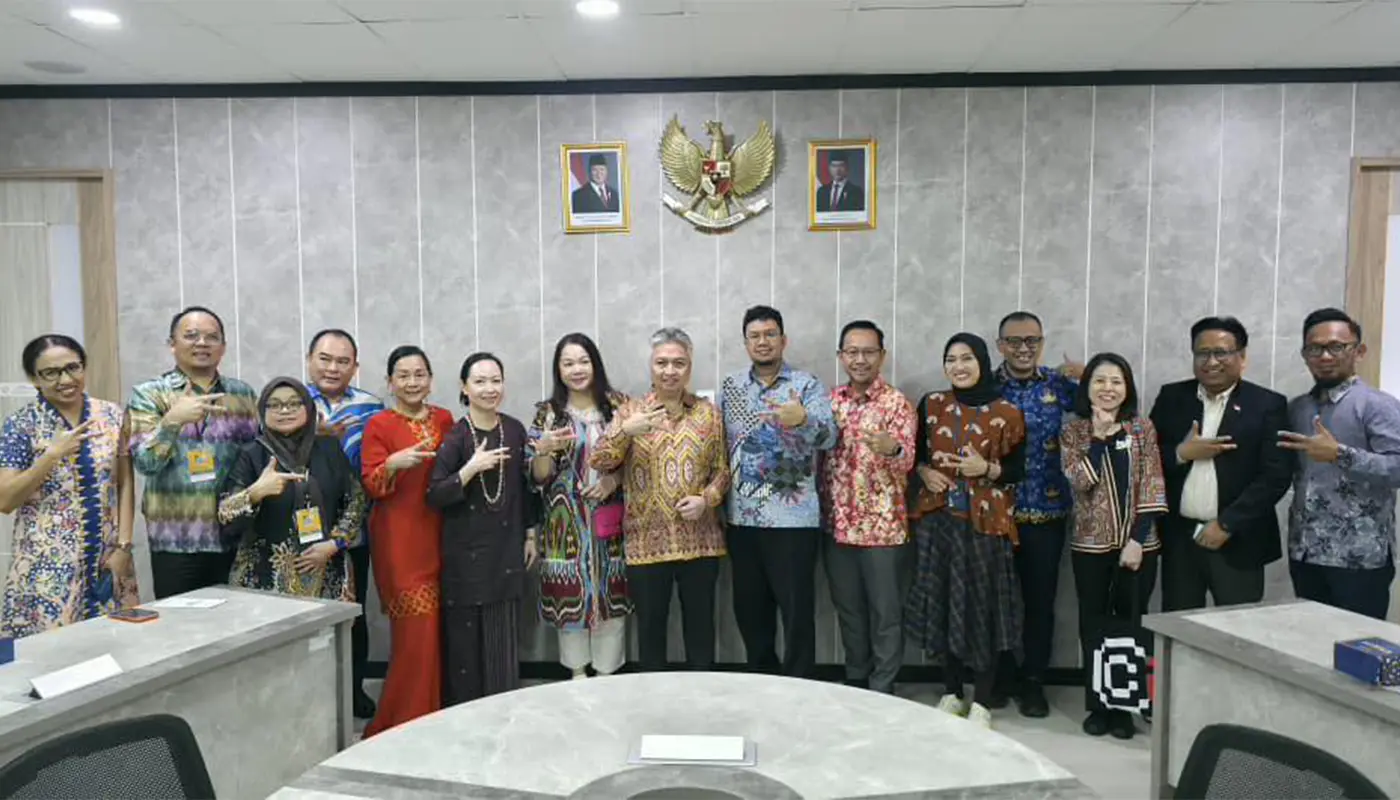
JAKARTA – Sarawak has further cemented its relations with Indonesia with a strategic bilateral meeting on creative industry ecosystem-based collaboration.
Jointly taking place with the Jakarta International Handicraft Trade Fair on 5 February 2026, the engagement underscored the significance of a role of government, industry, communities and academia to media and financial institutions in supporting sustainable development.
The delegation from Sarawak was headed by Yang Berhormat Datuk Snowdan Lawan, the Deputy Minister of Tourism, Creative Industry and Performing Arts Sarawak.

Accompanying him among the senior officials were Sarawak Craft Council CEO Mr Suriya Charles, Sarawak Arts Council Acting CEO Mr Awang Ikman bin Awang Sepian, Dewan Bandaraya Kuching Utara Deputy Director Mr Rudzaimer Malek and board of council members Miss Melia Linggi Jugah, Mdm Nur Rahmah Ranong and Mr Mohd Fu’ad Ariffin. The Director of Kraftangan Malaysia (Sarawak) were also present.
Indonesia was represented in the talks by Bapak Radi Manggala, Director of Marketing System Development and Institutional Relations on behalf of Deputy Rector Bapak Cecep Rukendi from the Ministry for Creative Economy. Senior Consul Ibu Lidya Karlina Ndoen and some officers from the Indonesian Consulate Office Kuching were also there.

It focused on how to enhance cooperation in craft industry development, creative entrepreneurship and market expansion policies. Both sides shared views on policies for promotion of artisans, creative MSMEs and grassroot level enterprises covering aspects like capacity building efforts, productivity improvement initiatives and digital readiness against international markets.
One focal point was Indonesia’s Hexahelix approach, where government, industry, community groups, academia and media as well as financial institutions were integrated in an existing creative economy ecosystem. Sarawak offered its prevailing approach, “heritage and community empowerment supported by government agencies, communities, academia and media.”
Discussions also gave rise new considerations for Sarawak to consider the potential for greater private investment and financial institutions contributions in scaling heritage-based craft sectors, as well as enhancing access to sustainable financing.
Datuk Snowdan Lawan, in his speech during the session, said Sarawak aimed to develop creative industries based on heritage as catalysts for economic growth and tourism.
He added that working with Indonesia as the regional front runner in building their creative economy ecosystem will provide good opportunities to share experiences of institutional coordination, creative funding and moving traditional crafts into one of the globally competitive sectors.
The collaboration is anticipated to grow market access for creative products from Sarawak and Indonesia via trade fairs, exhibitions, and business matching programmes. It also promotes sustainable heritage based industries such as engaging widows and empowering rural/traditional artisans.
They expressed strong interest in examining future partnership models to support ecosystem-based collaboration, raise the prominence of creative industries globally and guarantee that culture is at the heart of development through cultural heritage, community livelihoods and innovation.