



KUCHING – Sarawak is advancing its long-term infrastructure agenda with the proposed New Kuching International Airport (NKIA), a major component of the Kuching Low-Carbon Hub (KLCH) master plan.

The project is expected to transform the state’s aviation sector, strengthen international connectivity, and support economic expansion.
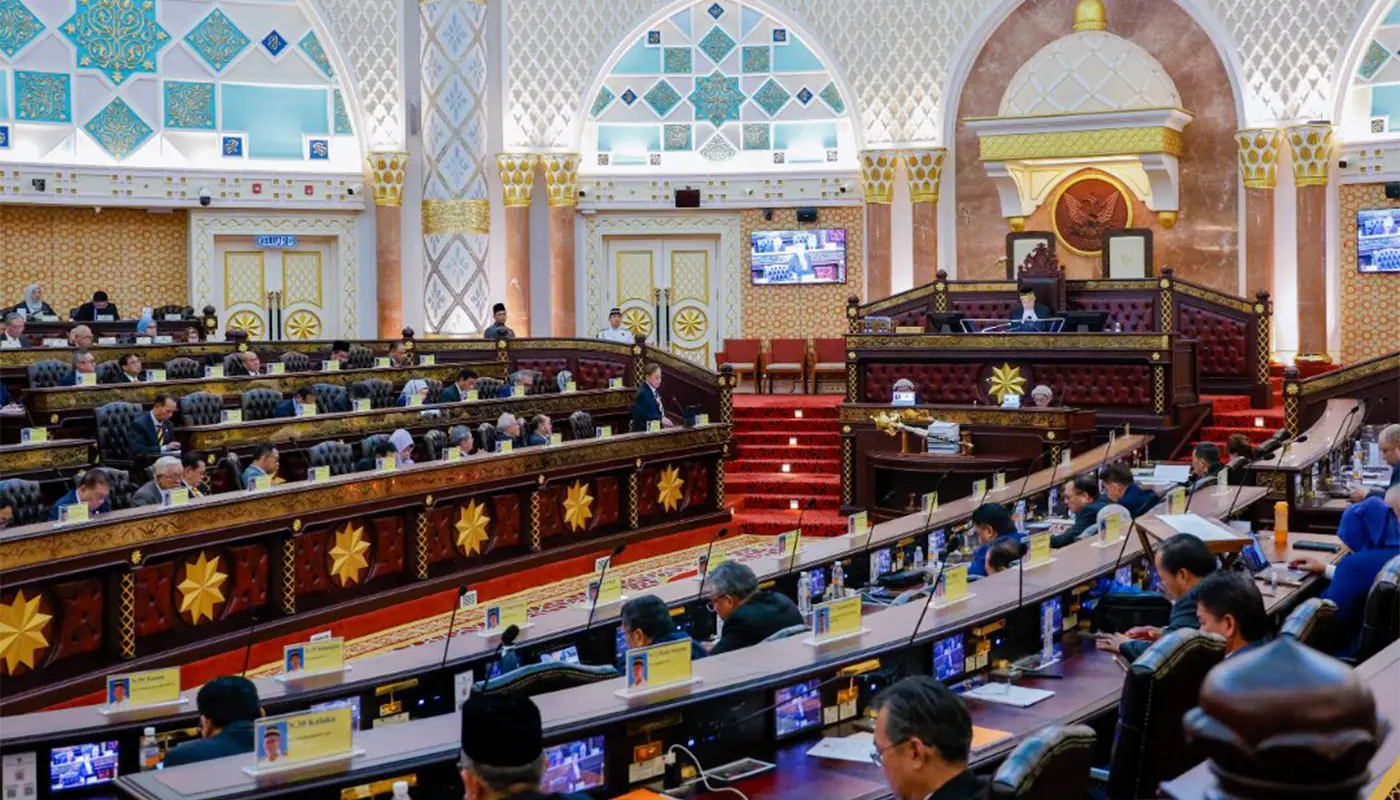
The Premier of Sarawak, Datuk Patinggi Tan Sri (Dr) Abang Haji Abdul Rahman Zohari bin Tun Datuk Abang Haji Openg, highlighted the significance of the NKIA during his winding-up speech at the State Legislative Assembly.
He explained that the airport is being designed with an initial annual passenger capacity of 15 million, with provisions for future expansion as demand increases.
“The long-term masterplan allows the airport’s capacity to be progressively upgraded to accommodate up to 60 million passengers annually in the future, reflecting Sarawak’s forward-looking infrastructure planning strategy,” he said.
The NKIA is envisioned as a future-ready aviation hub that will enhance passenger mobility, cargo operations, and aviation-related services across the state.
Beyond passenger traffic, the airport is expected to strengthen Sarawak’s air cargo logistics capabilities and support the growth of maintenance, repair and overhaul (MRO) services.
These sectors are anticipated to generate higher-value economic activities, attract foreign and domestic investment, and create skilled employment opportunities.
The Premier emphasised that the NKIA will not stand alone but will form part of a wider integrated framework under the KLCH masterplan. Complementing the airport, a proposed deep-sea port in Tanjung Embang is also being planned.
This port is expected to improve maritime logistics efficiency, facilitate larger cargo volumes, and support industrial expansion in the surrounding growth corridor.
Together, these projects are designed to position Sarawak as a competitive regional logistics and industrial hub.
The KLCH masterplan reflects Sarawak’s broader ambition to become a high-income and innovation-driven economy.
By combining aviation and maritime infrastructure, the state aims to strengthen its participation in regional and global supply chains.
The Premier noted that these developments will serve as critical pillars in ensuring Sarawak remains competitive in the decades ahead.
The NKIA project also underscores Sarawak’s commitment to sustainable growth and future-ready planning.
With its low-carbon focus, the KLCH framework is expected to balance economic expansion with environmental responsibility.
The Premier stressed that the initiative is not only about building infrastructure but also about creating opportunities for communities, businesses, and industries to thrive in a more connected and resilient economy.
As the KLCH master plan progresses, the New Kuching International Airport is set to play a central role in Sarawak’s aviation and economic transformation.
Together with the Tanjung Embang deep-sea port and other supporting infrastructure, the initiative highlights the state’s determination to modernise its transport system, expand trade, and secure long-term prosperity.
