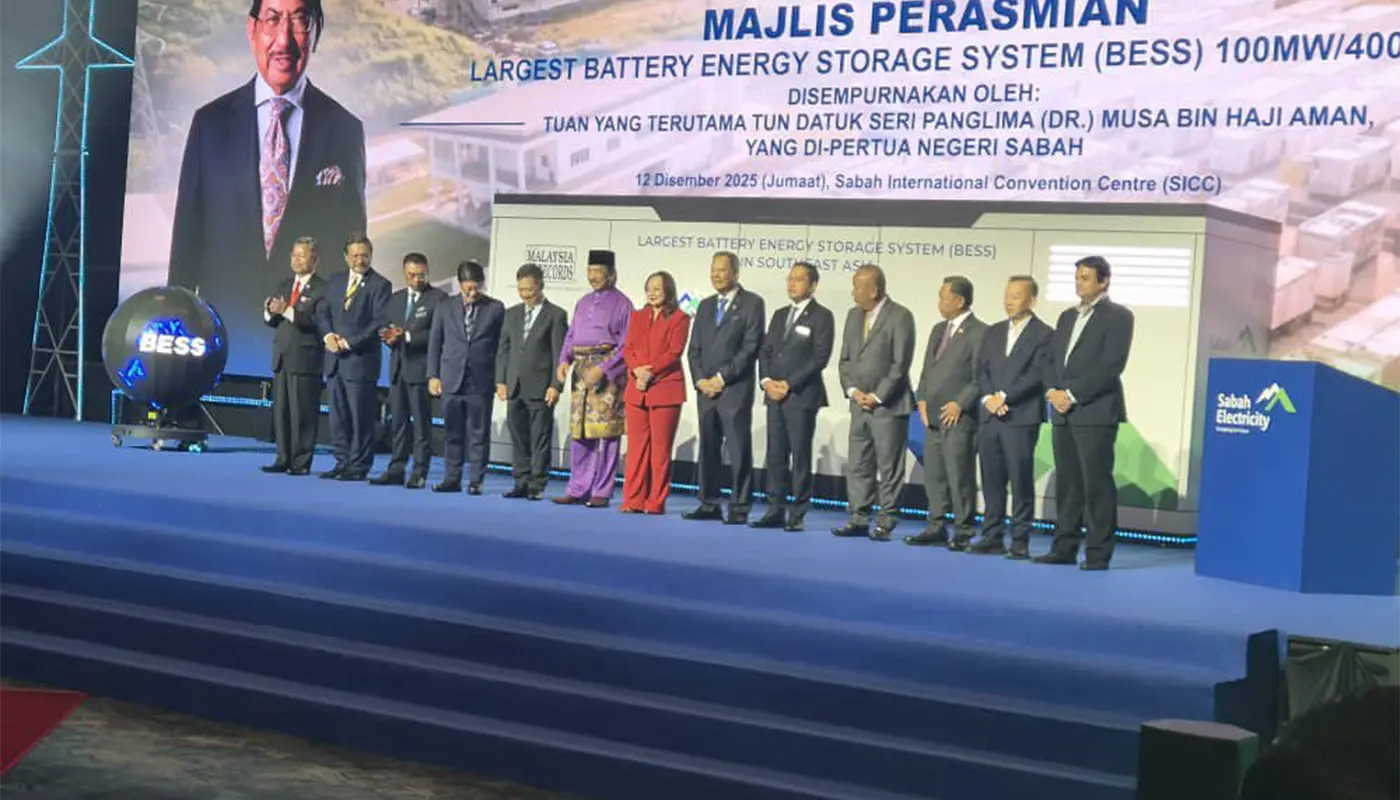
KOTA KINABALU – Sarawak’s Deputy Minister of Energy and Environmental Sustainability, Datuk Dr Hazland Abg Hj Hipni, represented the state government at the official launch of Southeast Asia’s largest Battery Energy Storage System (BESS) project, held at the Sabah International Convention Centre (SICC) on Friday.
The ceremony was officiated by Tun Musa Aman, Yang di-Pertua Negeri Sabah, marking a milestone in Sabah’s energy transformation agenda. Dr Hazland’s presence underscored Sarawak’s commitment to regional cooperation in advancing sustainable energy development.
The BESS project, located in Lahad Datu, has a capacity of 100 megawatts (MW) with 400MW-hours of energy storage, making it the largest facility of its kind in Southeast Asia. The initiative is expected to significantly enhance electricity stability, particularly on Sabah’s East Coast.

Saadiah Aziz, Chairman of Sabah Electricity Sdn Bhd (SESB), highlighted that the project was completed in just nine months, reflecting Sabah’s determination to strengthen its power infrastructure. She explained that the facility will reduce risks of supply disruptions and improve the quality of life for more than 700,000 electricity consumers across the state.
Meanwhile, Datuk Seri Dr Joachim Gunsalam, Sabah Deputy Chief Minister and Minister of Works and Utilities, said the project aligns with the Sabah Energy Master Plan and the Sabah Energy Roadmap 2040, which emphasise energy security, cost-effectiveness, and environmental sustainability. He added that Sabah has approved 1,000MW of new generation capacity, including hydro, solar, and wind projects.

Looking ahead, the Sabah Energy Commission (ECos) plans to launch a Large Scale Solar (LSS) bid with a capacity of 350MW in 2027, further expanding renewable energy adoption in the state.
The launch ceremony drew around 1,000 participants, including representatives from government departments, state agencies, energy industry stakeholders, NGOs, and utility sector organisations.
Dr Hazland’s participation not only strengthened bilateral ties between Sarawak and Sabah but also reflected a shared vision of sustainable energy development across Borneo and the wider Southeast Asian region.