KUCHING – Sarawak’s civil service has been urged to remain lean and agile, with reforms centred on efficiency and accountability rather than workforce expansion.
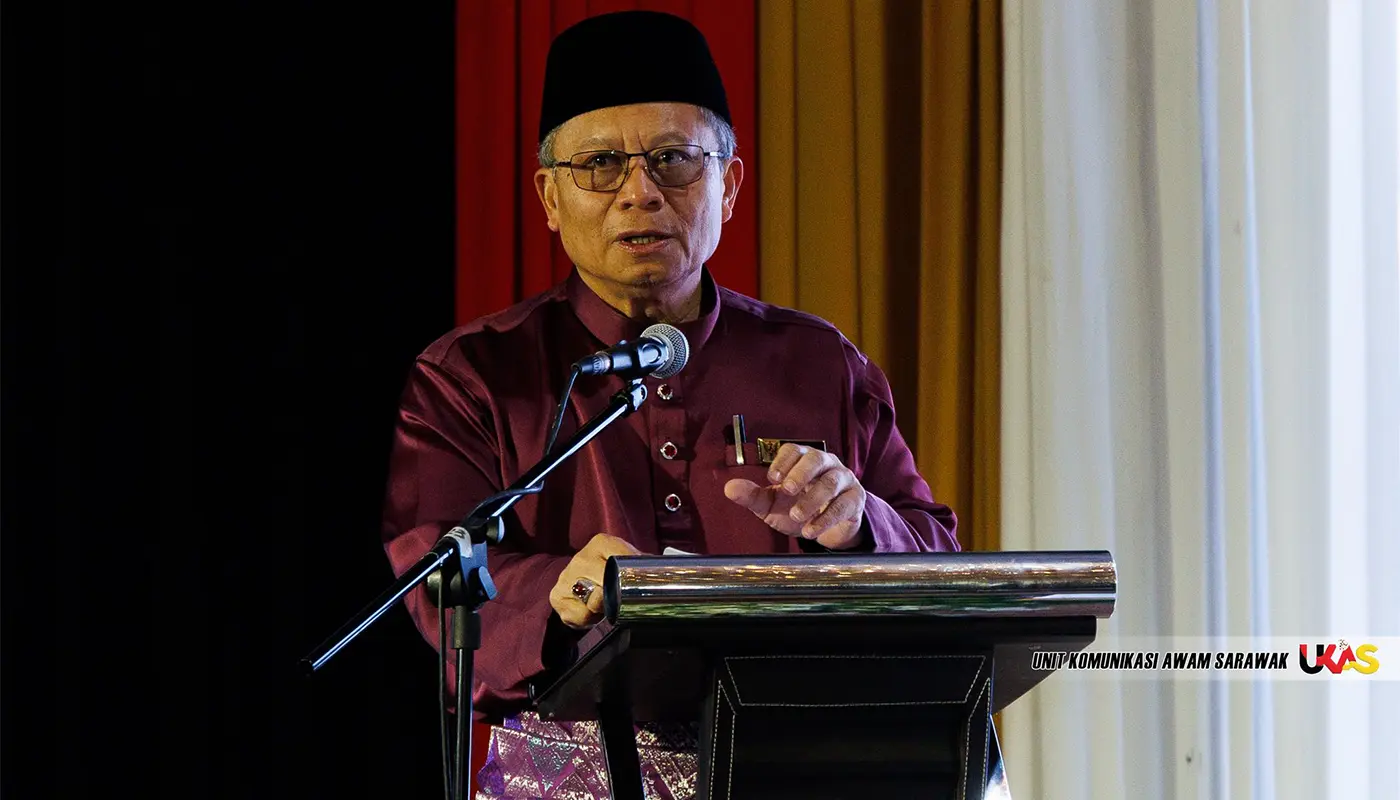
State Secretary Datuk Amar Mohamad Abu Bakar Marzuki made the call during the Majlis Bersama Setiausaha Kerajaan Sarawak ceremony at the Sarawak Islamic Complex.
He explained that while government agencies face growing responsibilities, this should not automatically lead to requests for more personnel. Instead, agencies must adapt through improved systems, digitalisation and streamlined work practices.

“Civil service today must move in a lean manner, and we should not assume that increasing responsibilities require an increase in manpower,” he said.
Risks of Over-Expansion
Datuk Amar cautioned that excessive expansion could hinder the ability of institutions to remain responsive to evolving demands. A larger workforce, he noted, does not necessarily equate to better service delivery.

This aligns with broader reforms under Sarawak’s Revisit, Rethink, Recharge (3R) framework, which has already introduced over 200 initiatives to modernise governance.
Premier Tan Sri Abang Johari Tun Openg has similarly stressed that a strong civil service is measured by impact rather than size, urging agencies to simplify processes, cut inefficiencies and embrace innovation.
Outsourcing and Efficiency
Datuk Amar highlighted outsourcing as a practical solution to reduce operational burdens, particularly for non-core functions.
By delegating certain tasks to external providers, agencies can concentrate on their primary responsibilities.
This approach reflects Sarawak’s broader push towards a leaner government model, designed to deliver faster and more cost-effective services.
Integrity and Accountability
The State Secretary reminded civil servants that the trust placed in them by the leadership carries a responsibility to uphold integrity, professionalism and accountability.
He emphasised that Islamic agencies, in particular, must lead by example in demonstrating disciplined governance and effective management.
Distinguished Attendance
The ceremony was attended by several prominent figures, including Sarawak Islamic Council President Datuk Misnu Taha, Syariah Reference Expert Datu Khalidi Ibrahim, Sarawak Islamic Religious Department (JAIS) Director and MIS Secretary Sahibus Siyadah Mual Suaud, Sarawak Grand Imam Dato Mustapha Kamal Ahmad Fauzi, and Sarawak Syariah Judiciary Department Chief Justice Datu Awang Suhaili Ledi.
Broader Reform Context
Sarawak’s civil service reforms are part of the state’s ambition to achieve developed status by 2030. The lean governance approach is closely tied to the Post-Covid Development Strategy (PCDS) 2030 and the Sarawak Digital Economy Blueprint, both of which emphasise innovation, digitalisation and results-driven administration.
By prioritising efficiency, outsourcing non-core functions and reinforcing integrity, Sarawak aims to build a civil service that is not only lean but also impactful, delivering measurable benefits to the people.
Sources: UKAS, Sarawak Daily