



KUCHING – Communities in the interior of Baram are set to benefit from improved road access following the Sarawak Government’s decision to assume responsibility for more than 7,000 kilometres of logging roads across the state.

Deputy Minister in the Sarawak Premier’s Department (Labour, Immigration and Project Monitoring), Datuk Gerawat Gala, revealed that approximately 2,700 kilometres of these roads are located in Baram.
He described them as crucial lifelines for residents in remote settlements, many of whom rely on logging tracks as their primary routes to towns and essential services.
Gerawat explained that once gazetted as state roads, the routes will qualify for maintenance, repair and upgrading under the Malaysian Road Records Information System (MARRIS) funding provided by the Federal Government.
“Of that total, 2,700 kilometres are located in the Baram Division. Once these roads are gazetted as state roads, we become eligible to receive MARRIS funding for phased maintenance, repairs and upgrading works,” he said.
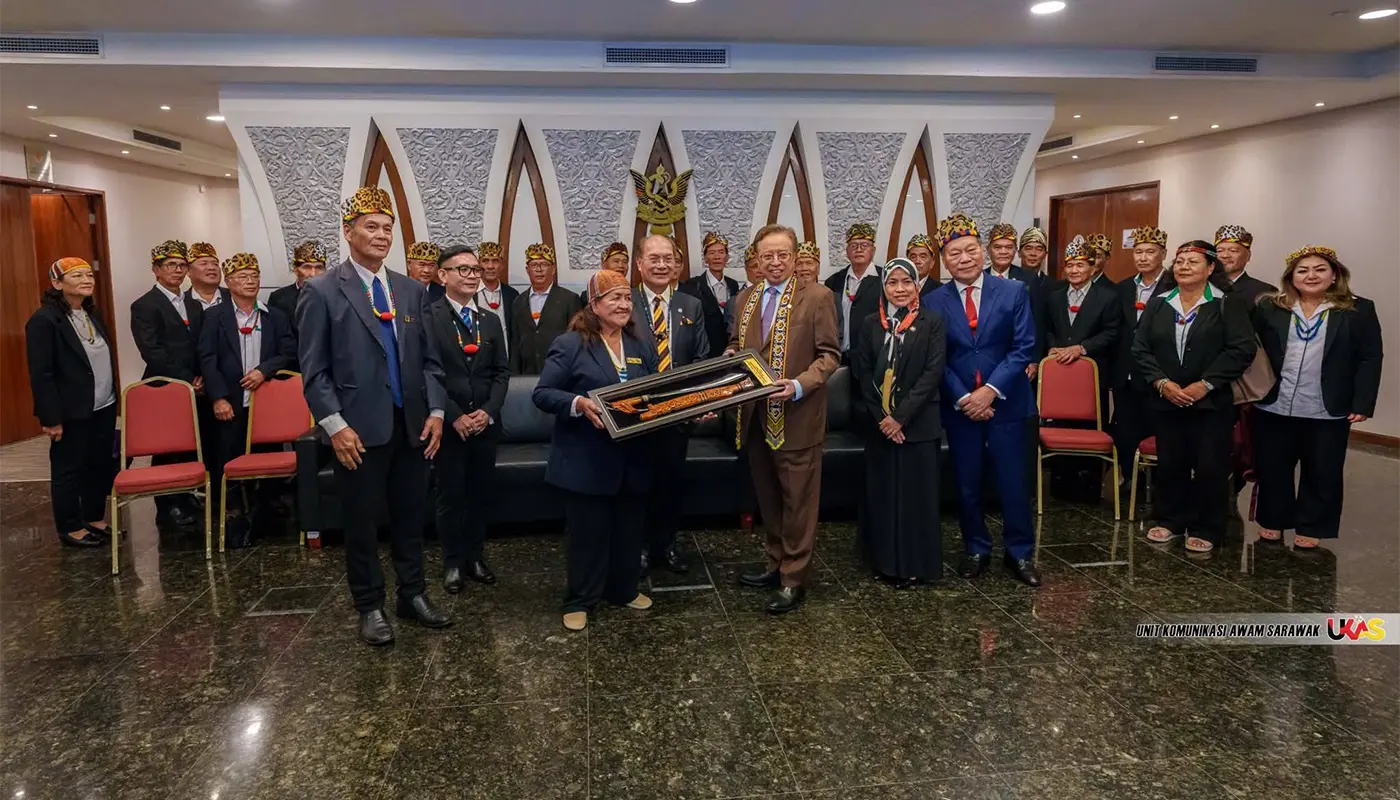
He made the remarks after leading a courtesy visit to Premier Datuk Patinggi Tan Sri (Dr) Abang Abdul Rahman Zohari Tun Datuk Abang Openg at the Sarawak Legislative Assembly Complex.
The delegation included 27 community leaders and village chiefs from Baram, accompanied by representatives of the Sarawak Kelabit Association.
During the meeting, the community expressed gratitude to the Premier and the Gabungan Parti Sarawak (GPS) Government for ongoing development initiatives in Bario.
These include the provision of 24-hour electricity, improved telecommunications and internet services, and access to a clean water supply.
Among the requests submitted was the upgrading of the road from Lapok Town to Bario, a vital stretch that connects more than 100 longhouses deep in the interior.
The Kelabit community also appealed for support in modernising the Bario rice industry. They emphasised the need for mechanisation to boost production of the region’s renowned speciality rice, which is still largely cultivated using traditional methods.
Gerawat noted that the Premier shared examples of modern farming techniques currently being applied in other parts of Sarawak, which have successfully increased paddy yields.
He said these approaches could be adapted to benefit the Kelabit rice industry, ensuring sustainability and higher output.
In addition, the Kelabit community requested the establishment of a Temenggong position to represent their interests, similar to arrangements already in place for other Orang Ulu groups such as the Lun Bawang, Bisaya and Penan.
The takeover of logging roads is expected to transform connectivity in Baram, opening up opportunities for economic growth, education, healthcare access and community development.
Analysts suggest that the move could significantly reduce isolation in rural areas, while also supporting Sarawak’s broader agenda of inclusive development.
