



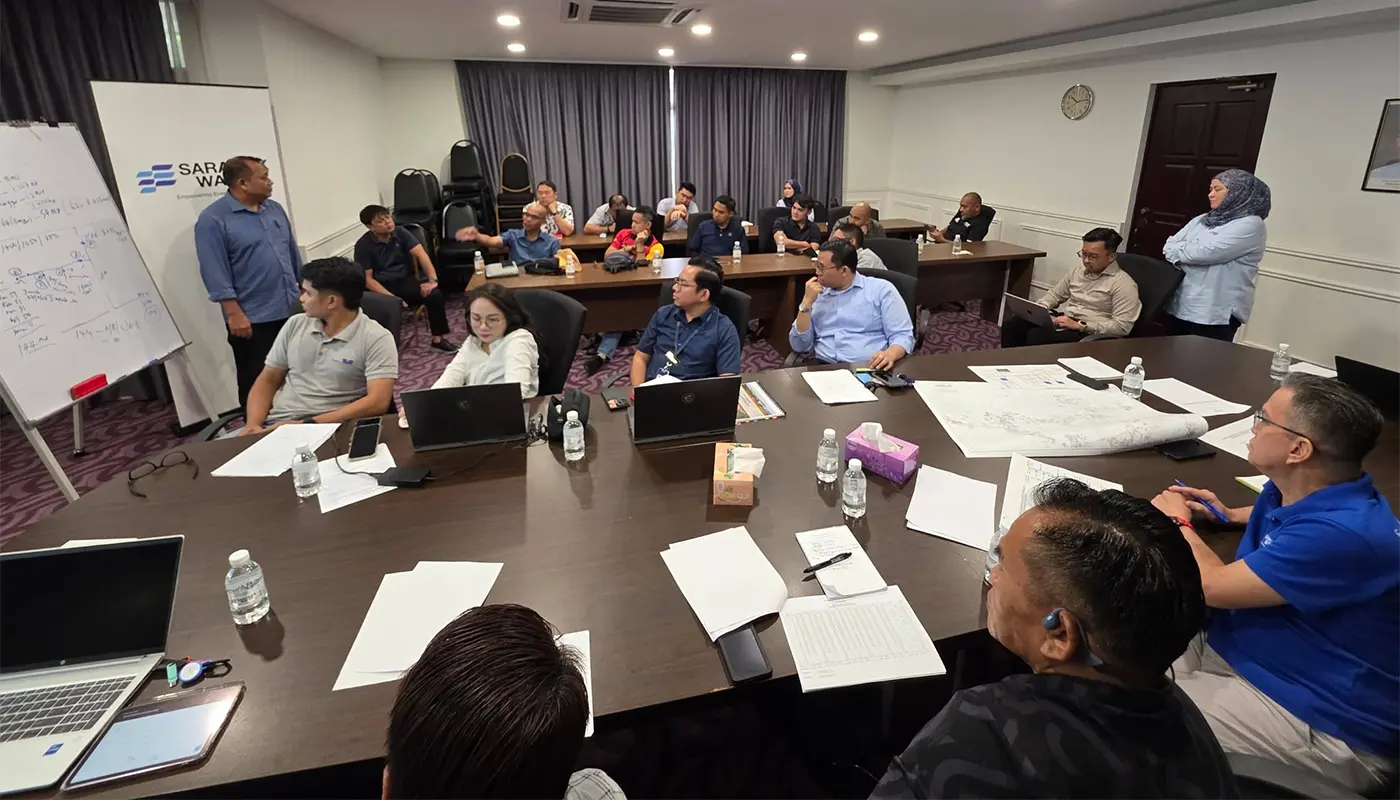
KUCHING – Sarawak Water and the Sarawak Rural Water Supply Department (JBALB) have held a joint technical discussion session to explore solutions for improving water distribution in Sebuyau and surrounding areas.

The meeting, chaired by Acting Chief Executive Officer of Sarawak Water, Mrs Malseni Jamal, brought together senior representatives from both agencies.
JBALB Sarawak was represented by Ir. Ts. Awang Muhammad Ayahtullah Awg Najeri, Head of Distribution and Non-Revenue Water (NRW) Branch, alongside officers from both organisations.
The session focused on identifying practical measures to strengthen the water supply system in Sebuyau, an area that has faced challenges in meeting growing demand.
Both agencies emphasised that water issues in Sarawak are a shared responsibility, requiring close collaboration to ensure reliable services for residents.
Discussions highlighted the importance of joint planning and technical cooperation, particularly in addressing infrastructure gaps and improving efficiency in water distribution.
The agencies agreed that coordinated action is essential to deliver sustainable solutions that meet the needs of communities across the region.
Sarawak Water reaffirmed its commitment to working hand-in-hand with JBALB, noting that partnerships between government-linked entities are crucial in tackling complex supply challenges.
JBALB echoed this sentiment, stressing that collaboration would help ensure long-term improvements in service delivery.
This initiative reflects the broader vision of the Sarawak government to strengthen infrastructure and public utilities, aligning with development strategies aimed at improving quality of life for rural and urban communities alike.
By pooling expertise and resources, Sarawak Water and JBALB aim to create a more resilient and efficient water supply system.
The meeting concluded with both parties pledging to continue their cooperation, with follow-up actions expected to focus on technical upgrades, monitoring, and community engagement.
The collaboration serves as a reminder of the importance of collective responsibility in safeguarding essential services for the people of Sarawak.
