



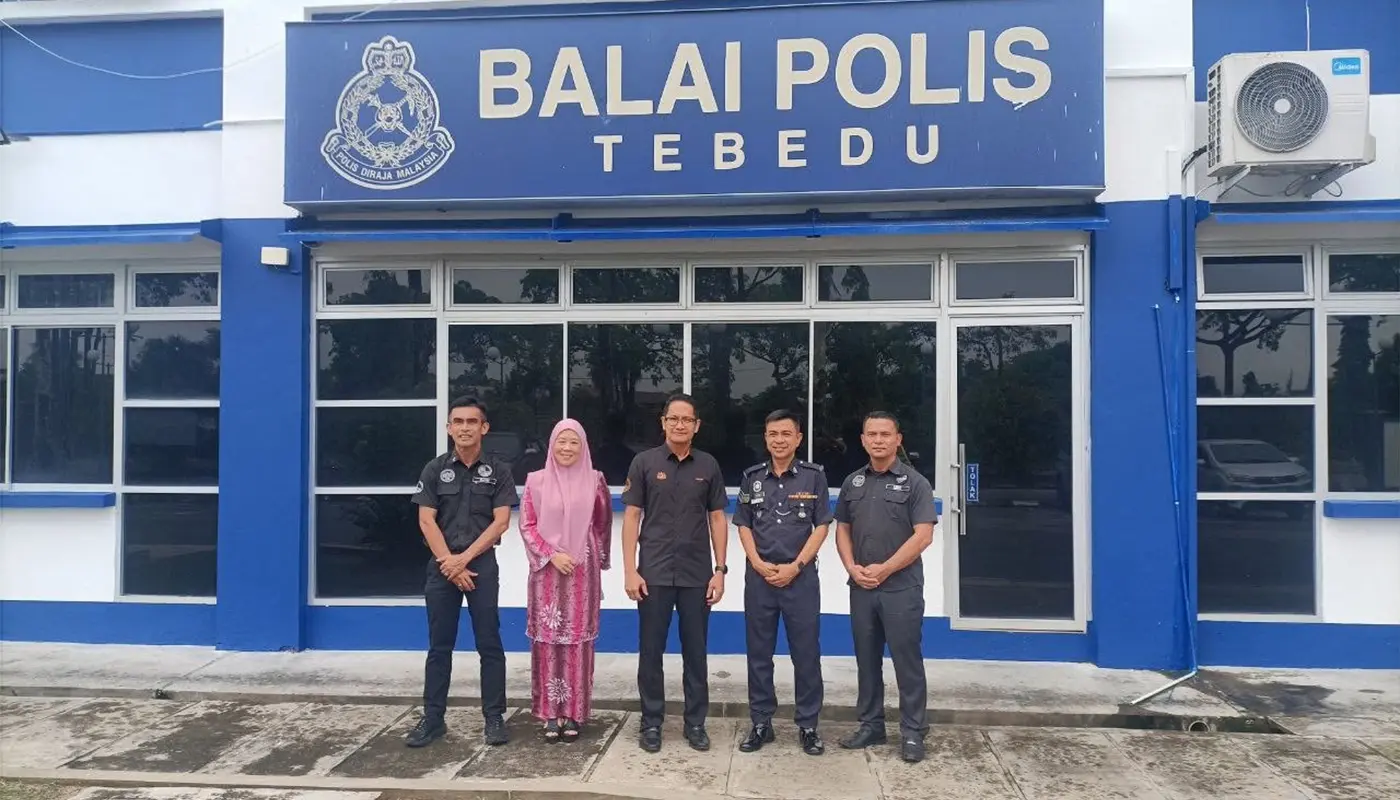
TEBEDU – Authorities carried out a detailed physical security inspection at the Tebedu Police Station on 16 July 2026, focusing on installations designated as Prohibited Areas and Prohibited Places under national law.

The exercise was led by State Director Mr Zainor bin Zailan, supported by Deputy Director Mr Mike Palmer Anak Fankie Riya from the Sarawak State Chief Government Security Office (CGSO). Their presence underscored the importance of maintaining strict protective measures at facilities that have been gazetted under the Prohibited Areas and Prohibited Places Act 1959 (Act 298).
The inspection formed part of ongoing efforts to ensure that security standards at sensitive sites remain robust and aligned with federal requirements. Prohibited Areas and Prohibited Places are locations identified by the government as critical to national security, where access is restricted and protective measures are legally enforced. These include police stations, military installations, and other strategic facilities.
Officials explained that such visits are not only routine but also essential for monitoring compliance with established protective security frameworks. The inspection at Tebedu Police Station involved assessing physical barriers, surveillance systems, and operational readiness to respond to potential threats.
The Prohibited Areas and Prohibited Places Act 1959 provides the legal foundation for safeguarding installations deemed vital to national defence and public order. Under this legislation, unauthorised entry into gazetted sites is a criminal offence, and strict penalties apply to breaches. The Act has been a cornerstone of Malaysia’s protective security regime for decades, ensuring that sensitive locations remain secure against espionage, sabotage, or other hostile activities.
Security experts note that inspections of this nature are increasingly important in today’s environment, where evolving threats demand constant vigilance. Regular reviews help identify vulnerabilities and strengthen coordination between agencies responsible for safeguarding critical infrastructure.
The Tebedu Police Station, situated near the Sarawak-Kalimantan border, plays a significant role in maintaining law and order in the district. Its designation as a Prohibited Place reflects its strategic importance in border security and policing. By conducting inspections, authorities aim to reassure the public that protective measures are actively enforced and continuously updated.
During the visit, officials emphasised the need for personnel stationed at gazetted areas to remain alert and adhere strictly to security protocols. The inspection also served as an opportunity to reinforce awareness among officers about the responsibilities associated with managing restricted facilities.
Observers highlight that such initiatives contribute to broader national objectives of strengthening resilience against security risks. In Sarawak, where border districts like Tebedu face unique challenges, maintaining high standards of protective security is vital for both local communities and national interests.
The inspection reflects the government’s commitment to ensuring that protective security measures are not only in place but also actively monitored. By conducting regular visits, the CGSO demonstrates its role as a guardian of national security, working closely with local enforcement agencies to uphold the integrity of gazetted sites.
As Malaysia continues to modernise its security framework, inspections such as the one at Tebedu Police Station remain central to safeguarding critical assets. They provide assurance that protective measures are functioning effectively and that restricted areas remain secure under the provisions of the law.
