



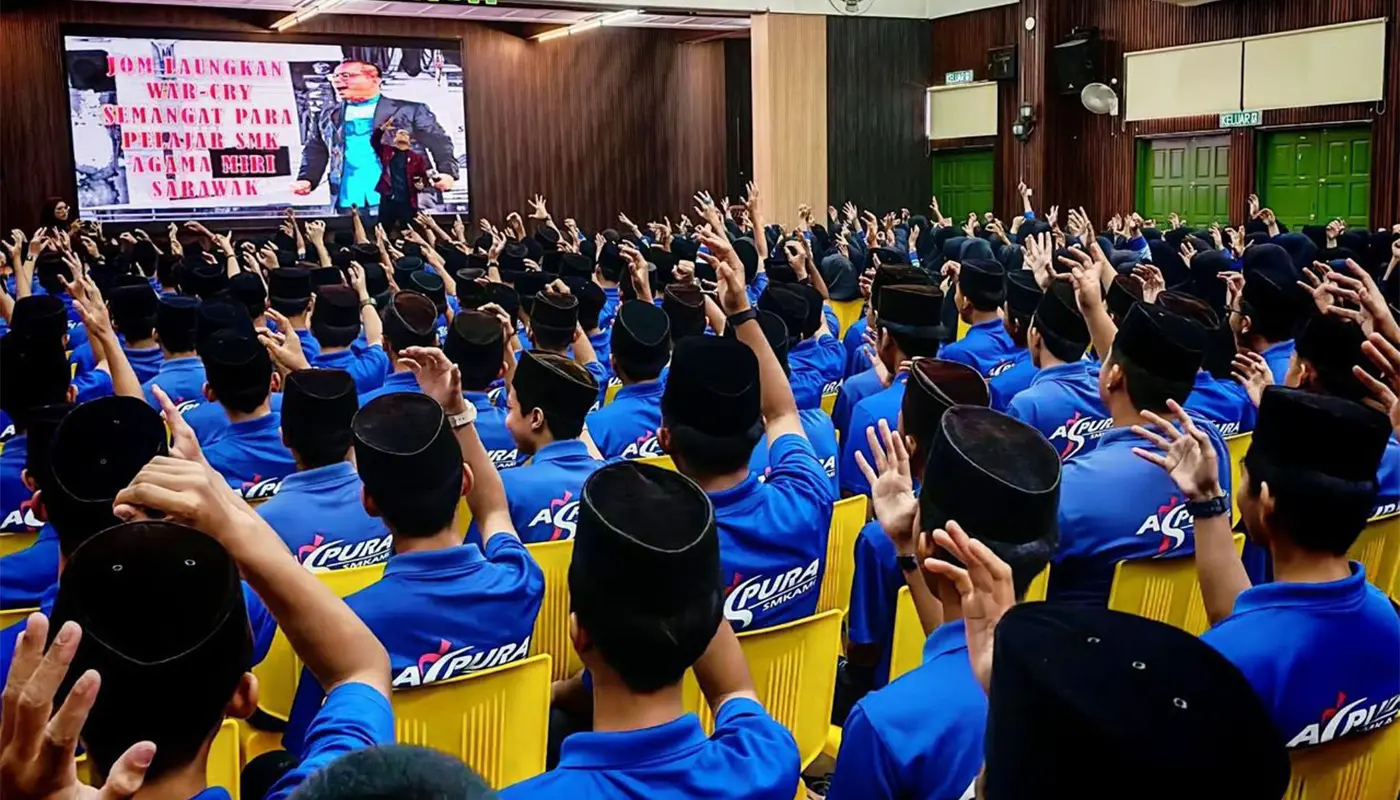
MIRI – Sekolah Menengah Kebangsaan Agama (SMKA) Miri has recorded a flawless performance in the recent Sijil Pelajaran Malaysia (SPM) 2025 examinations, attaining a 100 per cent certificate eligibility rate amongst its candidates.

The institution achieved a commendable School Average Grade (GPS) of 2.55, solidifying its reputation as a centre of academic distinction within northern Sarawak.
The success story emerging from this religious secondary school extends far beyond mere statistics. With a student population encompassing more than twenty distinct ethnic communities from across the state, particularly the northern regions, the institution stands as a testament to unity in diversity.
Learners hailing from metropolitan areas, rural villages and remote interior settlements converge upon this single campus, bringing with them varied cultural backgrounds yet sharing a common aspiration for knowledge.
A significant portion of the student body comprises individuals from B40 households and rural localities, demographics often facing educational barriers. The recent examination results have therefore carried profound emotional weight for families who witnessed their children receive results slips marked by success.
On the announcement day, parental reactions ranged from quiet gratitude to visible emotion, reflecting five years of separation endured during their children’s residential education.
The boarding school experience requires students to reside within dormitories throughout their five-year secondary journey. This separation, whilst challenging for families, has proven instrumental in fostering independence and resilience amongst learners.
The recent examination achievements validate these sacrifices, demonstrating that geographical and economic disadvantages need not preclude academic excellence.
Under the leadership of Principal Ahmad Fauzi bin Yaakob, SMKA Miri adheres to the philosophy encapsulated by its motto “Adab Dulu Baru Ilmu”, meaning character precedes knowledge. The institution maintains that genuine education transcends paper qualifications, emphasising instead the cultivation of moral fibre and ethical conduct.
Within the residential environment, daily routines are structured around spiritual discipline and character development. Congregational prayers form a regular practice, Quranic recitation becomes an ingrained habit, and spiritual observance serves as emotional sustenance.
These elements, though absent from official academic transcripts, constitute invaluable lessons etched into the personal development of every pupil.
Beyond formal academics, the school maintains robust co-curricular programmes. Students actively participate in sporting competitions, leadership roles, uniformed organisations, debating tournaments, nasyid performances and various contests at district, state and national levels.
Through these activities, learners acquire essential life skills, including teamwork, leadership capabilities, perseverance and courage.
The residential setting functions as a practical “university of life”, where adolescents master time management, emotional regulation, and mutual respect across cultural differences. Children arriving with rural inferiority complexes or urban anxieties gradually develop the confidence to command national stages with poise.
Academic support structures at the institution include the Focused Prep Programme, Nota Poket Programme, Al-Ina’ Programme, Juh Kepong Programme, A Score Programme and Plus 10 Programme. These initiatives, alongside numerous high-impact academic interventions, ensure comprehensive learner support.
From this nurturing environment emerge empathy, solidarity and adaptability, qualities essential for navigating future professional landscapes.
The SMKA Miri model demonstrates that when diversity is managed with wisdom, anchored in strong values and guided by committed leadership, excellence manifests not merely in numerical achievements but in the formation of upstanding character.
The institution’s ultimate objective remains the production not merely of intellectually capable graduates but of civilised individuals possessed of generous spirits and genuine commitment to societal contribution.
