



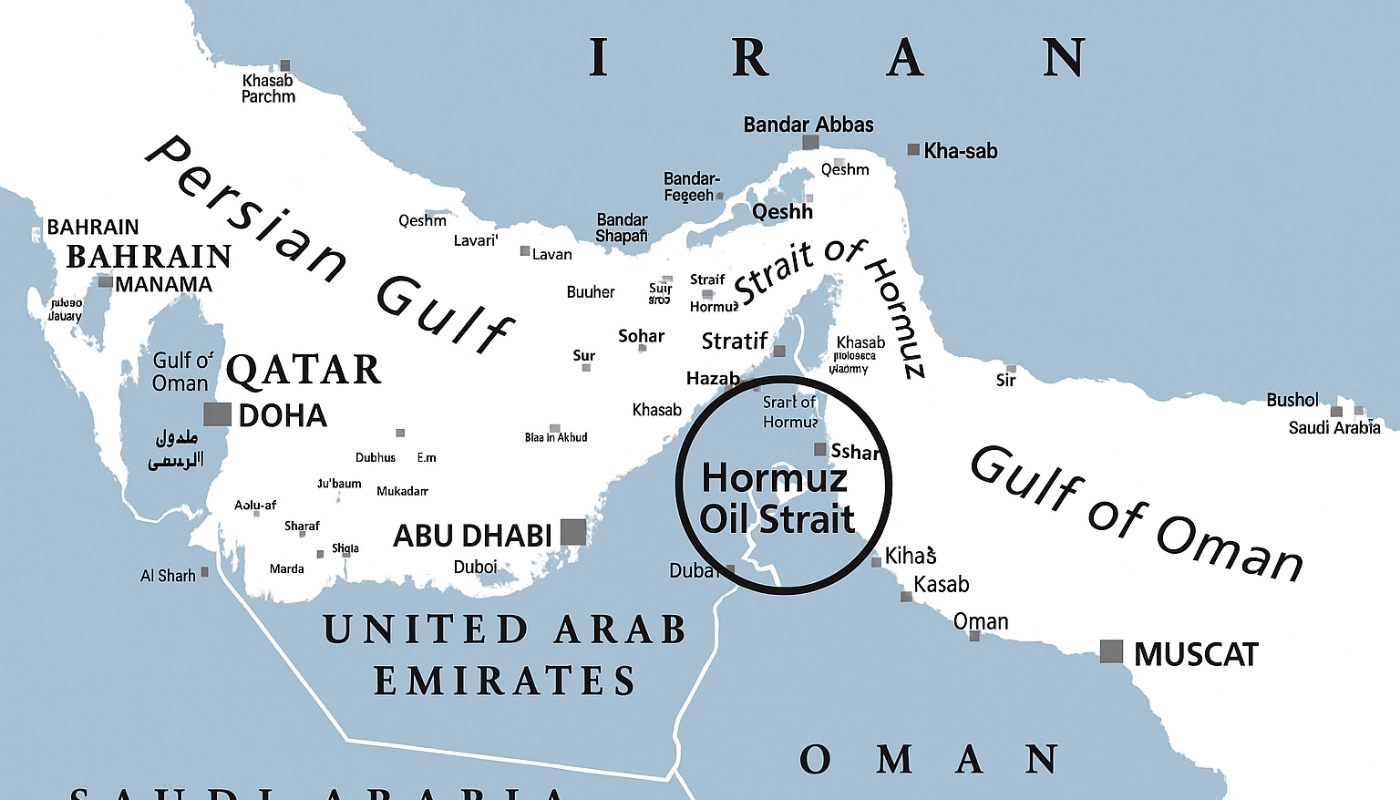
Iran’s parliament has unanimously endorsed a resolution to close the Strait of Hormuz in retaliation for the recent U.S. airstrikes on its nuclear facilities at Fordow, Natanz, and Isfahan. The parliamentary vote signals a potentially dramatic escalation in regional tensions. However, the closure remains contingent upon final approval from Iran’s Supreme National Security Council and Supreme Leader Ayatollah Khamenei.

The narrow maritime corridor, situated between Iran and Oman, is a critical chokepoint—around 20–30% of global seaborne oil shipments transit through this route daily . Following news of the vote, Brent crude rose to approximately $80 per barrel, while U.S. WTI futures also surged—highlighting immediate market concerns.
U.S. Secretary of State Marco Rubio condemned the move as “economic suicide” for Iran, urging China to intervene and discourage Tehran from taking action . Analysts are skeptical that parliament alone possesses the legal authority to enforce a closure—only Iran’s security leadership can implement such a decision.
If the Strait closes, global oil and natural gas markets could suffer severe disruption, with estimates of up to $1 billion in daily oil trade at stake . Experts warn of far-reaching economic consequences: elevated fuel prices, inflationary pressure, and potential regional military confrontation.
The Supreme National Security Council must approve and execute the parliamentary directive.
Iran may employ asymmetric tactics—mines, anti-ship missiles, drone harassment, and cyberattacks—to enforce control if the route is closed.
The U.S. Fifth Fleet and allied navies remain on high alert, prepared to maintain freedom of navigation in the event of any attempt to block the strait.
The parliamentary approval marks the most overt legislative move toward disrupting a vital global energy artery since the 1980s tanker war. As decision-making advances to Iran’s security apex, global leaders and markets await with growing concern.
