



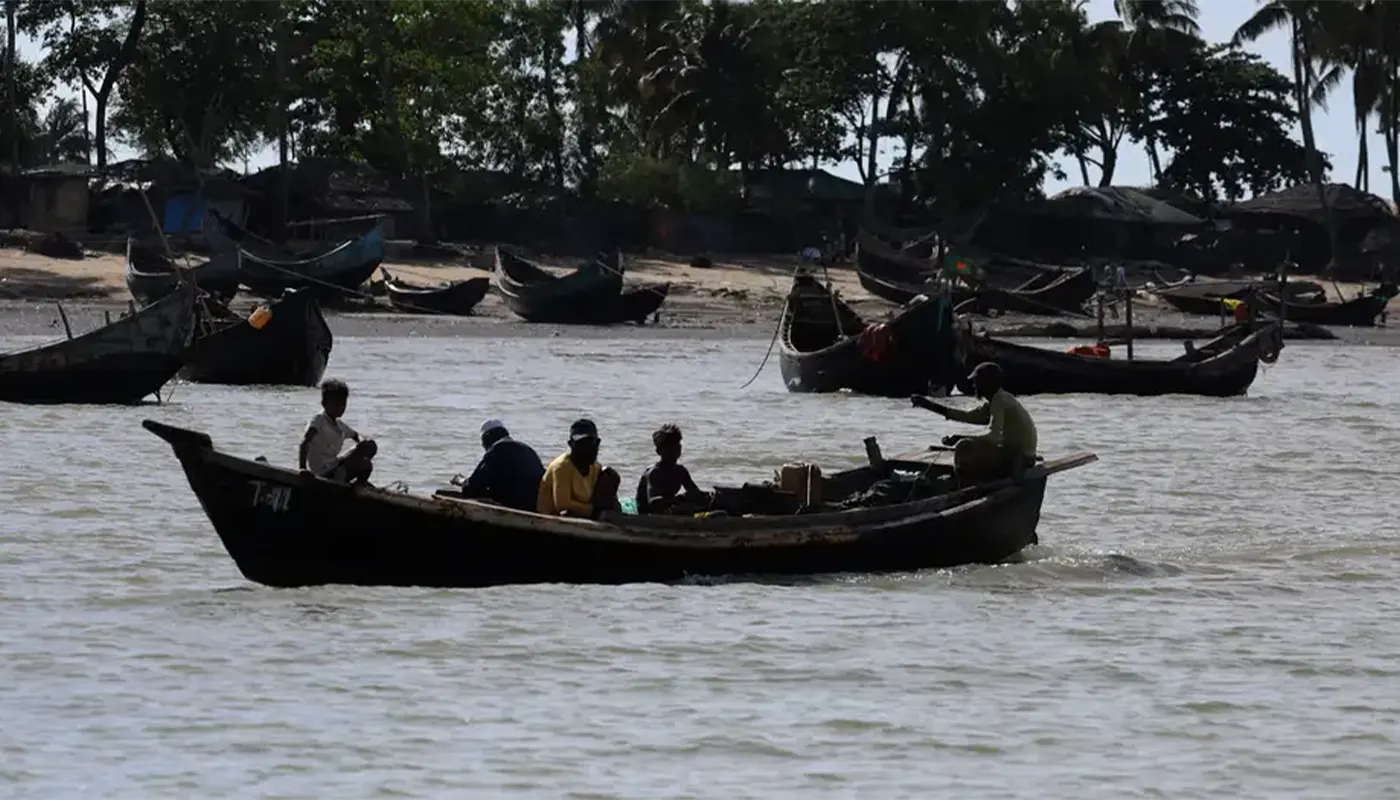
TEKNAF/Cox’s Bazar — As tensions simmer across the Naf River boundary, Bangladeshi fishermen continue facing violent abductions and harassment by Myanmar’s rebel group, the Arakan Army (AA). These incidents have surged since the lifting of a long-standing fishing ban earlier this year.

In early May, fisherman Mohammad Siddiqui and two colleagues were abducted at gunpoint despite remaining within Bangladeshi waters. The AA opened fire—reportedly discharging about 20 bullets—handcuffed them, and transported them to a camp in Rakhine, where they endured physical abuse, eating meagre food and confined in poor conditions. They were released after two days through mediation by Bangladesh authorities.
Since February 2025, AA has abducted dozens more. On February 11, four fishermen were seized near Shah Porir Dwip; the victims, aged between 16 and 30, were eventually rescued by the Border Guard Bangladesh (BGB). In May, three additional fishermen were abducted near Leda border areas; two of them were shot and injured. They were later returned after BGB intervention.
Several freed fishermen recount startling experiences: prolonged confinement, interrogations in Bangla about BGB deployments, and ransom demands ranging from Tk 100,000 to Tk 350,000—collected via mobile financial services. In some cases, families were shown videos and photos of tortured captives.
According to international observers, AA claims these actions as enforcement against illegal fishing, asserting control over border waterways since seizing key areas in Rakhine state in late 2023. Bangladesh, however, views AA as a non-state actor whose tactics breach sovereignty and terrorize local communities.
The reopening of Naf River fishing in February brought relief but heightened risk. The government allowed fishing between 8 a.m. and 4 p.m., with mandatory BGB registration and identity checks—a measure aimed at managing risk, though abductions have persisted.
BGB officials and local authorities continue negotiating with AA to secure releases. Though the AA has returned many captives, fishermen report that the AA remains unpredictable and violent.
Analysts urge Dhaka to pursue informal engagement with the AA, enlisting civil society and local leaders to establish border safety protocols while recognizing AA’s de facto influence in Rakhine.
Fisherfolk from Teknaf express fear and helplessness. “The AA threatens our livelihood for no fault of our own,” said a young fisherman. “When we go out to fish, we freeze at the sound of their boats”—a chilling testament to the precarious reality along one of South Asia’s most volatile riverine borders.
